The Wounded Knee Massacre, 1890 (Edexcel GCSE History): Revision Notes
📚Revision Notes
The Wounded Knee Massacre, 1890
Background to the tragedy
By 1890, Native American peoples living on reservations in the Plains were experiencing severe hardship. The government had reduced their food rations, and many communities were struggling with crop failures caused by drought. This desperate situation led to the emergence of a spiritual movement that would ultimately contribute to one of the most tragic events in American frontier history.
Note
The combination of government policies reducing essential supplies and natural disasters created a perfect storm of desperation among Plains Indian communities, making them particularly receptive to spiritual movements that promised hope and renewal.
The Ghost Dance movement
In response to their dire circumstances, many Plains Indians turned to a new religious practice known as the Ghost Dance. This spiritual movement was based on visions received by an Indigenous American prophet, who believed that if Native peoples continued to perform this sacred dance, several miraculous things would happen: the spirits of their deceased ancestors would return to life, the buffalo herds would come back, and a great flood would sweep away white settlers from their traditional lands.
The Ghost Dance quickly spread across numerous reservations, offering hope to communities that had lost so much. However, white American authorities and the US Army viewed this movement with suspicion and alarm. They worried that the religious gatherings might transform into organised resistance against government control.
Important
The Ghost Dance was fundamentally a peaceful spiritual movement focused on renewal and hope. However, white authorities misinterpreted its religious gatherings as potential military threats, setting the stage for the tragic confrontation that would follow.
The events leading to Wounded Knee
The tension surrounding the Ghost Dance movement reached a breaking point when authorities decided to take action against its leaders. Sitting Bull, the famous Sioux chief and a supporter of the Ghost Dance, became a target for arrest. When reservation police attempted to capture him, the situation turned violent, and Sitting Bull was killed during the confrontation.
Following Sitting Bull's death, many of his followers fled south to join another Sioux leader named Big Foot, who was also practising the Ghost Dance. The US Army, determined to stop what they saw as a potential uprising, pursued Big Foot's band as they moved across the winter landscape.
The massacre at Wounded Knee Creek
On 29 December 1890, tragedy struck at Wounded Knee Creek in South Dakota. Big Foot's band, weakened by cold weather and illness (Big Foot himself was suffering from pneumonia), was intercepted by US Army forces. The soldiers ordered the Native Americans to set up camp and began the process of disarming them.
During this tense confrontation, a gun was accidentally discharged. This single shot triggered a devastating response from the army, who opened fire on the Indigenous people. The violence continued for approximately ten minutes, but the consequences were catastrophic.
Important
The Devastating Casualties
When the gunfire finally stopped, around 250 Indigenous men, women, and children lay dead, along with 25 US soldiers. Many of the Native American casualties were non-combatants who had been caught in the crossfire. The Wounded Knee Massacre, as it became known, represented a devastating blow to Sioux resistance and marked a turning point in the relationship between Indigenous peoples and the US government.
The far-reaching impacts of Wounded Knee
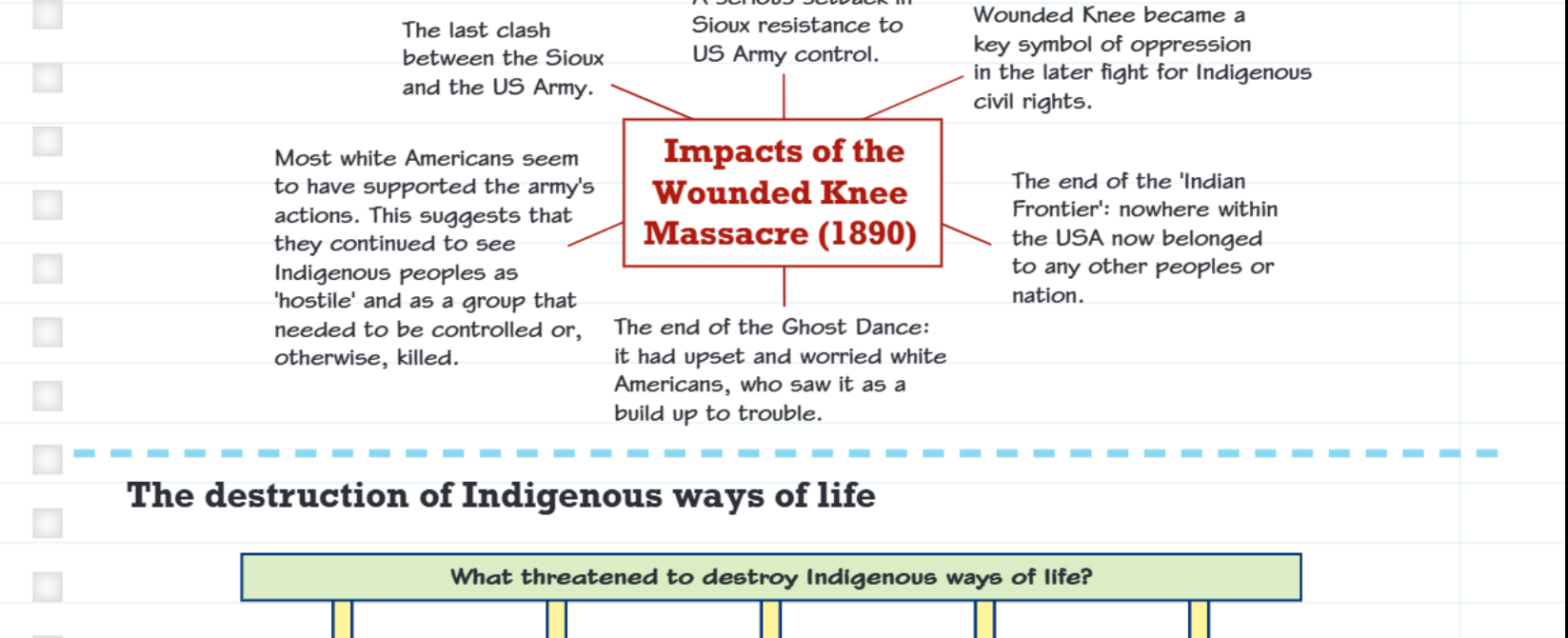
The consequences of the Wounded Knee Massacre extended far beyond the immediate tragedy. The event had several significant impacts that would influence American history for decades to come.
End of armed resistance
The massacre effectively ended the last major armed conflict between the Sioux nation and the US Army. It demonstrated the overwhelming military superiority of government forces and discouraged further organised resistance from Indigenous communities.
Symbolic importance for civil rights
In later years, Wounded Knee became a powerful symbol of oppression in the fight for Indigenous civil rights. The site would eventually become a rallying point for Native American activists seeking justice and recognition for historical wrongs.
Public opinion and government policy
Most white Americans at the time seemed to support the army's actions, viewing them as necessary to maintain order and security. This public backing suggested that many settlers continued to see Indigenous peoples as a threat that needed to be controlled or eliminated.
End of the Ghost Dance
The massacre effectively ended the Ghost Dance movement, which had worried white Americans who saw it as a potential catalyst for widespread Indigenous uprising.
Closing of the "Indian Frontier"
Wounded Knee marked the end of what historians call the "Indian Frontier" period. After 1890, no part of the USA was considered to belong to any other peoples or nations - the federal government now claimed complete control over all American territory.
Example
Historical Significance: The End of an Era
The Wounded Knee Massacre represents a clear historical watershed moment. Before 1890, there were still areas of the American West where Indigenous peoples maintained some degree of autonomy. After Wounded Knee, the US government's authority was unchallenged across the entire continental United States, marking the definitive end of the frontier period.
Timeline of key events
- 1890: Drought and reduced rations create hardship on Plains reservations
- 1890: Ghost Dance movement spreads across Indigenous communities
- December 1890: Sitting Bull killed during attempted arrest
- 29 December 1890: Wounded Knee Massacre occurs
- After 1890: End of the "Indian Frontier" era
Summary
Key Points to Remember:
- The Wounded Knee Massacre took place on 29 December 1890 at Wounded Knee Creek, marking the end of major Indigenous resistance in the American West
- Around 250 Indigenous people (including many women and children) and 25 US soldiers died in the violence
- The tragedy emerged from tensions surrounding the Ghost Dance religious movement, which offered hope to desperate reservation communities but alarmed white authorities
- The massacre became a symbol of Indigenous oppression and would later inspire civil rights activism
- Wounded Knee marked the end of the "Indian Frontier" period, with the US government now claiming complete control over all American territory