The first Fort Laramie Treaty, 1851 (Edexcel GCSE History): Revision Notes
📚Revision Notes
The first Fort Laramie Treaty, 1851
Background and context
The first Fort Laramie Treaty was signed in 1851 as a response to growing tensions between American migrants travelling westward and Indigenous peoples of the Great Plains. As more settlers used the Oregon Trail to cross through tribal territories, conflicts became increasingly common and dangerous for all involved.
The discovery of gold in California in 1849 dramatically increased the number of people making the journey west. This surge in migration put enormous pressure on the resources that Indigenous communities depended upon, particularly the buffalo herds that were essential for their survival and way of life.
Note
The California Gold Rush created a massive wave of westward migration, with thousands of people crossing Indigenous territories daily. This unprecedented movement of people fundamentally altered the dynamics between settlers and Plains tribes.
Reasons for growing tensions
Several interconnected factors led to the deteriorating relationship between migrants and Plains Indigenous peoples during this period.
The rapid increase in migration across the Plains created serious pressures on food supplies for Indigenous communities. As thousands of settlers passed through their territories, the buffalo herds were disturbed and disrupted, making hunting more difficult and reducing the availability of this crucial resource.
Many settlers developed fears about potential attacks from Indigenous tribes, even though most interactions were peaceful. These fears were often based on misunderstandings and prejudices rather than actual threats. At the same time, Indigenous peoples had legitimate concerns about the impact that this constant stream of migrants was having on their traditional lands and resources.
Important
The combination of these factors created a dangerous cycle where both sides viewed the other with suspicion and hostility. Migrants assumed that any Indigenous resistance was a direct threat to them, while Indigenous communities watched their traditional way of life being undermined by forces beyond their control.
The significance of the treaty
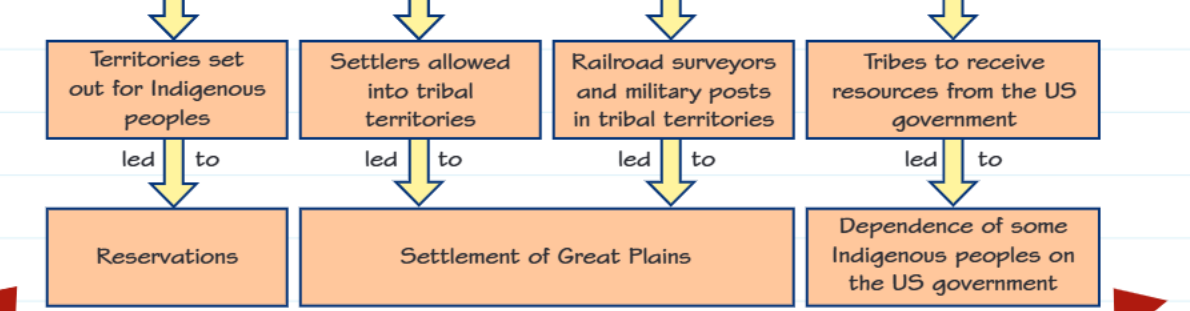
The first Fort Laramie Treaty represented a major shift in how the US government approached relationships with Indigenous peoples in the West. The treaty established several key principles that would shape future interactions.
The government designated specific territories for Indigenous peoples while simultaneously allowing settlers to pass through tribal lands. This arrangement seemed to offer protection for both groups, but in practice it often favoured the interests of migrants over Indigenous rights.
The treaty also permitted railroad surveyors and military posts to be established in tribal territories. This provision was particularly significant because it opened the door for further American expansion and development in the region, often at the expense of Indigenous communities.
Perhaps most importantly, the treaty promised that tribes would receive resources and payments from the US government. The Indigenous tribes involved agreed to accept an annual payment of $50,000 in exchange for agreeing to the treaty's terms.
Major consequences of the treaty
The Fort Laramie Treaty had three significant long-term consequences that fundamentally changed the American West.
First, it led to the creation of the reservation system. By setting aside specific territories for Indigenous peoples, the treaty began the process of confining tribal communities to designated areas, often far from their traditional homelands.
Second, the treaty facilitated the settlement of the Great Plains by making travel safer for migrants and providing government protection for those making the journey west. This protection encouraged more people to attempt the journey, accelerating westward expansion.
Third, and perhaps most significantly, the treaty created a system of dependence between some Indigenous peoples and the US government. The annual payments and promised resources meant that tribes became reliant on government support, gradually undermining their traditional independence and self-sufficiency.
Important
These three consequences - reservations, accelerated settlement, and government dependence - established patterns that would dominate American-Indigenous relations for generations to come.
Historical significance
The first Fort Laramie Treaty marked a crucial turning point in American-Indigenous relations. The US government prioritised the needs and safety of settlers over the previous commitments it had made regarding Indigenous lands, as outlined in earlier legislation like the Indian Trade and Intercourse Act of 1834.
The treaty effectively ended the concept of a "Permanent Indian Frontier" between the eastern states and Indigenous territories in the West. This change meant that there would be ongoing interaction and often conflict between American settlers and Indigenous communities, rather than separate and distinct territories for each group.
Note
The concept of a "Permanent Indian Frontier" had been a cornerstone of earlier US policy, envisioning distinct separation between American and Indigenous territories. The Fort Laramie Treaty marked the beginning of the end for this approach.
The treaty also demonstrated how the government could use financial incentives to encourage Indigenous peoples to accept arrangements that ultimately weakened their position and independence. This became a pattern that would be repeated in many subsequent treaties and negotiations.
Timeline of key events
- 1849: Discovery of gold in California leads to massive increase in migration along the Oregon Trail
- 1850: Tensions between migrants and Plains Indigenous peoples reach critical levels
- 1851: First Fort Laramie Treaty signed, establishing new framework for relations between US government and Plains tribes
- Post-1851: Beginning of reservation system and increased government dependence among some Indigenous communities
Summary
Key Points to Remember:
- The first Fort Laramie Treaty of 1851 was a direct response to conflicts caused by increased migration along the Oregon Trail following the California Gold Rush
- The treaty allowed settlers safe passage through tribal lands while promising Indigenous peoples annual government payments of $50,000
- Three major consequences emerged: the creation of reservations, acceleration of Great Plains settlement, and development of Indigenous dependence on the US government
- The treaty marked the end of the idea of separate territories for Indigenous peoples and Americans, leading to ongoing conflicts and negotiations
- This treaty established patterns of using financial incentives to gain Indigenous agreement to arrangements that ultimately weakened tribal independence and traditional ways of life