Black Power, 1963-70 (Edexcel GCSE History): Revision Notes
📚Revision Notes
Black Power, 1963-70
From 1963 onwards, some African American civil rights groups began to reject the non-violent methods that had characterised the early civil rights movement. Instead, they adopted a more radical approach that became known as 'Black Power'. This shift represented a significant change in strategy and philosophy within the struggle for racial equality.
Why did Black Power emerge?
Frustration with non-violent methods
By the mid-1960s, many Black Americans felt that peaceful protest was not achieving change quickly enough. Despite significant victories like the Civil Rights Act of 1964, everyday experiences of racism and discrimination continued. The slow pace of progress led some activists to question whether non-violence was truly effective.
Note
The Civil Rights Act of 1964 was a major legislative victory, but it primarily addressed legal discrimination rather than the deeper social and economic inequalities that continued to affect African American communities in their daily lives.
Influence of Malcolm X
Malcolm X played a crucial role in shaping Black Power ideology. Unlike Martin Luther King Jr., Malcolm X argued that Black Americans should not seek integration into white society, but should instead focus on building their own strong communities. He believed that Black people should feel pride in their heritage rather than trying to fit into a white-dominated society that had historically mistreated them.
Important
Malcolm X's philosophy represented a fundamental departure from the integrationist approach of mainstream civil rights leaders, advocating for Black separatism and self-reliance instead of working within existing white-dominated institutions.
Focus on self-determination and pride
Black Power advocates demanded that African Americans should have control over their own communities and destinies. They promoted the idea that Black people should develop self-respect and take pride in their African heritage, rather than seeking acceptance from white America. This represented a fundamental shift from the integrationist goals of earlier civil rights activism.
Broader social concerns
The Black Power movement expanded beyond traditional civil rights issues to address wider problems affecting African American communities, particularly poverty and unemployment. Activists also became involved in opposing the Vietnam War, seeing connections between American violence abroad and oppression at home.
The Black Power salute became a powerful symbol of this movement - a raised clenched fist that represented strength and defiance. It was used to intimidate those who opposed Black equality and became a rallying cry chanted at demonstrations across the USA.
The significance of Stokely Carmichael
Stokely Carmichael emerged as one of the most important leaders of the Black Power movement. After 1965, while SNCC (Student Nonviolent Coordinating Committee) continued to focus on voter registration, many Black Americans grew dissatisfied with the lack of attention to broader Black rights issues.
Carmichael helped establish the Lowndes County Freedom Organisation (LCFO) as an independent political party to concentrate on issues most affecting Black Americans. The party adopted a panther as its logo, which later became a symbol of Black rights activism. In May 1966, Carmichael became Chairman of SNCC, advocating for a more radical approach to achieving equality.
Example
The March Against Fear - June 1966
When James Meredith was shot during his 220-mile 'March against Fear' in Mississippi, the event became a turning point for the Black Power movement. Martin Luther King Jr. and Stokely Carmichael took over leadership of the march, but their approaches diverged dramatically:
- King's approach: Continued advocacy for non-violent methods
- Carmichael's approach: Active promotion of Black Power ideology
- Result: A clear ideological split within the civil rights movement was publicly displayed
His philosophy gained national attention during this famous march. Black Power supporters particularly welcomed Carmichael's message in the North, especially in poor Northern ghettos where economic conditions remained dire despite legal advances in civil rights.
The Black Panthers
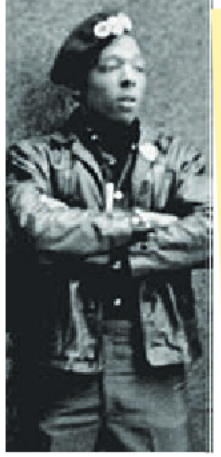
The Black Panther Party was founded in 1966 by Huey Newton and Bobby Seale in Oakland, California. Originally called 'The Black Panther Party for Self-Defense', the organisation represented one of the most radical expressions of the Black Power movement.
Core beliefs and methods
The Black Panthers believed that Black people needed their own officials and police force to properly support their communities. They were prepared to work with white people who shared their beliefs, but maintained that Black Americans should lead their own struggle for liberation.
Note
The Black Panthers' willingness to work with sympathetic white allies distinguished them from some other Black Power groups that advocated complete racial separatism. However, they insisted on Black leadership and control of their movement.
The party developed a comprehensive 'ten-point plan' for transforming American society, which included ending capitalism, providing free healthcare, and stopping all wars. Their ultimate goal was achieving what they called a 'radical social and economic revolution' in the USA.
Distinctive appearance and tactics
Black Panthers were immediately recognisable by their uniform: black berets, black trousers, and black leather jackets. They openly carried guns for self-defense and used tape recorders to document police harassment of Black communities. This militant appearance and approach marked a dramatic departure from the suits and peaceful protests of earlier civil rights activists.
Important
The Black Panthers' decision to openly carry weapons was legal under California law at the time, but their militant image often overshadowed their community service work and made them targets for intense government surveillance and harassment.
Community programmes
Despite their radical image, the Black Panthers also focused on practical community support. They established breakfast clubs that provided free meals for poor Black children and offered free medical services to underserved communities. These programmes demonstrated their commitment to addressing the immediate needs of Black Americans while working towards broader social change.
The Black Panthers were particularly successful in providing support for Black Americans living in poverty, though their ultimate goal of achieving a complete social and economic revolution in the USA was never realised.
The significance of the 1968 Mexico Olympics
The 1968 Mexico Olympics provided a dramatic international platform for the Black Power movement. Two African American athletes, Tommie Smith and John Carlos, used their moment of victory to make a powerful political statement that resonated around the world.
Example
The Olympic Black Power Protest - 1968
The Setup: Both athletes won medals in the 200 metres
- Tommie Smith: Gold medal
- John Carlos: Bronze medal
The Protest: During the medal ceremony, they raised their fists in the Black Power salute while the American national anthem played.
The Impact: This gesture was broadcast to millions of viewers worldwide, making it one of the most memorable protests in Olympic history.
The Consequences:
- Immediate criticism in American media
- Banned from the Olympic team
- Generated significant support among young Black Americans
The athletes faced immediate consequences for their actions. They were widely criticised in the American media and were banned from the Olympic team. However, their protest also generated significant support, particularly among young Black Americans who admired their courage in using such a public platform to express their political views.
The Olympics protest demonstrated how Black Power had evolved beyond traditional civil rights activism. Rather than simply asking for equal treatment, Smith and Carlos were making a statement about Black pride and power on the world stage, showing that the movement had gained international dimensions.
Timeline of key events
- 1963: Black Power movement begins to emerge as alternative to non-violent civil rights activism
- 1965: Stokely Carmichael helps establish Lowndes County Freedom Organisation
- May 1966: Carmichael becomes Chairman of SNCC
- June 1966: 'March against Fear' in Mississippi brings national attention to Black Power
- 1966: Black Panther Party founded by Huey Newton and Bobby Seale
- 1968: Tommie Smith and John Carlos make Black Power salute at Mexico Olympics
Summary
Key Points to Remember:
-
Black Power emerged from frustration with the slow pace of change achieved through non-violent methods and represented a shift towards more radical approaches to civil rights
-
Key figures like Stokely Carmichael and Malcolm X promoted Black pride, self-determination, and community control rather than integration into white society
-
The Black Panthers combined militant tactics with practical community programmes, wearing distinctive uniforms while providing breakfast clubs and medical services
-
The 1968 Olympics protest by Tommie Smith and John Carlos brought Black Power to international attention through their raised-fist salute during the medal ceremony
-
The movement expanded civil rights activism beyond legal equality to address broader issues of poverty, unemployment, and American foreign policy