Civil rights law, 1964-65 (Edexcel GCSE History): Revision Notes
📚Revision Notes
Civil rights law, 1964-65
Introduction to federal civil rights legislation
During the early-to-mid 1960s, the United States experienced a breakthrough period in civil rights legislation. Following years of peaceful protests, particularly events in Birmingham and other Southern cities, Presidents Kennedy and Johnson played crucial roles in pushing through landmark federal laws. This period saw the federal government take unprecedented steps to protect civil rights and challenge state-level discrimination.
Note
This period represents one of the most significant advances in civil rights legislation in American history, with the federal government taking direct action to override state-level discrimination for the first time since Reconstruction.
The response to civil rights protests transformed from initial reluctance to active federal intervention. Both presidents recognised that federal law was necessary to guarantee basic rights that state governments had failed to protect.
Presidential leadership in civil rights
Kennedy's contributions (1961-63)
President John F. Kennedy initially approached civil rights cautiously but became increasingly committed to the cause. His administration made several important contributions to the civil rights movement:
Kennedy appointed Black Americans to high-level positions in government, including Thurgood Marshall, who successfully argued the landmark Brown v. Topeka case in 1954. This demonstrated federal commitment to racial equality at the highest levels of government.
The president's stance evolved significantly after witnessing the violence against peaceful protesters, particularly in Birmingham. The brutal treatment of demonstrators, including the use of police dogs and fire hoses against civilians, shocked Kennedy and pushed him towards stronger federal action.
Kennedy backed the introduction of new civil rights laws after initially being reluctant to support them. He recognised that federal intervention was necessary to protect civil rights activists and ensure basic constitutional rights were upheld across all states.
To protect civil rights workers, Kennedy sent federal troops to the University of Mississippi and deployed US marshals to escort the Freedom Riders. These actions established the principle that federal authority could override state resistance to integration.
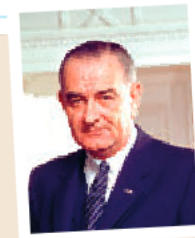
Johnson's contributions (1965-69)
President Lyndon B. Johnson succeeded Kennedy following the assassination in November 1963 and continued expanding federal civil rights protections. His administration achieved several major victories:
Johnson maintained Kennedy's commitment to appointing Black Americans to significant positions, including naming Patricia Harris as US Ambassador to Luxembourg in 1965. This continued the precedent of diverse federal representation.
The president successfully urged Southern politicians to support the 1964 Civil Rights Bill, using his political skills and Southern background to build crucial legislative coalitions. His experience as a former Senate majority leader proved invaluable in navigating Congressional politics.
Johnson supported both the 1964 Civil Rights Act and the 1965 Voting Rights Act, ensuring these landmark pieces of legislation became law. He recognised that comprehensive federal action was needed to address systematic discrimination.
Most dramatically, Johnson intervened to protect protesters marching from Selma to Montgomery in 1965, sending federal troops and placing the Alabama National Guard under federal control when state authorities failed to protect civil rights demonstrators.
The 1964 Civil Rights Act
The 1964 Civil Rights Act represented the most comprehensive federal civil rights legislation since Reconstruction. This landmark law addressed multiple forms of discrimination and gave the federal government new powers to enforce civil rights:
School desegregation enforcement: The Act provided new federal powers to force school desegregation. Schools that refused to integrate could lose federal funding, giving the government significant leverage to ensure compliance with earlier Supreme Court decisions.
Public accommodations: The law banned discrimination in public spaces and interstate businesses, including restaurants, hotels, theatres, and transportation facilities. This ended legal segregation in public accommodations across the United States.
Employment discrimination: The Act banned employment discrimination in larger businesses and established the Equal Employment Opportunities Commission to investigate workplace discrimination complaints and ensure fair hiring practices.
Voter registration protection: The law prohibited discrimination in voter registration tests, removing literacy tests and other barriers that had been used to prevent Black Americans from voting.
The 1965 Voting Rights Act
Building on the 1964 Act, the Voting Rights Act specifically addressed voting discrimination and federal oversight of elections. Johnson was heavily influenced by the Selma campaign and praised the courage of civil rights activists in pushing for this legislation.
Standardized registration process: The Act introduced a standardised voting registration process across the USA, controlled by the federal government rather than individual states. This eliminated state-level variations that had been used to discriminate.
Federal intervention powers: States could introduce new voting rules only if the federal government agreed. This gave federal authorities veto power over potentially discriminatory voting changes.
Federal oversight: Federal officials would take over voter registration in states where less than 50% of qualified voters had registered. This targeted states with the worst records of voting discrimination.
Important
The Act represented a fundamental shift in federal-state relations, with Washington taking direct control over voting rights in areas where discrimination was most severe. This marked the most significant expansion of federal power over state election processes in American history.
The Selma to Montgomery marches, 1965
The Selma to Montgomery marches became a crucial catalyst for the Voting Rights Act and demonstrated both the power of peaceful protest and the violent resistance it faced.
Background and planning: Early in 1965, the SCLC and Martin Luther King Jr. decided to campaign for voting rights in Selma, Alabama. The campaign aimed to highlight voting discrimination and build support for President Johnson's proposed Voting Rights Act. Some campaigners organised protests against voter registration tests while others attempted to register to vote, facing significant obstacles and harassment.
Example
The Selma March Sequence: Three Attempts
7 March 1965 - "Bloody Sunday": 600 protesters attempted to march 54 miles from Selma to Montgomery. State troops violently attacked peaceful demonstrators with tear gas, clubs, and cattle prods, creating worldwide media attention.
9 March 1965 - Second Attempt: Another march was attempted but failed due to continued state resistance. A white civil rights activist was murdered by local groups, increasing public outrage.
21-24 March 1965 - Success: Under federal protection, 25,000 protesters successfully completed the march from Selma to Montgomery, demonstrating the power of federal intervention in protecting civil rights.
Federal intervention and successful march: President Johnson responded to the violence by placing the Alabama state national guard under federal control and ordering them to provide safe passage for the marchers. The third and final march took place from 21-24 March, with 25,000 protesters successfully completing the journey from Selma to Montgomery on 25 March.
The Selma marches demonstrated how peaceful protest could expose violent discrimination and generate public support for federal civil rights legislation.
Timeline of major events
Note
Key Timeline: Civil Rights Legislation 1961-1965
- 1961: Kennedy becomes president, begins appointing Black Americans to federal positions
- 1963: Birmingham protests and Kennedy's assassination; Johnson becomes president
- 1964: Civil Rights Act passed, banning discrimination in public accommodations, employment, and voter registration
- Early 1965: SCLC begins Selma voting rights campaign
- 7 March 1965: Bloody Sunday - violent attacks on peaceful marchers
- 9 March 1965: Second unsuccessful march attempt
- 21-24 March 1965: Successful Selma to Montgomery march under federal protection
- 1965: Voting Rights Act passed, establishing federal oversight of voting registration
Remember!
Summary
Key Points to Remember:
-
Federal intervention was crucial: Both Kennedy and Johnson used federal power to override state resistance to civil rights, including sending troops and marshals to protect activists
-
Legislation addressed multiple forms of discrimination: The 1964 Civil Rights Act tackled segregation in schools, public spaces, employment, and voting, while the 1965 Voting Rights Act focused specifically on voting discrimination
-
Peaceful protest drove legislative change: Events like the Birmingham protests and Selma marches exposed violent discrimination and built public support for federal civil rights laws
-
Presidential leadership evolved: Kennedy moved from cautious support to active commitment, while Johnson built on this foundation to pass comprehensive civil rights legislation
-
Federal oversight became permanent: The laws established ongoing federal monitoring and enforcement powers, fundamentally changing the relationship between federal and state authority over civil rights