Peaceful protests and their impact, 1963-65 (Edexcel GCSE History): Revision Notes
📚Revision Notes
Peaceful protests and their impact, 1963-65
Introduction
By 1963, civil rights campaigners had learned an important lesson about achieving change in America. They discovered that gaining media attention was crucial for putting pressure on authorities in Southern states to improve conditions for Black Americans. This period saw some of the most significant peaceful protests in American history, each carefully planned to maximise public impact and sympathy.
Note
The shift towards media-focused campaigns in 1963 marked a turning point in civil rights strategy. Leaders recognised that shocking images and national television coverage could do more to advance their cause than years of local organising alone.
Events in Birmingham, 1963
Martin Luther King Jr. and the Southern Christian Leadership Conference (SCLC) chose Birmingham, Alabama as the location for a major civil rights campaign. This wasn't a random choice - Birmingham was selected for three strategic reasons.
First, the city remained completely segregated, making it a perfect example of the injustices civil rights leaders wanted to highlight. Second, the local police chief, Eugene "Bull" Connor, had built a reputation as someone who could easily be provoked into violent responses. Finally, Black Americans in Birmingham had been regularly attacked, creating a clear pattern of injustice that needed addressing.
The Birmingham campaign used various peaceful protest methods including marches, sit-ins, boycotts, and public meetings. However, the response from authorities was far from peaceful. Hundreds of arrests occurred, including many young children being taken to jail.
Important
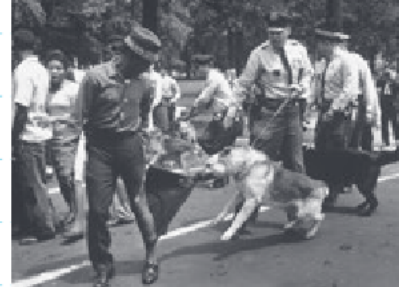
When the gaols became full, Connor made a crucial mistake that would help the civil rights movement enormously. He ordered the use of water cannons and police dogs against the peaceful protesters. This violent response to peaceful demonstration was widely criticised across America and gained enormous supportive news coverage for the civil rights campaign.
The images of peaceful protesters being attacked shocked the nation and built sympathy for the cause, demonstrating exactly what civil rights leaders had hoped to achieve through strategic location selection.
The March on Washington, 1963
Following the success of gaining media attention in Birmingham, civil rights leaders organised an even larger demonstration. In August 1963, they planned a march from across the United States to Washington D.C., calling it the "March on Washington for Jobs and Freedom."
The scale of this event was unprecedented. More than 250,000 people participated in the march, including approximately 70,000 white Americans who showed their support for civil rights. This diverse participation demonstrated that the movement had gained support beyond just the Black community.
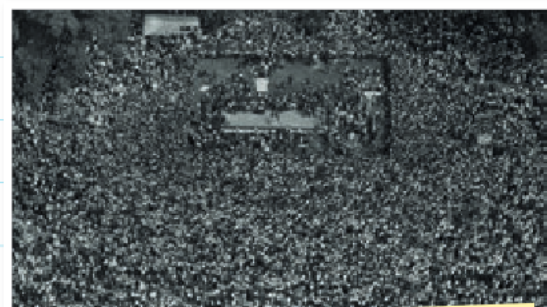
The march remained completely peaceful and was broadcast live on television around the world, giving it massive global reach. During this event, Martin Luther King Jr. delivered his famous "I have a dream" speech, which became one of the most memorable moments in American civil rights history.
Note
At the time, this was considered the largest demonstration in US history, showing the growing power of the civil rights movement. The global television coverage meant that millions of people worldwide witnessed this peaceful display of unity and determination.
Freedom Summer, 1964
In 1964, the Student Nonviolent Coordinating Committee (SNCC) and the Congress of Racial Equality (CORE) organised the "Freedom Summer" campaign in Mississippi. They sent around a thousand volunteers to Mississippi specifically to help boost voter registration among Black Americans.
The organisers made a strategic decision to recruit most volunteers from white college students from respectable families. This wasn't accidental - they knew that any violence against these volunteers would receive much more media attention than violence against Black activists alone, making the campaign more newsworthy.
These volunteers ran voter registration classes to teach Black residents about the process of registering to vote and help them pass the often deliberately difficult tests. The challenges were enormous: Black Americans attempted to register to vote during this campaign, but only were successful, showing how difficult the system made it for Black Americans to exercise their voting rights.
Important
Systematic Voter Suppression: The statistics from Freedom Summer reveal the true extent of barriers to voting rights. Despite major efforts and thousands of attempts, only about of Black Americans who tried to register were successful, demonstrating deliberate systemic exclusion.
The response from white supremacists was swift and violent. In retaliation, the Ku Klux Klan burned crosses and set fire to Black people's homes and churches, trying to intimidate both volunteers and local Black residents.
The Mississippi murders
The violence reached its peak on June 21, 1964, when three civil rights activists - Michael Schwerner and Andrew Goodman (both white volunteers) and James Chaney (a Black activist) - were killed by a Klan lynch mob near Meridian, Mississippi.
CORE and SNCC members desperately tried to find the bodies of the murdered activists. During their search, they discovered the bodies of eight other victims of Klan violence, revealing the broader pattern of murders that had been occurring.
Important
The Broader Pattern of Violence: The discovery of these additional victims showed how hatred and violence were being used as systematic tools to stop civil rights progress. The "Mississippi murders" demonstrated to the American public the extreme levels of violence that Klan members were willing to use to prevent Black Americans from gaining their civil rights.
This event helped build even more support for federal intervention in protecting civil rights workers and exposed the deadly reality of the resistance to civil rights progress.
Timeline of major events
- 1963: Birmingham campaign - peaceful protests met with violent police response
- August 1963: March on Washington - 250,000+ participants, "I have a dream" speech
- 1964: Freedom Summer begins - voter registration campaign in Mississippi
- June 21, 1964: Mississippi murders - three civil rights workers killed by KKK
- 1964: Discovery of additional murder victims during search
Key Takeaways
Summary
Key Points to Remember:
- Strategic media focus: Civil rights leaders deliberately chose locations and methods to maximise news coverage and public sympathy for their cause
- Peaceful methods, violent responses: Despite using only peaceful protest methods like marches, sit-ins, and boycotts, activists consistently faced water cannons, police dogs, arrests, and even murder
- Growing national support: The March on Washington demonstrated that over 250,000 Americans, including many white supporters, backed civil rights progress
- Systematic barriers persisted: Even with major campaigns like Freedom Summer, only 9.4% of Black Americans who attempted voter registration were successful, highlighting deliberate exclusion
- Media attention was crucial: Television coverage of peaceful protesters being attacked with violence shocked the nation and built crucial support for federal civil rights legislation