The strengths of North Vietnam (Edexcel GCSE History): Revision Notes
📚Revision Notes
The strengths of North Vietnam
Understanding why the United States struggled in Vietnam requires examining the many advantages that North Vietnam possessed. These strengths made it incredibly difficult for American forces to achieve their objectives and ultimately contributed to US failure in the conflict.
Geographic and cultural advantages
North Vietnam held several key advantages that gave them a significant edge over American forces. The country had previously been unified, which meant North Vietnamese leaders possessed excellent geographic and cultural knowledge of South Vietnam. This familiarity with the terrain, climate, and local conditions proved invaluable during military operations.
Note
The shared heritage between North and South Vietnam was another crucial factor. Many people across both regions desired reunification as a single country, giving North Vietnam a clear political goal that resonated with the population. Additionally, North Vietnamese forces spoke the same language as South Vietnamese civilians, making it easier to gain local support and gather intelligence.
Unlike their American counterparts, North Vietnamese soldiers had extensive knowledge of the natural environment in South Vietnam. They understood how to use jungles, rivers, and difficult terrain to their tactical advantage, while US forces often struggled to adapt to these challenging conditions.
Total commitment to the war effort
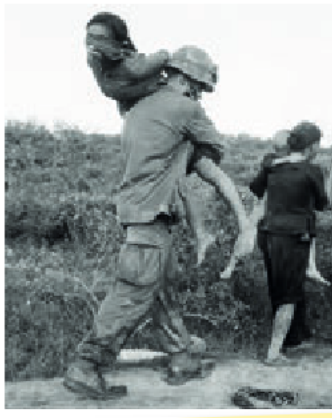
The North Vietnamese demonstrated an extraordinary level of dedication to their cause that extended throughout their entire society. Every citizen, from the oldest adults to the youngest children, was expected to contribute fully to the war effort. This created a unified front that was difficult for American forces to break.
Note
Children received military training from an early age and took on important support roles, including carrying messages between units. The North Vietnamese people genuinely believed that fighting and potentially dying for their country represented a matter of honour and patriotic duty.
Important
Perhaps most significantly, opposing the war effort or questioning the government was not tolerated in North Vietnamese political culture. This meant there was no visible internal opposition to weaken their military campaign, unlike the growing anti-war movement that developed in the United States.
International support from communist allies
North Vietnam received substantial assistance from other communist nations, particularly China and the Soviet Union. This support proved crucial in sustaining their war effort over many years.
Soviet assistance
From 1965 onwards, after US military involvement escalated significantly, the Soviet Union became North Vietnam's primary source of economic aid. This support helped North Vietnam maintain their military operations and support their population during the prolonged conflict.
Chinese contributions
Note
China provided both technical military expertise and financial assistance to North Vietnam from the beginning of the conflict. The support was particularly significant following the 1964 Gulf of Tonkin incident, which marked a major escalation in US involvement in Vietnam.
Between 1965 and 1971, China sent over 320,000 troops to assist North Vietnam and the Vietcong forces operating in South Vietnam. This massive commitment of personnel provided crucial support for North Vietnamese operations.
Overall, these communist allies contributed more than $3 billion in aid to North Vietnam between 1954 and 1967, providing the resources necessary to sustain a long-term military campaign against the much wealthier United States.
Effective guerrilla warfare tactics
The Vietcong, North Vietnam's allies operating in South Vietnam, employed guerrilla tactics that proved extremely difficult for conventional US forces to counter. These fighters were well-adapted to jungle warfare conditions and maintained excellent organisation and equipment for their style of fighting.
The strong ideological commitment of both Vietcong and North Vietnamese troops created a formidable opponent. These fighters possessed clear beliefs about why they were fighting and what they hoped to achieve, giving them motivation that was difficult to break.
Important
In contrast, the Army of the Republic of Vietnam (ARVN), which fought alongside US forces, suffered from poor training and lacked the same level of conviction about their cause. This created a significant disadvantage for the American-backed forces in South Vietnam.
The Ho Chi Minh Trail supply network
One of North Vietnam's greatest strategic advantages was the Ho Chi Minh Trail, a complex supply route that ran through Laos and Cambodia. This network allowed North Vietnamese forces to transport supplies, equipment, and personnel to Vietcong forces operating in South Vietnam.
Note
The trail stretched approximately 1,000 kilometres and included multiple routes and paths through difficult jungle terrain. Some sections consisted of proper roads, while others were makeshift trails that could be quickly abandoned and rebuilt if discovered.
Thousands of Vietnamese workers were dedicated to maintaining this supply network and keeping it operational despite American efforts to disrupt it. US forces used biological weapons to destroy jungle cover and expose the trail, but North Vietnamese forces managed to keep supplies flowing throughout the war.
The trail's location in neutral Laos and Cambodia created additional political complications for American forces, limiting their ability to completely shut down this crucial supply line.
Timeline of key events
- 1954: North Vietnam begins receiving aid from communist allies
- 1964: Gulf of Tonkin incident leads to increased Chinese support
- 1965: Soviet Union becomes primary source of economic aid after US military escalation
- 1965-1971: China sends over 320,000 troops to support North Vietnam
- 1967: Peak period of communist aid to North Vietnam
Summary
Key Points to Remember:
- North Vietnam possessed excellent geographic and cultural knowledge of South Vietnam, giving them significant tactical advantages
- The entire North Vietnamese society was committed to the war effort, with no internal political opposition allowed
- Communist allies provided over $3 billion in aid and 320,000 Chinese troops between 1954-1971
- Vietcong guerrilla tactics were highly effective against conventional US military strategies
- The Ho Chi Minh Trail provided a crucial 1,000km supply network that US forces could not completely shut down