Conflict in Vietnam, 1964-68 (Edexcel GCSE History): Revision Notes
📚Revision Notes
Conflict in Vietnam, 1964-68
Introduction
The conflict in Vietnam between 1964-68 saw dramatically different military approaches from each side. The USA, North Vietnamese forces, and the Vietcong employed contrasting tactics as they fought for control, with each side adapting their strategies based on their strengths and the challenging jungle environment.
Guerrilla tactics of the Vietcong
The Vietcong (VC) revolutionised warfare in Vietnam through their sophisticated guerrilla tactics, which proved highly effective against conventional American military power.
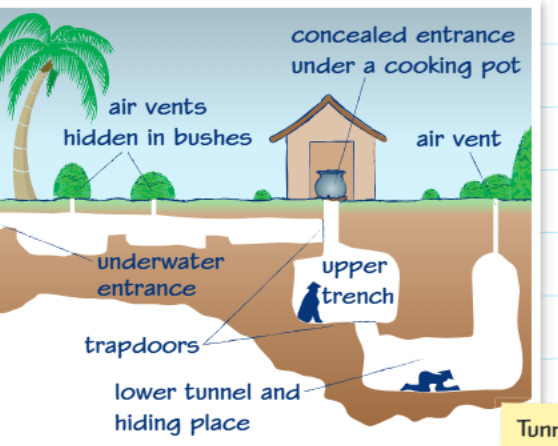
The Vietcong developed an extensive underground tunnel network that served multiple purposes. These tunnels allowed them to organise surprise attacks, store supplies safely, hide securely from bombing campaigns, and treat wounded fighters. The tunnel systems were ingeniously designed with concealed entrances hidden under everyday objects like cooking pots, underwater access points, air vents disguised in bushes, and multiple levels with trapdoors for quick escapes.
Note
The tunnel systems became so sophisticated that some included underground hospitals, weapons factories, and even theatres for entertainment. The Cu Chi tunnels near Saigon extended over 200 kilometres and could house thousands of fighters.
The VC employed several key guerrilla methods that made them particularly difficult for US forces to combat. They conducted carefully planned ambushes against American patrols, set simple but deadly traps throughout the jungle, and deliberately avoided wearing military uniforms so they could blend in with rural peasants. This made it extremely difficult for US soldiers to identify who was an enemy combatant.
Strategically, the Vietcong stayed close to US deployments of soldiers, making it nearly impossible for American forces to bomb them without risking their own troops. They systematically sabotaged roads and bridges to disrupt enemy movement and avoided open battles where American firepower would give them a decisive advantage. Perhaps most importantly, they blended seamlessly with the local population, making identification nearly impossible - a Vietcong fighter could appear to be male, female, young, or old.
Important
The Vietcong's ability to blend with civilians created a major problem for US forces: they could never be certain who was an enemy. This uncertainty led to tragic incidents involving civilians and undermined American efforts to win local support.
Operation Rolling Thunder (1965)
By early 1965, there were still no US ground troops in Vietnam. President Johnson wanted to pressure North Vietnam to negotiate a settlement, so in February 1965, the USA launched a major bombing campaign called Operation Rolling Thunder.
Johnson initially wanted to use the military to bomb extensively, but Rolling Thunder began gradually, targeting areas near South Vietnam first. The campaign focused on the Ho Chi Minh Trail, which was the key supply route being used to transport weapons and supplies from north to south, and North Vietnam's small industrial facilities.
However, Johnson was careful to avoid certain targets that might escalate the conflict beyond Vietnam. He specifically avoided bombing the capital Hanoi and the port city of Haiphong, where the USSR was sending supplies into North Vietnam. He also avoided the border area with China to prevent the war from expanding and drawing China and the USSR into more direct involvement.
Important
Strategic Limitations of Rolling Thunder: Johnson's cautious approach meant that many key military and industrial targets remained untouched. This allowed North Vietnam to maintain critical supply lines and keep their war effort functioning effectively, ultimately limiting the bombing campaign's strategic impact.
US tactic of 'search and destroy'
The Americans developed their own tactical response called 'search and destroy' operations. Small groups of US soldiers would track down Vietcong camps, then call in helicopters to spray the area with chemicals and bomb the location. The goal was to eliminate VC presence in specific areas.
The Vietcong often left traps on the ground designed to kill or injure US soldiers who entered their former territory. When any VC remained in an area, they would use 'hit and run' attacks on US troops rather than engaging in direct battles where American superior firepower would be decisive.
US forces would systematically destroy any VC tunnels, weapons, and supplies they discovered during these operations. However, the strategy had a major flaw - after US troops left an area, the Vietcong typically returned and reestablished their presence. This pattern sent a clear message that US search and destroy methods were ultimately failing to achieve lasting results.
Important
Fatal Flaw in Search and Destroy: The fundamental problem with this strategy was that US forces could not maintain permanent control of cleared areas. Without a long-term occupation plan, the Vietcong simply waited for American troops to leave before returning to their former positions.
The extensive use of chemical sprays and bombing of crops and homes during these operations made the USA increasingly unpopular with local Vietnamese civilians, further complicating the American military effort.
Tet Offensive, 1968
The Tet Offensive represented a major turning point in the Vietnam conflict. Led by North Vietnamese and Vietcong forces in January-February 1968, this coordinated attack targeted over 100 cities and US military bases throughout South Vietnam.
Initially, the North Vietnamese and VC forces achieved significant tactical success by drawing US and ARVN (Army of the Republic of Vietnam) troops away from cities and military bases through attacks on the demilitarised zone. While US forces were distracted, the communists suggested they wanted a negotiated settlement, which led Americans to believe they were winning the conflict.
Example
The Tet Offensive Strategy:
Phase 1: Diversionary attacks on the demilitarised zone drew US and ARVN forces away from major cities and bases.
Phase 2: False peace negotiations made Americans believe victory was near.
Phase 3: On 30 January 1968, coordinated surprise attacks struck over 100 targets simultaneously, including the US embassy in Saigon.
Result: Though militarily defeated, the offensive shocked American public opinion and changed perceptions of the war.
On 30 January, North Vietnamese troops and the Vietcong launched surprise attacks on high-profile locations in Saigon, including the US embassy, airport, and radio station. The boldness and coordination of these attacks shocked American citizens watching events unfold on television.
Although the attack in Saigon was ultimately defeated and US and ARVN forces eventually recaptured the cities and bases that had been targeted, the communist forces suffered very heavy casualties - the VC were almost completely destroyed as an effective fighting force. However, the American public viewed the Tet Offensive as a devastating failure of US strategy and a clear indication that victory was not achievable.
Chemical weapons
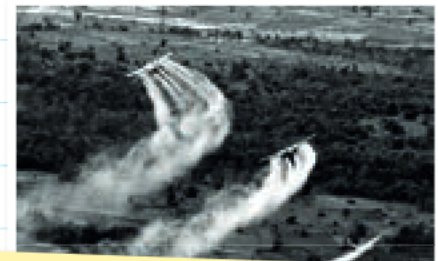
The United States extensively used chemical weapons as part of their military strategy in Vietnam. They sprayed large areas of Vietnamese territory with chemicals such as napalm, designed to destroy jungle vegetation and crops. The intention was to eliminate the natural cover that allowed Vietcong forces to move and hide effectively.
Important
Long-term Consequences of Chemical Warfare: These chemical attacks had devastating consequences beyond their military objectives. The chemicals caused serious birth defects in Vietnamese children and led to widespread starvation as food crops were destroyed. The environmental impact was long-lasting and affected civilian populations for generations after the conflict ended.
Timeline of major events
- February 1965: Operation Rolling Thunder bombing campaign begins
- 1965-1968: Search and destroy operations intensify
- 30 January 1968: Tet Offensive launches with coordinated attacks across South Vietnam
- February 1968: Tet Offensive concludes with heavy casualties on both sides
Summary
Key Points to Remember:
-
Guerrilla vs conventional warfare: The Vietcong's guerrilla tactics, including extensive tunnel systems and blending with civilians, proved highly effective against conventional US military power.
-
Operation Rolling Thunder's limitations: Despite massive bombing efforts from 1965, the US avoided key targets like Hanoi to prevent escalating the conflict with China and the USSR.
-
Search and destroy failures: US tactics achieved temporary success but the Vietcong consistently returned after American forces left areas, showing the strategy's fundamental weakness.
-
Tet Offensive's impact: Though militarily defeated, the 1968 Tet Offensive was a psychological victory for North Vietnam as it convinced many Americans the war was unwinnable.
-
Chemical warfare consequences: US use of napalm and other chemicals had devastating long-term effects on Vietnamese civilians and the environment, damaging America's reputation internationally.