Escalation of the confl ict under Johnson (Edexcel GCSE History): Revision Notes
📚Revision Notes
Escalation of the conflict under Johnson
Johnson becomes president, 1963
When Lyndon B. Johnson assumed the presidency in 1963, he inherited a complex and deteriorating situation in Vietnam. The conflict would dramatically escalate during his time in office from 1963 to 1969, largely triggered by events in 1964 that gave Johnson greater authority to expand American military involvement.
Johnson's aims and the challenges he faced
President Johnson had clear objectives for Vietnam, but these goals conflicted sharply with the realities on the ground. His strategic aims created significant problems that would plague his entire presidency.
Note
Johnson's Three Primary Objectives in Vietnam:
Johnson's strategic goals were ambitious but ultimately proved incompatible with the situation he faced:
- Containment of Communism: Prevent the spread of communist influence in Southeast Asia following previous administrations' policies
- Democratic Stability: Create a stable, democratic government in South Vietnam with genuine popular support
- Limited Conflict: Ensure the conflict remained contained and did not escalate into nuclear warfare
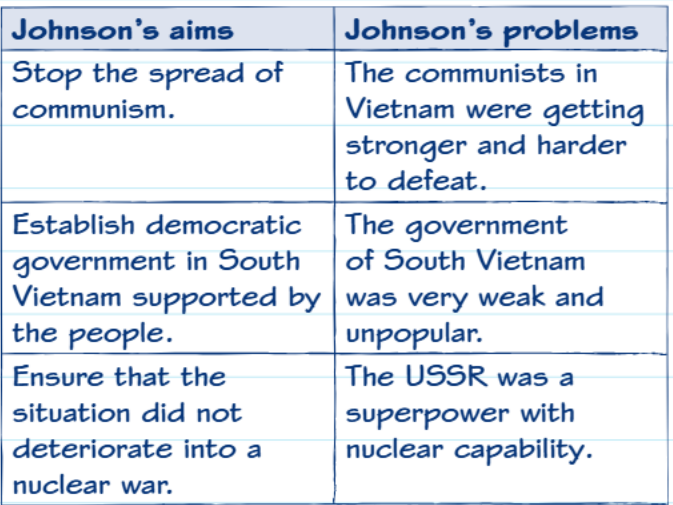
Johnson's primary goal was to prevent the spread of communist influence in Southeast Asia, following the containment policy of previous administrations. However, the Vietnamese communist forces were actually becoming more powerful and organised, making this objective increasingly difficult to achieve.
The president also sought to create a stable, democratic government in South Vietnam that would have genuine popular support. Unfortunately, the existing South Vietnamese government was widely seen as corrupt, ineffective, and lacking legitimacy among its own people.
Important
The Nuclear Dilemma
Johnson's third major concern was ensuring the conflict remained limited and did not escalate into nuclear warfare. This created additional pressure because the Soviet Union possessed nuclear weapons and was supporting North Vietnam, meaning any miscalculation could have catastrophic consequences.
The Gulf of Tonkin incident, 1964
The Gulf of Tonkin incident in August 1964 became the crucial turning point that allowed Johnson to dramatically expand American involvement in Vietnam. This event involved reported attacks on US naval vessels and had far-reaching consequences.
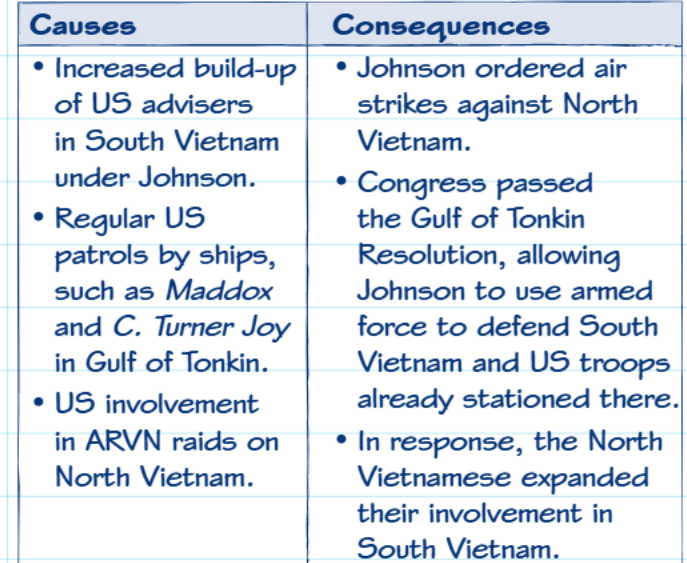
Two American naval ships, the USS Maddox and USS C. Turner Joy, were conducting regular patrols in the Gulf of Tonkin when they reported being attacked by North Vietnamese torpedo boats. The incident occurred against a backdrop of increased American military advisory presence in South Vietnam and US support for South Vietnamese army (ARVN) raids against North Vietnam.
Important
Johnson's Swift Response and Congressional Authorization
Johnson's response was swift and decisive. He ordered immediate air strikes against North Vietnamese targets in retaliation. More significantly, Congress passed the Gulf of Tonkin Resolution, which gave the president broad powers to use military force in Vietnam without formally declaring war.
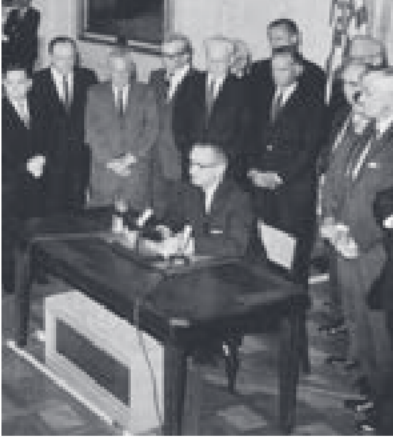
This resolution effectively removed Congressional oversight from future military decisions in Vietnam. As the image shows, this was a formal, significant moment in American political history. While it stopped short of being an official declaration of war, the resolution had the same practical effect by authorising the president to escalate military action as he saw fit.
Increasing threat of the Vietcong
During Johnson's presidency, the communist forces in South Vietnam, known as the Vietcong, became increasingly organised and effective. Their growing strength posed a serious challenge to American and South Vietnamese forces.
The Vietcong developed into a more structured and disciplined fighting force, with their numbers steadily increasing throughout the mid-1960s. What made them particularly dangerous was their ability to gain popular support among ordinary Vietnamese civilians, who often viewed American forces as foreign occupiers rather than liberators.
Many South Vietnamese citizens became frustrated with their own government's policies, particularly programmes like the Strategic Hamlet Programme, which forced rural populations into fortified villages. This resentment made it easier for the Vietcong to recruit supporters and gather intelligence.
Note
Sources of Vietcong Strength
The communist forces received crucial support from North Vietnam, which provided them with weapons, supplies, and training. Much of this assistance came through the Soviet Union and China, giving the Vietcong access to modern military equipment that made them more effective against conventional forces.
Rural areas became particularly supportive of the Vietcong cause. The increased civilian backing meant that communist forces could operate more effectively, as local populations provided shelter, information, and recruitment opportunities.
The Ho Chi Minh Trail
One of the most significant factors in the escalation of the Vietnam conflict was the development and expansion of the Ho Chi Minh Trail. This supply network became crucial to North Vietnamese strategy and extremely difficult for American forces to stop.
The trail was actually a complex network of paths and smaller routes that connected North and South Vietnam, running through neighbouring Laos and Cambodia. This route allowed North Vietnamese forces to send troops, weapons, and supplies to support the Vietcong in South Vietnam.
Note
Evolution of the Trail System
Initially, the journey along the trail took approximately one month from start to finish. However, as the conflict intensified, the North Vietnamese invested heavily in improving and expanding these supply routes.
By 1974, significant portions of the trail had been improved with proper paving and marking. The North Vietnamese also constructed underground hospitals, fuel storage facilities, and weapons depots along the route. These improvements made the supply network more efficient and harder for American forces to disrupt through bombing campaigns.
Important
Political Complications
The trail's location in neutral Laos and Cambodia created additional political complications for American military planners, as attacking supply routes in these countries risked expanding the conflict beyond Vietnam's borders.
Timeline of key events
- 1963: Johnson becomes president, inherits deteriorating Vietnam situation
- August 1964: Gulf of Tonkin incident occurs
- August 10, 1964: Congress passes Gulf of Tonkin Resolution
- 1964 onwards: Systematic expansion of Ho Chi Minh Trail begins
- 1964-1969: Steady escalation of American military involvement
Summary
Key Points to Remember:
- Johnson inherited the Vietnam conflict but dramatically escalated American involvement during his presidency from 1963-1969
- The Gulf of Tonkin incident in August 1964 was the key trigger that gave Johnson Congressional authority to expand the war without formal declaration
- Johnson faced an impossible situation: his aims of stopping communism and creating democracy conflicted with the reality of strengthening Vietcong forces and weak South Vietnamese government
- The Ho Chi Minh Trail became a crucial supply network that allowed North Vietnam to support communist forces in the South, despite American bombing efforts
- The Vietcong gained strength not just militarily but also through popular support, especially in rural areas where people were frustrated with government policies