Kennedy and Vietnam, 1961-63 (Edexcel GCSE History): Revision Notes
📚Revision Notes
Kennedy and Vietnam, 1961-63
Kennedy's escalation of US involvement
When John F. Kennedy became President in 1961, he significantly increased American involvement in the Vietnam conflict. Kennedy was a firm believer in the domino theory - the idea that if one country fell to communism, neighbouring countries would follow like falling dominoes.
Note
The domino theory became a central justification for US involvement in Vietnam throughout the 1960s. This Cold War strategy assumed that communist victories in one region would inevitably lead to the spread of communism across neighbouring territories.
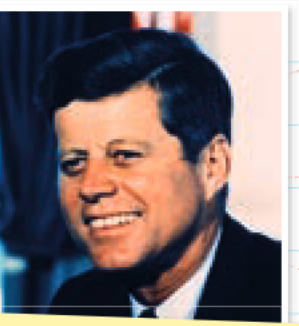
Kennedy's approach to Vietnam involved several key strategies, though he wanted to avoid sending large numbers of US combat troops directly into battle. Instead, he focused on providing support and advisors to help South Vietnam fight the Vietcong (VC) - the communist guerrilla forces operating in the south.
By late 1962, Kennedy had sent approximately 16,000 additional military advisors to South Vietnam, dramatically increasing the US presence there. He also authorised the use of chemical weapons, including Agent Orange, to destroy crops and jungle areas where the Vietcong were hiding.
Important
Kennedy's authorisation of chemical warfare marked a significant escalation in US involvement. Operation Ranch Hand, which began in 1961, would have lasting environmental and health consequences for Vietnam and exposed American forces.
Kennedy also changed military tactics from simply trying to drive Vietcong fighters into open battle to actively searching for and engaging them using new methods. In 1961, he requested detailed reports on the possibility of sending American soldiers for active combat service in Vietnam.
Growing concerns about Diem's government
Despite increased US support, President Kennedy became increasingly worried about the effectiveness of South Vietnamese leader Ngo Dinh Diem. Several major problems emerged that undermined American confidence in Diem's leadership.
The Army of the Republic of Vietnam (ARVN) suffered a significant defeat at the Battle of Ap Bac in January 1963. Even though the ARVN had US air support and outnumbered the Vietcong by five to one, they still lost the battle. The US media reported this as a major defeat, despite government attempts to present it more positively. This battle made Kennedy seriously question Diem's military capabilities.
Important
The Battle of Ap Bac was particularly damaging because it demonstrated that superior numbers and equipment did not guarantee victory against determined guerrilla forces. This defeat highlighted fundamental weaknesses in South Vietnamese military strategy and leadership.
Diem's treatment of Buddhist communities created additional problems. On May 6, 1963, government troops opened fire on a Buddhist religious procession, killing nine people. This incident sparked widespread anger among the Vietnamese population. The situation escalated further on June 11, when a Buddhist monk burned himself to death in protest against Diem's religious persecution policies. This act of self-immolation generated negative publicity worldwide and damaged Diem's reputation.
Kennedy tried to pressure Diem's government to make peace with the Buddhist community, but Diem continued his harsh treatment of religious minorities. By this point, Kennedy realised that Diem's government would never become truly democratic and that his leadership lacked popular support among the South Vietnamese people.
The Strategic Hamlet Programme, 1962
One of the most significant initiatives during Kennedy's presidency was the Strategic Hamlet Programme, launched in 1962. This programme was designed to separate rural Vietnamese villagers from Vietcong influence by relocating them to new, fortified communities.
The programme involved building new villages where local people would be moved away from areas where the Vietcong operated. The goal was to provide security for villagers while creating support for the South Vietnamese government. These hamlets were supposed to include schools and medical centres to improve villagers' lives.
Example
How the Strategic Hamlet Programme Was Supposed to Work:
Step 1: Identify villages in Vietcong-controlled areas Step 2: Build new fortified hamlets with defences and facilities Step 3: Relocate villagers to secure, government-controlled areas Step 4: Provide services (schools, medical care) to win hearts and minds Step 5: Cut off Vietcong from rural support base
However, the Strategic Hamlet Programme faced serious implementation problems. The ARVN forces often removed villagers forcibly from their ancestral homes and relocated them to areas that lacked adequate resources. Many of the new villages didn't have enough food or basic supplies, and some villagers actually starved to death in these new locations.
Important
The programme backfired significantly because villagers resented being forced to leave their traditional homes and communities. Rather than creating support for Diem and the USA, the Strategic Hamlet Programme made them more unpopular throughout South Vietnam.
Diem's overthrow and assassination
Kennedy's frustrations with Diem's leadership eventually led him to withdraw support entirely. He made it clear that he no longer backed Diem's government, signalling to South Vietnamese military leaders that the US would not intervene to protect the unpopular leader.
In November 1963, ARVN generals organised a military coup and assassinated Diem. The United States did not intervene to prevent this overthrow, effectively allowing Diem's removal from power.
Note
Kennedy believed the US government had a responsibility to help protect the new South Vietnamese government from communist expansion. He wanted to increase military involvement in Vietnam but preferred to help build a new democracy through persuasion and support rather than using direct military force and repression.
Timeline of key events
- 1961: Kennedy becomes President and agrees with domino theory; Operation Ranch Hand (chemical warfare) begins; sends more military advisors
- 1962: Strategic Hamlet Programme launched; approximately 16,000 US advisors in Vietnam by end of year
- January 1963: ARVN defeated at Battle of Ap Bac despite superior numbers and US air support
- May 6, 1963: South Vietnamese troops fire on Buddhist procession, killing nine people
- June 11, 1963: Buddhist monk burns himself to death in protest against religious persecution
- November 1963: ARVN generals overthrow and assassinate Diem with US knowledge
Summary
Key Points to Remember:
- Kennedy significantly escalated US involvement in Vietnam through military advisors, chemical warfare, and the Strategic Hamlet Programme, while trying to avoid sending large numbers of combat troops
- The domino theory drove Kennedy's policy - he believed preventing communist victory in Vietnam was essential to stopping the spread of communism throughout Southeast Asia
- Diem's unpopular leadership, military defeats like Ap Bac, and persecution of Buddhists convinced Kennedy to withdraw support from the South Vietnamese leader
- The Strategic Hamlet Programme backfired by forcibly relocating villagers from their ancestral homes, creating resentment rather than support for the government
- Kennedy's presidency ended with Diem's assassination in November 1963, leaving South Vietnam's political future uncertain and setting the stage for greater US military involvement