Policies towards the churches (Edexcel GCSE History): Revision Notes
📚Revision Notes
Nazi policies towards the churches
Introduction
The Nazi regime's approach to controlling churches was part of their broader strategy to dominate every aspect of German life. Rather than directly banning religion, Hitler and his propaganda minister used sophisticated methods of control, manipulation, and pressure to bring religious institutions under Nazi influence.
Note
This indirect approach was deliberately chosen because direct attacks on popular religious beliefs might have created widespread resistance. The Nazis preferred gradual manipulation over confrontational tactics.
The propaganda machine and religious control
Joseph Goebbels became the Reich Minister of Enlightenment and Propaganda in 1933, giving him enormous power over how Germans thought about religion and spirituality. His role was crucial in shaping the Nazi approach to churches - he didn't just control political messages, but also worked to gradually replace Christian values with Nazi ideology.
Goebbels understood that direct attacks on popular religious beliefs might backfire. Instead, he used subtle manipulation and gradual pressure to weaken church influence while promoting Nazi ideals as a replacement for traditional faith.
Important
Goebbels' strategy was particularly dangerous because it avoided direct confrontation with religious beliefs while systematically undermining their influence in German society.
Methods of censorship affecting churches
The Nazi censorship system had a significant impact on religious life in Germany. Several key methods were used to restrict church activities and religious expression:
Book burning and religious literature
Religious books that contradicted Nazi ideology were publicly burned, including works by Jewish authors and Christian writers who opposed Nazi ideas. This sent a clear message about what religious thinking was acceptable.
Control of religious media
Church newspapers and religious publications faced strict censorship. Religious leaders had to be extremely careful about what they said in print, knowing that any criticism of the regime could result in their publications being shut down.
Restrictions on religious broadcasting
Churches found it increasingly difficult to access radio broadcasting, while Nazi propaganda filled the airwaves. This was particularly significant because radio was becoming the main way people received information.

Monitoring of religious gatherings
The regime made it clear that only approved religious messages could be shared publicly. Churches that tried to maintain independence from Nazi ideology faced increasing pressure and surveillance.
Propaganda techniques used against churches
The Nazis employed various propaganda methods to undermine traditional religious authority and replace it with loyalty to the state:
Visual propaganda in religious spaces
Nazi symbols and imagery gradually appeared in public spaces where religious communities gathered. The regime encouraged the display of Nazi flags and portraits even in religious contexts.
Cultural manipulation
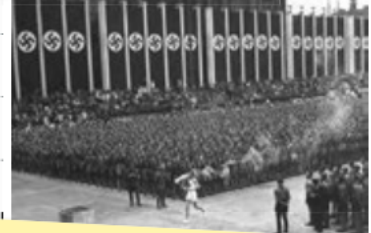
Through events like rallies and parades, the Nazis created alternative "religious" experiences that promoted racial ideology and worship of the state rather than traditional Christian values.
Cinema and entertainment
Films were produced that subtly promoted Nazi racial theories while undermining traditional Christian teachings about human equality and compassion. Religious communities found their moral authority challenged by state-sponsored entertainment.
The Reich Chamber of Culture and religious control
Important
The Reich Chamber of Culture: A Key Control Mechanism
Established in 1933 under Goebbels' supervision, the Reich Chamber of Culture monitored all cultural activities, including religious art, music, and architecture. This institution was crucial to Nazi control over religious expression.
This had profound effects on church life: Religious artists, musicians, and architects had to become members of Nazi-approved cultural organisations. This meant that church music, religious art, and even church architecture gradually came under Nazi influence. Traditional religious culture was slowly replaced with art and music that promoted Nazi ideology.
Churches found it increasingly difficult to maintain their traditional cultural practices without some accommodation to Nazi requirements.
Timeline of key developments
- 1933: Goebbels appointed as Propaganda Minister; Reich Chamber of Culture established
- 1933-1934: Initial pressure on churches through censorship and cultural control
- 1935-1936: Increased use of major events like the Berlin Olympics to promote Nazi ideology as alternative to religious values
- 1937-1939: Intensification of pressure on churches through propaganda and legal restrictions
The impact on religious life
These propaganda and censorship policies had a gradual but profound impact on German religious communities. Many churches found themselves caught between maintaining their religious principles and avoiding persecution. Some religious leaders accommodated Nazi demands, while others resisted and faced severe consequences.
The Nazi strategy was particularly effective because it didn't rely on direct confrontation with popular religious beliefs. Instead, it gradually eroded the influence of churches while offering Nazi ideology as a replacement for traditional faith.
Note
This approach created a particularly difficult situation for religious leaders, who had to navigate between their faith convictions and the practical need to protect their congregations from persecution.
Remember!
Summary
Key Points to Remember:
- Joseph Goebbels controlled all propaganda from 1933, using sophisticated methods to gradually undermine church authority rather than direct attacks
- Censorship affected religious publications, broadcasts, and gatherings, making it dangerous for churches to oppose Nazi ideology publicly
- The Reich Chamber of Culture (1933) brought religious art and music under Nazi control, slowly changing the cultural expression of faith
- Propaganda techniques like rallies and cinema offered alternative "spiritual" experiences that promoted racial ideology instead of Christian values
- The strategy was gradual but effective, weakening traditional religious influence while avoiding direct confrontation with popular beliefs