Volume and Pressure in Gases (Edexcel GCSE Physics): Revision Notes
📚Revision Notes
Volume and Pressure in Gases
Note
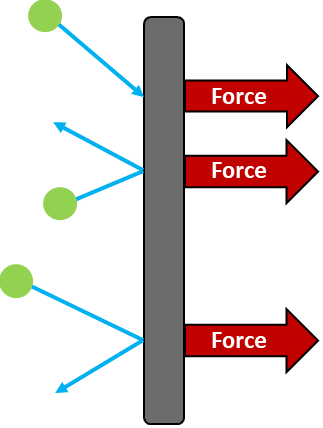
The pressure of a gas is caused by the collisions of gas particles with the walls of the container. These collisions produce a force that acts at right angles to the container walls. The pressure is the result of this force being spread over the area of the container.
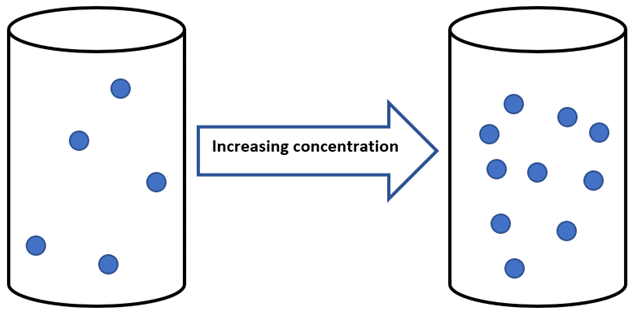
How Concentration Affects Pressure
- If you increase the number of gas particles while keeping the container's volume the same, the concentration of particles increases.
- With more particles and less space between them, the particles collide with the container walls more often.
- More collisions mean higher pressure, as each collision applies force to the walls.
Volume and Pressure
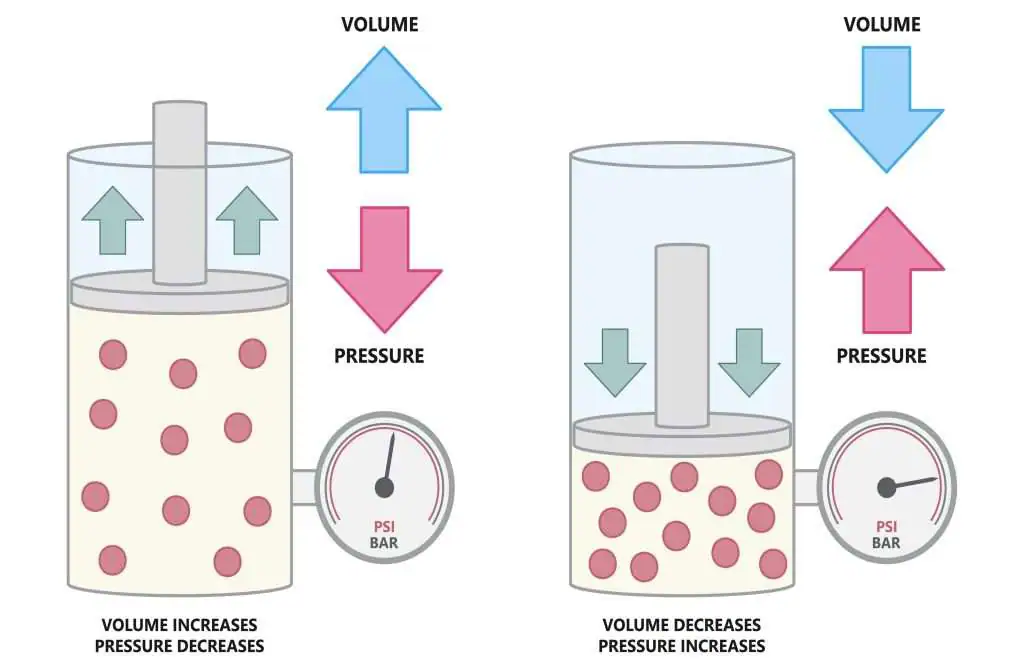
If you decrease the volume of the container but keep the same number of gas particles, the particles have less space to move around.
- This results in more frequent collisions, which increases the pressure.
Note
There is an inverse relationship between volume and pressure:
- As volume increases, pressure decreases.
- As volume decreases, pressure increases.
Calculating Pressure and Volume
For a fixed mass of gas at a constant temperature, the relationship between pressure and volume is given by Boyle's Law:
Note
Or
Where:
- P1 and V1 represent the initial pressure and volume,
- P2 and V2 represent the final pressure and volume after a change. This shows that if the volume of a gas changes, its pressure will adjust accordingly, as long as the temperature remains constant.
Flexible Containers
If the container is flexible (such as a balloon), then changes in temperature or concentration can change the volume of the container instead of the pressure.
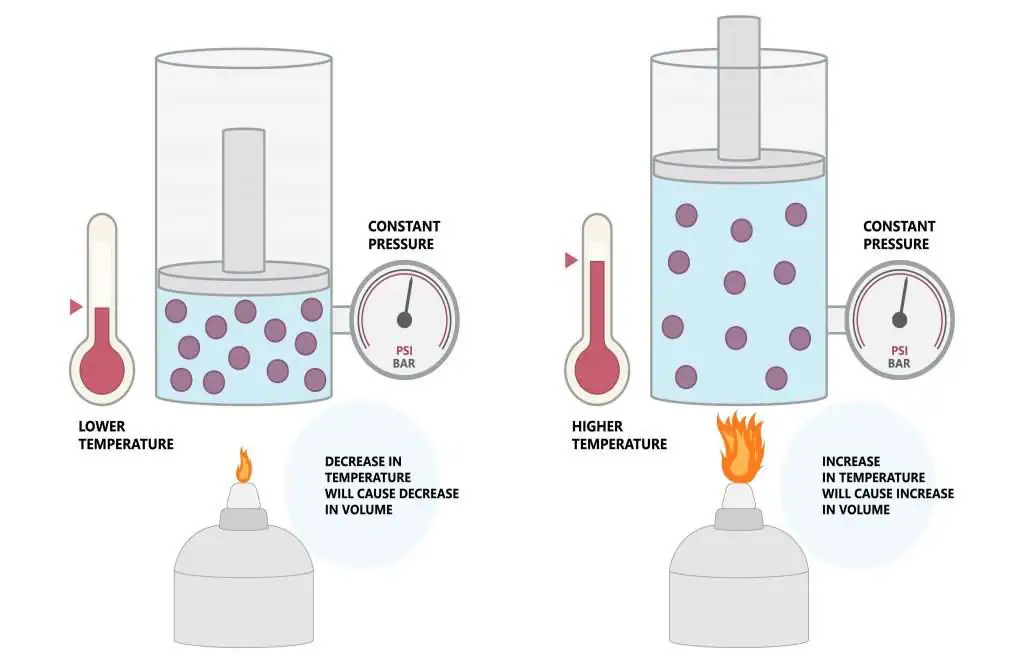
- When there are more collisions or stronger collisions between gas particles, the flexible container can expand, increasing its volume.
- In some cases, both the volume and pressure might increase, but there is a limit to how much a flexible container can expand before the pressure increases significantly.