Mitosis & the Cell Cycle (OCR GCSE Biology A, Combined (Gateway Science Suite)): Revision Notes
📚Revision Notes
1.2.2 Mitosis & the Cell Cycle
Note
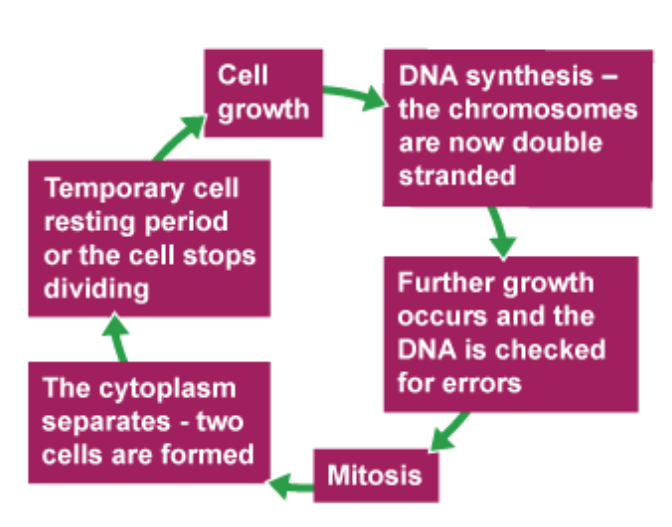
The cell cycle is a series of steps that a cell goes through in order to grow, replicate its DNA, and ultimately divide into two identical cells. Mitosis is a crucial part of this cycle—specifically the stage where the cell's nucleus divides.
Stages of the Cell Cycle:
- Stage 1: Interphase
- During interphase, the cell prepares for division.
- Growth: The cell grows in size, and organelles like ribosomes and mitochondria increase in number.
- Protein Synthesis: The cell synthesises the proteins needed for cell functions and division.
- DNA Replication: The cell's DNA is copied, forming two identical sets of chromosomes, each with the characteristic 'X' shape.
- Energy Storage: The cell increases its energy stores to fuel the upcoming division.
- Stage 2: Mitosis
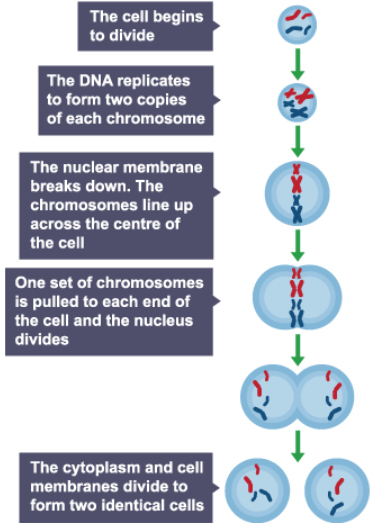
- Chromosome Alignment: The chromosomes line up in the centre of the cell (the equator).
- Separation: Cell fibres attach to each chromosome and pull the two identical halves (chromatids) apart, moving them to opposite sides of the cell.
- Mitosis ensures that each new cell will receive an identical set of chromosomes.
- Stage 3: Cytokinesis
- Division of the Cytoplasm: The cell's cytoplasm divides, and the cell membrane pinches inwards, creating two separate cells.
- Formation of Daughter Cells: Two genetically identical daughter cells are formed, each with the same number of chromosomes as the original cell.
Importance of Mitosis:
- Growth and Development: Mitosis is essential for the growth and development of multicellular organisms, allowing them to increase in size and complexity.
- Repair and Replacement: Mitosis replaces damaged or dead cells, maintaining the health and function of tissues and organs.
- Asexual Reproduction: In organisms that reproduce asexually, mitosis allows for the production of offspring that are genetically identical to the parent. Since only one parent is involved, the process relies entirely on mitosis to replicate cells. Mitosis is a vital process that ensures the continuity of life, enabling organisms to grow, repair, and reproduce.