Selective Breeding (OCR GCSE Biology A, Combined (Gateway Science Suite)): Revision Notes
📚Revision Notes
6.2.3 Selective Breeding
Note
Selective breeding is when humans choose which organisms to breed in order to produce offspring with a certain desirable characteristic (e.g animals with more meat, plants with disease resistance or big flowers).
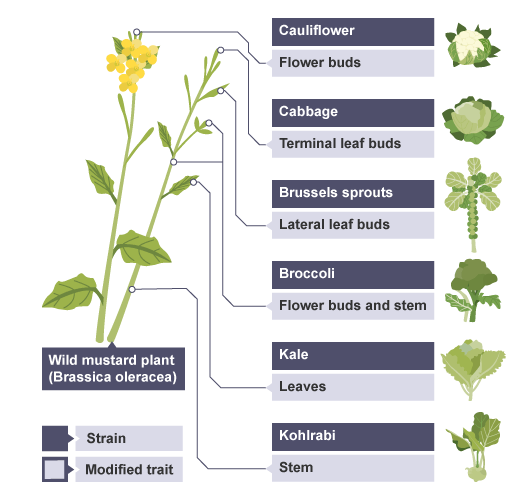
This has been happening for many years since animals were domesticated and plants were grown for food.
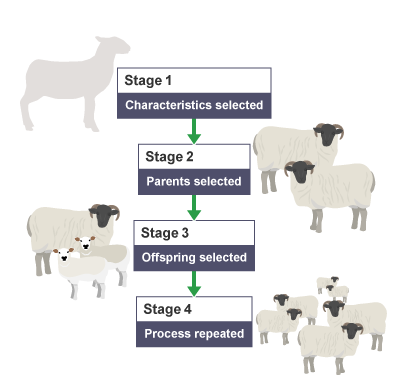
- Parents with desired characteristics are chosen.
- They are bred together.
- From the offspring those with desired characteristics are bred together.
- The process is repeated many times until all the offspring have the desired characteristic.
The problem is that it can lead to inbreeding.
- Breeding those with similar desirable characteristics means it is likely you are breeding closely related individuals.
- This results in the reduction of the gene pool, as the number of different alleles reduce (as they mostly have the same alleles).
- This means if the environment changes or there is a new disease, the species could become extinct as they all have the same genetic make-up (so the chance of a few organisms having a survival advantage and not dying is reduced).
Another problem is that the small gene pool leads to a greater chance of genetic defects being present in offspring, as recessive characteristics are more likely to present.