Required Practical: Ecosystems (OCR GCSE Biology A (Gateway Science Suite)): Revision Notes
📚Revision Notes
7.2.2 Required Practical: Ecosystems
This practical focuses on investigating the distribution and abundance of organisms in a habitat. You'll learn how to collect, analyse, and interpret ecological data using two key methods: transects and quadrats.
Note
Aims:
- To understand how to measure the distribution and abundance of species in an ecosystem.
- To practice using transects and quadrats for sampling.
- To learn how to analyse ecological data using statistical methods.
Note
Definitions:
- Transect: A straight line along which ecological measurements are taken at regular intervals to study changes in a habitat.
- Quadrat: A square frame, usually 1m x 1m, used to isolate a sample area for study.
- Distribution: The way organisms are spread across an area.
- Abundance: The number of individuals of a species in a given area.
Note
Method 1: Using Transects Purpose: To study how the distribution of organisms changes across a habitat.
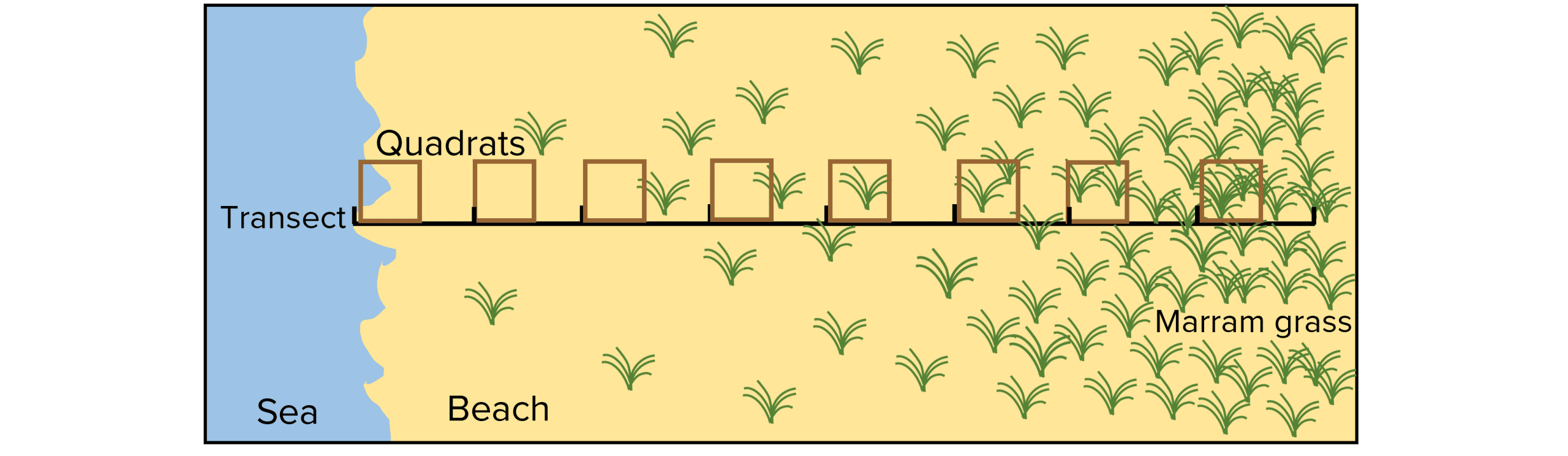
- Lay out a transect line: Stretch a tape measure or rope across the study area.
- Place quadrats at regular intervals along the transect (e.g., every 2 metres).
- Record the species present in each quadrat and count their abundance.
- Analyze the data to observe patterns of distribution. For example, you may notice changes in plant species from a shaded area to an open area.
Note
Method 2: Using Quadrats Purpose: To estimate the population size or abundance of organisms in a specific area.
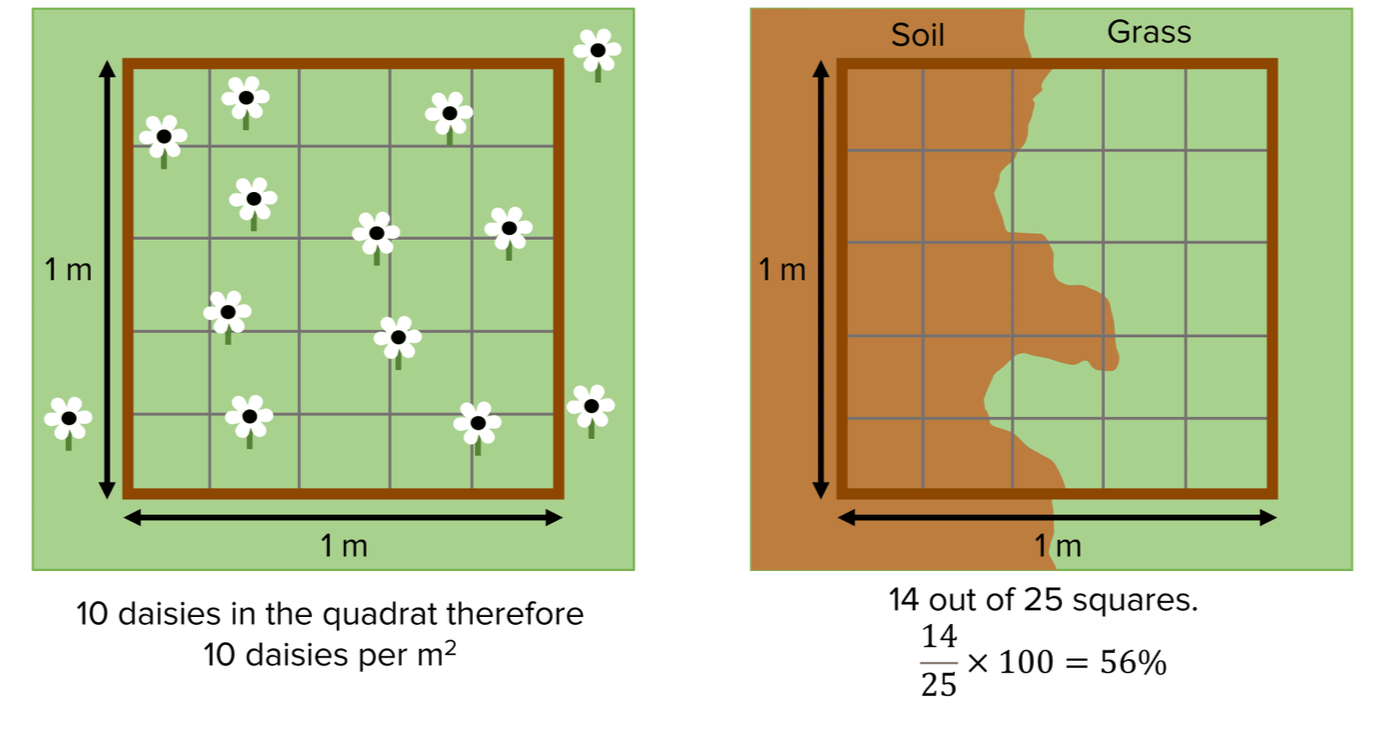
- Place the quadrat randomly within the study area to avoid bias.
- Count the number of individual organisms of each species within the quadrat.
- Repeat this process multiple times in different parts of the habitat to get a reliable average.
- Calculate the mean number of organisms per quadrat. You can then scale this up to estimate the population in the entire area.
Note
Data Analysis
- Mean: Average number of organisms per quadrat.
- Mode: The most common number of organisms found in the quadrats.
- Median: The middle value when the numbers of organisms are arranged in order. You can also represent your data using graphs or charts to identify trends in the ecosystem.
Important
Important Considerations
- Ensure random sampling to avoid bias.
- Take a sufficient number of samples to make your data reliable.
- Consider environmental factors such as light, temperature, and moisture, which may affect the distribution of organisms.
Applications of the Practical
- Understanding how organisms are distributed across different environments.
- Studying the effects of environmental changes, such as pollution or habitat destruction, on ecosystems.
- Helping in conservation efforts by providing data on species distribution and abundance.
Example Exam Questions
- Describe how you would use a transect to investigate the distribution of a plant species across a habitat.
- Explain why it is important to take multiple samples when using quadrats.
- Discuss how the results of this practical could be used to inform conservation strategies.