Food Production (OCR GCSE Biology A (Gateway Science Suite)): Revision Notes
📚Revision Notes
7.5.4 Role of Biotechnology
Note
Biotechnology plays a crucial role in addressing global challenges, such as feeding the growing population and providing treatments for various diseases.
Applications of Biotechnology:
Mycoprotein Production:
- The fungus Fusarium is used to produce mycoprotein, a protein-rich food source.
- Key Benefits:
- Vegetarian-friendly: Mycoprotein is an excellent protein source for vegetarians.
- Efficient Production: It is grown on glucose syrup in aerobic conditions, making the process efficient.
- Environmental Impact: Producing mycoprotein requires less land compared to raising livestock, and it reduces methane emissions, as it eliminates the need for cattle.
- Process:
- The fungus is harvested and purified to make it safe for consumption, providing a sustainable protein source without the use of animals.
Genetically Modified Bacteria for Insulin Production:
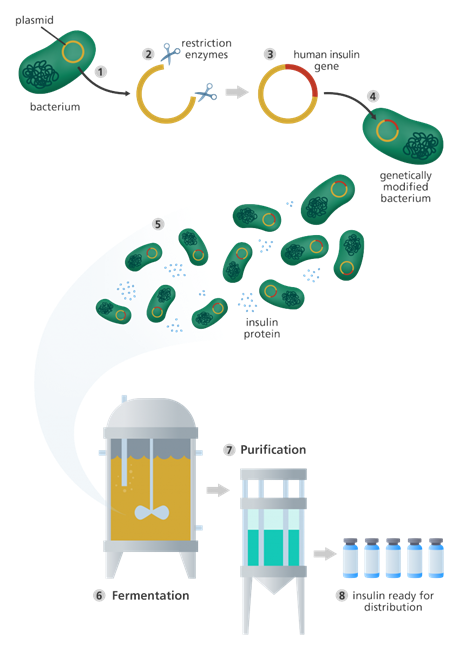
- Bacteria can be genetically modified to produce insulin, a hormone crucial for managing diabetes.
- Process:
- The insulin produced by these bacteria is extracted and purified.
- It is then used to treat individuals with diabetes, providing a reliable and scalable source of this essential medication.
Genetically Modified Crops:
Note
Crops can be genetically modified to possess specific traits that enhance their usefulness and resilience.
- Advantages:
- Pest and Weather Resistance: Modifications can make crops resistant to pests and extreme weather conditions, leading to higher yields and more reliable food production.
- Nutritional Enhancement: Crops can be engineered to have increased nutritional value, which is particularly beneficial in regions where diets lack essential nutrients. For example, Golden Rice is modified to contain more vitamin A, addressing deficiencies in certain populations.