Contraception (OCR GCSE Biology A (Gateway Science Suite)): Revision Notes
📚Revision Notes
5.3.2 Contraception
Hormonal methods of contraception
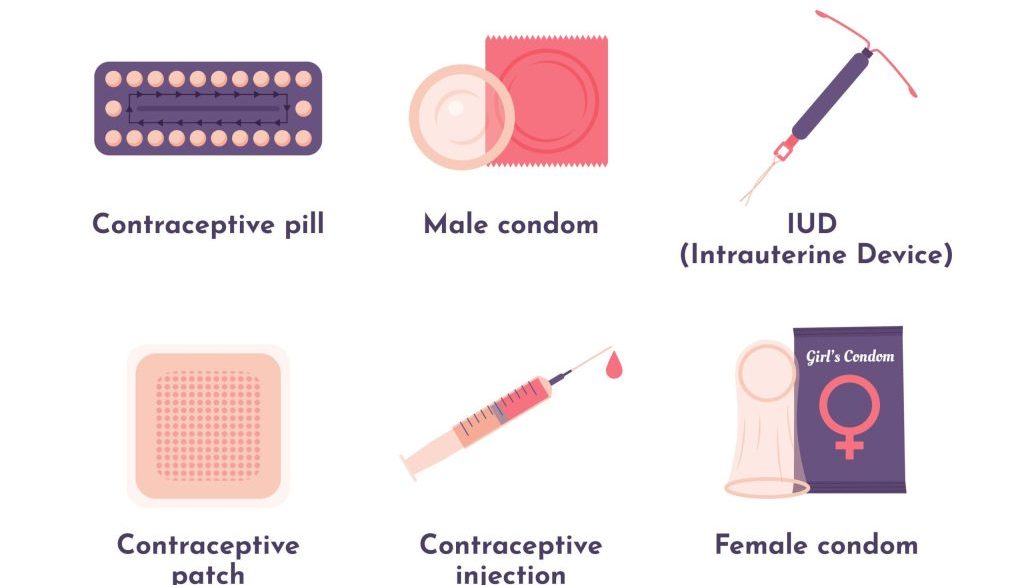
The contraceptive pill must be taken regularly or the bodies own hormones will be released, leading to an egg maturing.
-
The mixed pill contains oestrogen and progesterone
- This means the oestrogen levels are constantly high, inhibiting FSH so no eggs mature.
- The lining also stops developing and the mucus in the cervix becomes thick so sperm cannot move through
- Some possible side effects include changes in mood, mood swings, depression, breast pain or tenderness, breast enlargement, increased blood pressure.
-
The progesterone only pill
- This has less side effects in comparison to the mixed pill. The contraceptive patch contains oestrogen and progesterone.
-
It is small and is stuck on the skin
-
Lasts for one week The contraceptive implant releases a continuous amount of progesterone.
-
This prevents the ovaries from releasing the egg, thickens the mucus in cervix so sperm cannot swim and stops fertilised eggs from embedding in the uterus
-
Lasts for three years The contraceptive injection is made up of progesterone.
-
Same effect as the implant
-
Lasts for 2 to 3 months The plastic intrauterine device (IUD) releases progesterone.
-
Same effect as the implant
-
T shaped, inserted into the uterus
Non-hormonal methods of contraception
These stop sperm fertilising the egg.
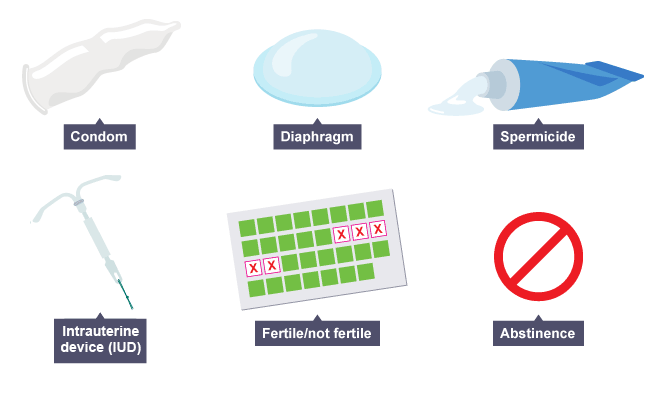
- Chemical methods involve spermicides. These kill or disable sperm, but are only 70% to 80% effective.
- Barrier methods include condoms and diaphragms :
- Condoms are either worn over the penis or are inside the vagina. They also prevent the individual from contracting sexually transmitted diseases. A problem is that it can tear and therefore let sperm through.
- A diaphragm is a plastic cup which is positioned over the cervix. It is used with spermicide. The copper intrauterine device works by killing sperm in the uterus and stopping any fertilised embryos from implanting in the uterus lining.
Surgical methods of male and female sterilisation involve cutting and tying the fallopian tubes or sperm duct. This lasts forever.
Abstaining from intercourse ensures that an egg is not fertilised. Others may only abstain during ovulation.