Cash and cash flow (OCR GCSE Business): Revision Notes
📚Revision Notes
5.5 Cash and cash flow
Importance of Cash to a Business
Cash is crucial for a business as it provides liquidity, enabling the business to meet its short-term debts and expenses. It ensures that the business can pay its bills, wages, and suppliers, and continue its operations smoothly.

Difference Between Cash and Profit
• Cash: The actual money a business has on its premises or in its bank accounts. It is used to pay immediate expenses and debts.
• Profit: The difference between sales revenue and production costs. A business can be profitable but still face cash shortages if its cash flow is not managed well.
Usefulness of Cash Flow Forecasting to a Business
Cash flow forecasting is a vital tool for businesses, helping them plan and manage their finances effectively. It involves predicting the flow of money into and out of the business over a certain period.
Key Benefits of Cash Flow Forecasting:
-
Planning Tool: Helps a business know if it will have enough liquidity to pay its bills.
-
Anticipating Cash Shortages: Identifies periods when the business might face cash shortages and allows for early planning to address these issues.
-
Dealing with Negative Cash Flow: Suggests ways to manage cash shortages, such as arranging for finance or reducing spending.
-
Providing Targets: Helps set cash flow targets to ensure the business can meet its financial obligations.
| Use | Explanation |
|---|---|
| Planning tool | A cash flow forecast is a plan which helps a business know if it will have enough liquidity to pay bills. |
| Anticipating shortages | Shows when the business might have a cash shortage, enabling it to plan how to address this. |
| Dealing with shortages | Suggests methods to handle cash shortages, like arranging finance or cutting costs. |
| Providing targets | Helps set financial targets, ensuring the business can meet its obligations during cash flow issues. |
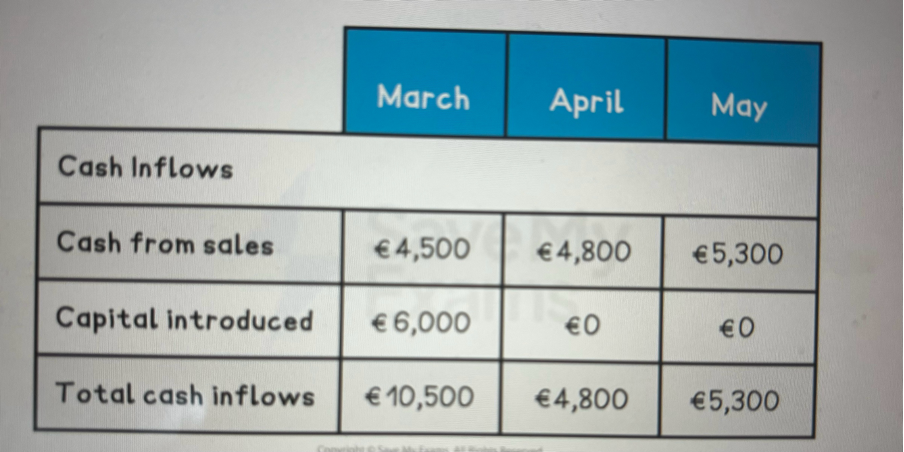
Steps to Complete a Cash Flow Forecast:
-
Total Inflow: Add all cash inflows for the month.
-
Total Outflow: Add all cash outflows for the month.
-
Net Cash Flow: Subtract total outflows from total inflows.
-
Closing Balance: Add the net cash flow to the opening balance to get the closing balance for the month. This closing balance becomes the opening balance for the next month.
Example of a forecast diagram: