Humanity & Greenhouse Gases (OCR GCSE Chemistry A, Combined (Gateway Science Suite)): Revision Notes
📚Revision Notes
9.2.2 Humanity & Greenhouse Gases
Human Activity and Greenhouse Gases
Scientists now understand that human activity is having a profound impact on the Earth's greenhouse effect, leading to significant changes in global climate patterns.
The Impact of the Industrial Revolution
Note
Since the Industrial Revolution, the emission of carbon dioxide (CO₂) and other greenhouse gases has drastically increased. The burning of fossil fuels to power industry, transportation, and urban life has significantly contributed to the rise in greenhouse gases in the Earth's atmosphere. This increase has amplified the greenhouse effect, resulting in a rise in global temperatures.
Note
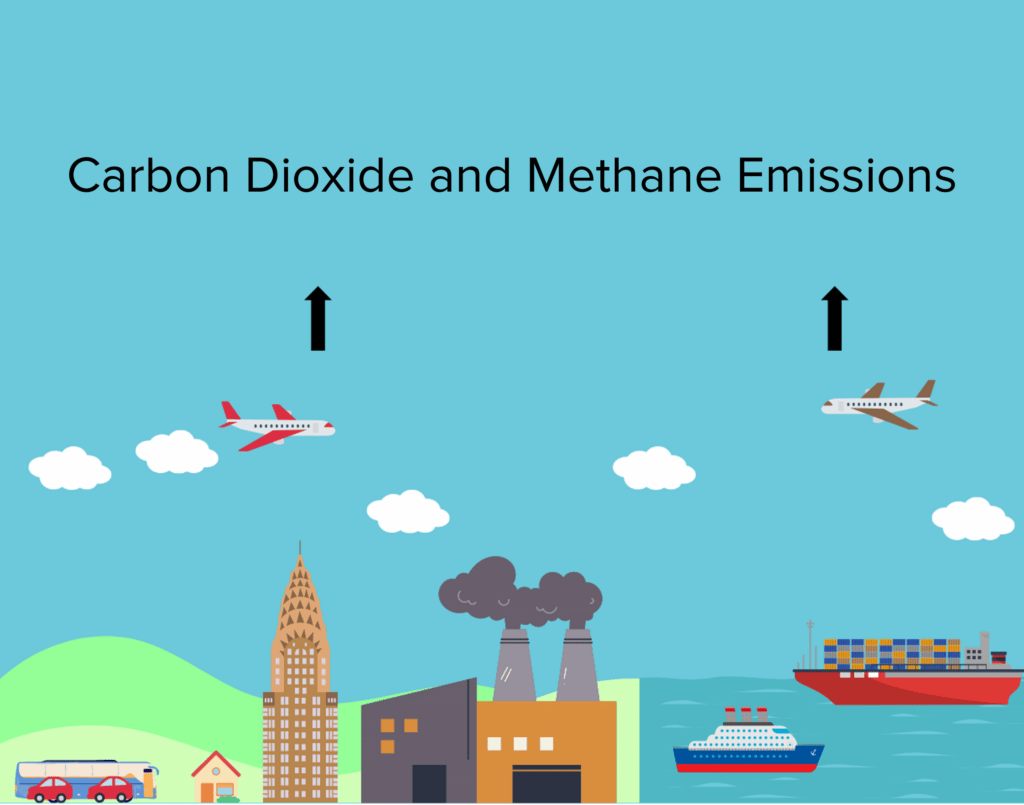
Key Human Activities Contributing to Greenhouse Gas Emissions:
- Motor Transport:
- Vehicles like cars, buses, and lorries burn fossil fuels, releasing large amounts of CO₂ into the atmosphere.
- Industrial Manufacturing:
- Factories and industrial plants emit CO₂ and other greenhouse gases through the combustion of fossil fuels and other chemical processes.
- Air Travel:
- Aeroplanes release CO₂ and water vapour directly into the upper atmosphere, where they have a potent greenhouse effect.
- Shipping:
- Ships, particularly those powered by heavy fuel oil, contribute to significant CO₂ emissions. These activities, all integral to modern society, present an ethical challenge: while they drive economic growth and improve quality of life, they also contribute to climate change.
Natural Processes and Human Impact
There are natural processes, such as photosynthesis, that help to remove CO₂ from the atmosphere. However, human activities like deforestation and industrial farming are reducing the effectiveness of these natural processes.
- Deforestation and Land Clearance:
- Deforestation, especially for large-scale agriculture, is a major contributor to the reduction of CO₂ absorption by trees. As forests are cleared, fewer trees are available to absorb CO₂ through photosynthesis.
- Estimates suggest that the world has lost about 50% of its forests in the last 70 years, leading to a substantial decline in the amount of carbon removed from the atmosphere.
- Controlled Burning:
- Land clearance for agriculture often involves controlled burning, where existing vegetation is burned to make way for crops. This process releases significant amounts of CO₂, previously stored in plant matter, back into the atmosphere, further contributing to greenhouse gas levels.
- Industrial Farming and Methane Emissions:
- Cattle farming contributes massively to methane emissions through the digestive processes of livestock and the decomposition of animal waste.
- Rice farming also produces large amounts of methane due to the decomposition of organic matter in flooded rice paddies.
Note
Conclusion: Human activities, from transportation and industry to deforestation and agriculture, have significantly increased the concentration of greenhouse gases in the atmosphere. These activities are driving climate change by strengthening the greenhouse effect, leading to rising global temperatures. To mitigate this impact, it is essential to address the sources of these emissions and explore sustainable alternatives.