DNA & Natural Polymers (OCR GCSE Chemistry A (Gateway Science Suite)): Revision Notes
📚Revision Notes
7.3.4 DNA & Natural Polymers
Note
To recap, polymers are large molecules made up of many smaller, repeating units called monomers. They are found everywhere in daily life and can be made naturally or synthetically.
Note
DNA (Deoxyribonucleic Acid) is another example of a natural polymer. DNA is essential for all life on earth since it tells living things how to grow and develop.
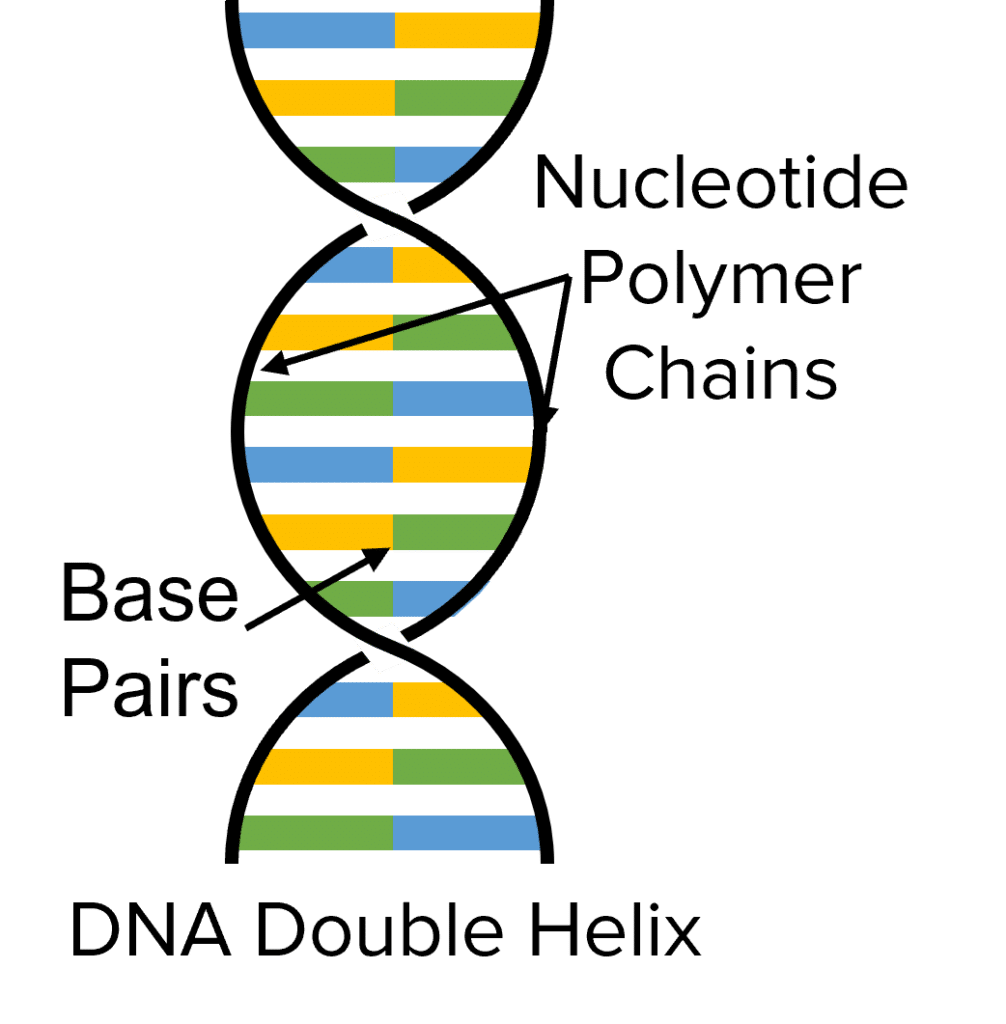
- DNA is formed of two long polymer chains, built out of the combination of four types of monomers called nucleotides. These two polymer chains are wrapped around each other in a structure known as the double helix (discovered by Rosalind Franklin in 1953).
The function of DNA:
- Base Pairs: The two strands of DNA are held together by bonds between pairs of nitrogenous bases, which are often referred to as base pairs. There are four bases in DNA—adenine (A), thymine (T), cytosine (C), and guanine (G). Adenine pairs with thymine, and cytosine pairs with guanine.
- Genetic Code: The sequence of these base pairs forms the genetic code. This code contains the instructions that cells use to build proteins, which are essential for life processes.
Other Natural Polymers:
- Starch: A polymer made from glucose molecules, used by plants to store energy.
- Cellulose: Another polymer of glucose, which forms the cell walls of plants and provides structural support.