Alloys as Useful Materials (OCR GCSE Chemistry A (Gateway Science Suite)): Revision Notes
📚Revision Notes
10.3.2 Alloys as Useful Materials
Alloys as Useful Materials
Note
Alloys are mixtures of metals and other elements, which can be either metals or non-metals, designed to have specific properties. Most of the metals used today are alloys, as they offer enhanced characteristics compared to pure metals. One of the most famous and widely used alloys is steel.
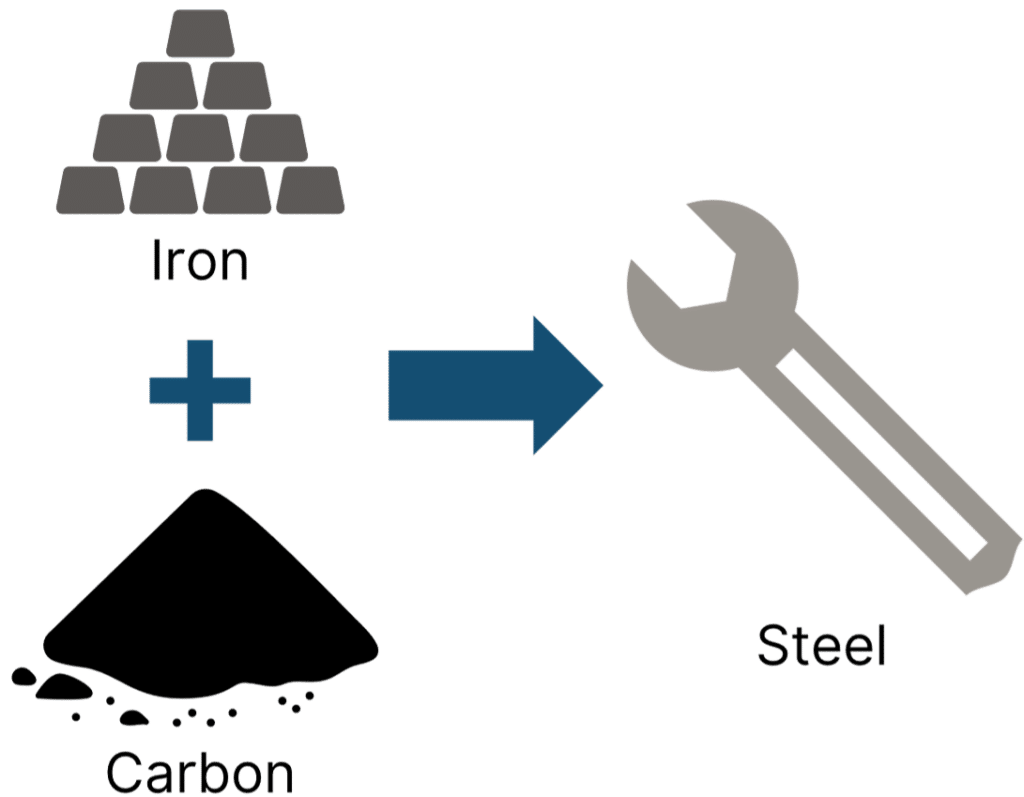
Steel: An Essential Alloy
- Composition: Steel is an alloy primarily composed of iron and carbon, with small amounts of other metals sometimes added.
- Types of Steel:
- Low Carbon Steel: Contains a small percentage of carbon, making it softer and easier to shape. This type of steel is commonly used in construction and vehicle manufacturing.
- High Carbon Steel: Contains a higher percentage of carbon, making it harder but more brittle. It is primarily used in the production of machine parts.
Note
Steel is renowned for its strength and versatility, making it an essential material in construction, tool production, and the manufacture of vehicles like ships and cars.
Advantages of Alloys
Alloys are typically created to improve the properties of metals in specific ways:
- Increased Strength: Most alloys are stronger than the pure metals from which they are made, making them more durable and suitable for heavy-duty applications.
- Reduced Density: Some alloys, such as those made from aluminium, are manufactured to have a lower density than pure aluminium. These lightweight alloys are ideal for use in the aerospace industry, particularly in the manufacture of aircraft.
Alloys in Jewellery and Art
Alloys are also extensively used in jewellery and artistic applications:
- Gold Alloys:
- Composition: Gold is often alloyed with other metals like silver, copper, and zinc to increase its hardness, which makes it more durable for everyday use in jewellery.
- Purity Measurement: The purity of gold is measured in carats, with 24-carat gold being pure gold. One carat equals approximately 5 mg of gold content. Gold alloys have been historically used in decorations (such as gilded furniture) and jewellery (like rings, earrings, and necklaces).
- Brass and Bronze:
- Brass: An alloy of copper and zinc, brass is more malleable than pure copper and is often used for decorative purposes, such as door handles, and plaques, and in the manufacture of musical instruments.
- Bronze: An alloy of copper and tin, bronze is harder than pure copper and has been widely used in sculpture and construction. Its durability and aesthetic appeal make it a popular material in the arts.