Ceramics, Polymers & Composites (OCR GCSE Chemistry A (Gateway Science Suite)): Revision Notes
📚Revision Notes
10.3.3 Ceramics, Polymers & Composites
Ceramics and Composites
Note
Both ceramics and composites have been used by humans for thousands of years.
Note
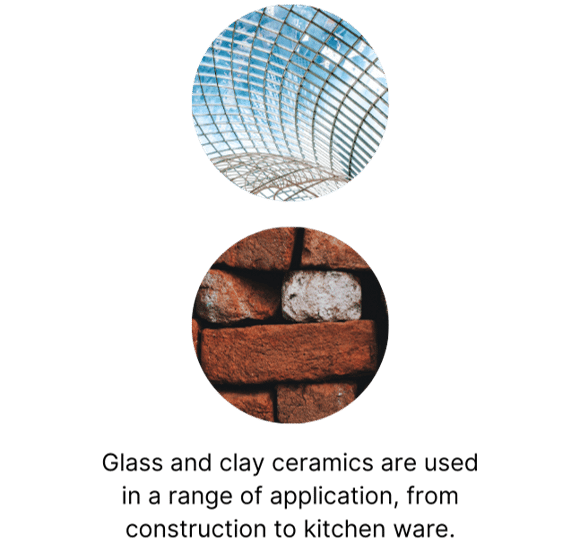
Ceramics are solid materials with high melting points that are not composed of carbon compounds. Two common examples of ceramics are glass and clay.
-
Glass Ceramics:
-
The most commonly used glass is soda-lime glass, which is made from a mixture of sand, sodium carbonate, and limestone. This type of glass is suitable for everyday uses, such as drinking glasses, mirrors, or windows.
-
For applications requiring higher temperature resistance, borosilicate glass is used. It is made from sand and boron trioxide and has a higher melting point than soda-lime glass. Both types of glass are produced by heating the components to a high temperature until they melt together.
-
Clay Ceramics:
- Products like bricks or pottery are made by shaping wet clay into the desired form and then heating it to high temperatures in a kiln.
-
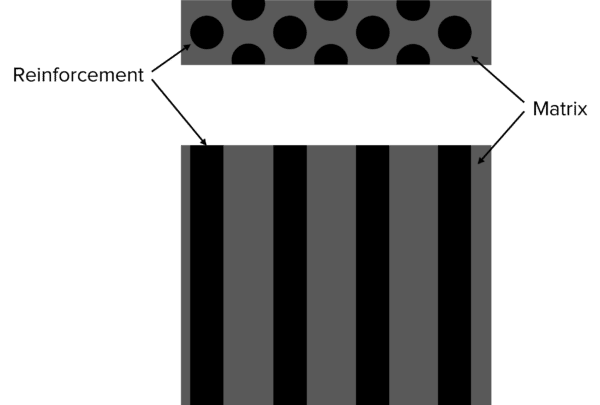
Composites are materials made by combining two or more different substances. Typically, one material acts as a matrix or binder, surrounding and supporting fibres of the other material, which is called the reinforcement. The combination of these materials results in a composite that has different properties from its individual components.
- Reinforced Concrete:
- A common composite material used in construction is reinforced concrete. It is made by pouring cement around rods of steel or iron. The steel rods reinforce the concrete, adding strength, while the cement allows the structure to remain flexible.
.
Polymers
Note
Polymers are among the most widely used materials in the world. They can be engineered to have a vast range of properties, from being soft and malleable, like the polymers used in plastic bags, to hard and brittle, like those used in window fittings.
Note
The properties of a polymer depend on both the monomers from which it is made and the conditions under which it is produced.
Note
For example, poly(ethene) exhibits different properties depending on its method of manufacture:
- Low-Density Poly(ethene) (LDPE):
- Produced at a moderate temperature and high pressure.
- LDPE is flexible and is commonly used for plastic bags and bottles.
- High-Density Poly(ethene) (HDPE):
- Produced at low temperature and pressure, using a catalyst.
- HDPE is more rigid and is used for products such as water tanks and drainpipes.
Note
Polymers can also be designed with specialist properties, such as thermosetting and thermosoftening polymers:
- Thermosetting Polymers:
- Do not soften when heated.
- They contain monomers that form cross-links between polymer chains, making the material more rigid.
- Thermosoftening Polymers:
- These polymers do not have cross-links and, as a result, they are less rigid and melt upon heating.