Zambia A Low Income Developing Country (OCR GCSE Geography B (Geography for Enquiring Minds)): Revision Notes
📚Revision Notes
Zambia A Low Income Developing Country
Introduction to Zambia
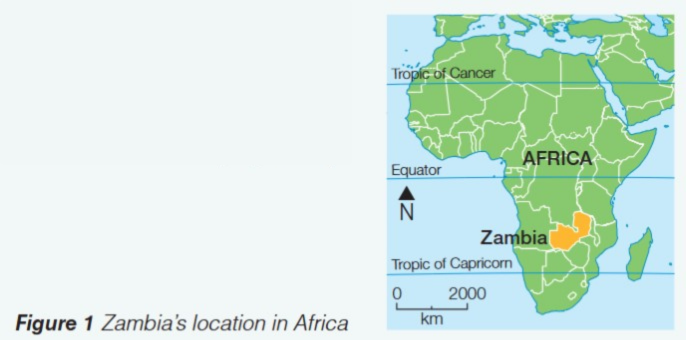
Zambia is located in the central-southern region of the African continent. It is classified as a Low-Income Developing Country (LIDC), which means it has low levels of economic development and faces significant development challenges.
One of Zambia's key geographical features is that it is a landlocked nation. This means it has no access to the sea and is completely surrounded by other countries, with no coastline of its own.
Note
What is a LIDC?
A Low-Income Developing Country is a classification used for nations with low economic development levels. These countries typically have lower incomes, less industrialization, and face greater challenges in areas like healthcare, education, and infrastructure compared to more developed nations.
Where is Zambia?
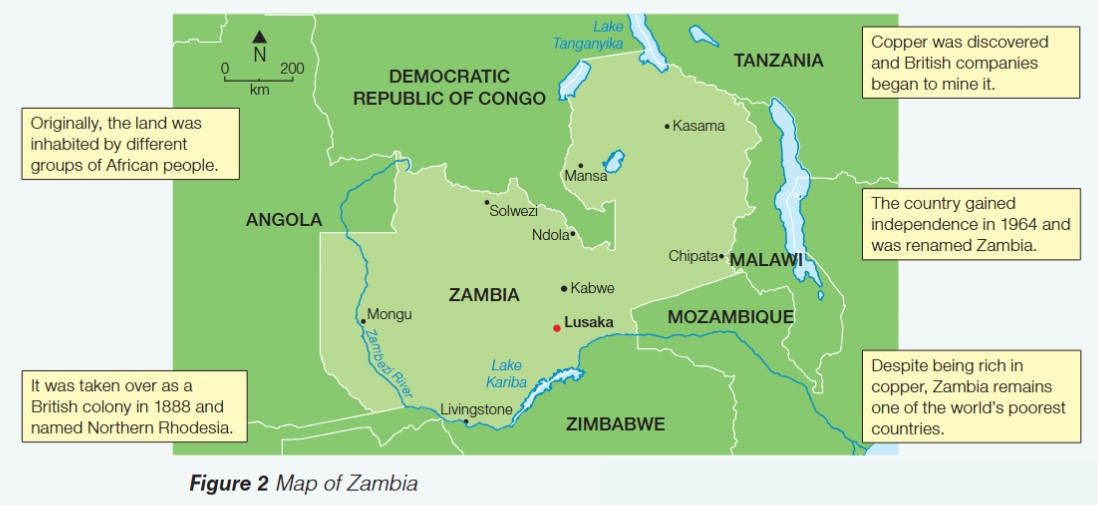
Zambia sits in central-southern Africa and is bordered by eight neighboring countries. To the north lies Tanzania and the Democratic Republic of Congo. Angola borders Zambia to the west, while Malawi and Mozambique are to the east. Zimbabwe sits to the south of Zambia.
The capital city of Zambia is Lusaka, located in the central-southern part of the country. Other major cities include Livingstone in the south, Ndola and Kabwe in the central regions, and Mongu in the west.
Historical background
Originally, the land that is now Zambia was inhabited by different groups of African people who lived across the region. The course of Zambian history changed dramatically in 1888 when it was taken over as a British colony and named Northern Rhodesia.
During the colonial period, British companies discovered copper deposits in Zambia and began mining operations. This discovery would shape the country's economy for decades to come.
In 1964, the country gained its independence from British rule and was renamed Zambia. This marked the end of colonial control and the beginning of self-governance for the nation.
Important
Impact of Colonization
The colonial period fundamentally shaped Zambia's economic structure. British mining companies established copper extraction operations that continue to dominate the economy today. However, the economic systems put in place during colonization often benefited the colonial powers rather than the local population, creating patterns of resource extraction that persist in affecting Zambia's development.
Zambia as a LIDC
Zambia displays the typical features of a Low-Income Developing Country. These characteristics are evident across various social and economic indicators.
The country has a relatively high birth rate of 43 births per 1000 people, which is common in LIDCs where family sizes tend to be larger. The death rate stands at 13 deaths per 1000 people. Life expectancy is low at just 52 years, meaning the average person in Zambia lives considerably shorter lives compared to people in more developed countries.
However, Zambia has achieved a reasonable literacy rate of 80%, which shows that the majority of the population can read and write. This is an important foundation for future development.
Note
The high literacy rate of 80% is actually a positive indicator for Zambia compared to many other LIDCs. This suggests that educational initiatives have had some success and provides a foundation for potential economic and social development in the future.
The country's economic status is reflected in its GNI (Gross National Income) per capita of $3,070. This figure represents the average income per person and places Zambia firmly in the low-income category. Furthermore, Zambia ranks 164th out of 187 countries on the Human Development Index (HDI), positioning it in the bottom third of nations globally in terms of overall development.
Key statistics about Zambia
| Indicator | Data |
|---|---|
| Population | 14.5 million |
| Area | 752,614 km² |
| Population growth rate | 2.9% |
| Birth rate | 43 per 1000 |
| Death rate | 13 per 1000 |
| Average life expectancy | 52 years |
| Literacy rate | 80% |
| GNI per capita | $3,070 |
| Human Development Index | 0.43 (ranked 164/187 in the world) |
| Urban population | 36% |
| Economic growth rate | 6.5% per year |
The population of 14.5 million is spread across an area of 752,614 square kilometers. Only 36% of the population lives in urban areas, meaning the majority (64%) live in rural areas. The population is growing at 2.9% annually, which is relatively high and puts pressure on resources and services.
Interestingly, despite being a LIDC, Zambia's economy is growing at a rate of 6.5% per year, which suggests potential for future development.
Zambia's economy and the copper paradox
Zambia's economy is heavily dependent on natural resources, particularly copper mining. The country's main exports include:
- Copper (accounting for 64% of exports)
- Cobalt
- Tobacco
- Flowers
- Cotton
The country must import essential goods including:
- Machinery
- Transport equipment
- Oil
- Fertilizer
- Food
- Clothing
Important
The Copper Paradox
This creates an economic paradox that defines Zambia's development challenge. Although Zambia possesses significant copper resources and is one of Africa's major copper producers, it remains among the poorest nations in the world. This demonstrates that having natural resources does not automatically lead to economic prosperity or improved living standards for the population.
The paradox exists because the benefits from copper mining have not translated into widespread development across the country. Profits from mining often leave the country, infrastructure remains underdeveloped, and the majority of the population continues to face poverty despite living above valuable mineral deposits.
This situation highlights a common challenge faced by resource-rich developing countries: the presence of valuable natural resources alone is insufficient for development. What matters is how those resources are managed, how profits are distributed, and whether they are invested in building infrastructure, education, healthcare, and other foundations for sustainable development.
Summary
Key Points to Remember:
-
Zambia is a landlocked LIDC in central-southern Africa, surrounded by eight countries with no access to the sea.
-
The country was colonized by Britain in 1888 (named Northern Rhodesia), gained independence in 1964, and was renamed Zambia.
-
Zambia faces the copper paradox: despite being rich in copper resources (64% of exports), it remains one of the world's poorest countries, ranking 164/187 on the HDI.
-
Key LIDC characteristics include: high birth rate (43 per 1000), low life expectancy (52 years), low GNI per capita ($3,070), but reasonable literacy (80%).
-
The economy is growing at 6.5% annually, suggesting potential for development, but benefits from natural resources have not yet improved living standards for most Zambians.