Food Security (OCR GCSE Geography B (Geography for Enquiring Minds)): Revision Notes
📚Revision Notes
Food Security
What is food security?
Food security exists when all people, at all times, have access to sufficient, safe and nutritious food that maintains a healthy and active life. This is a key challenge for our planet, particularly as the global population continues to grow.
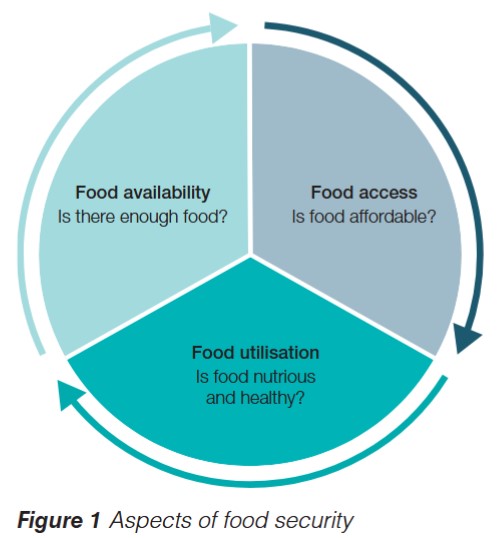
Food security has three essential parts that must all be achieved:
Food availability - This asks whether there is enough food being produced to meet demand. It considers the total supply of food across regions and countries.
Food access - This focuses on whether food is affordable for people to buy. Even if food is available, it is not secure if people cannot afford to purchase it.
Food utilisation - This examines whether the food people can access is nutritious and healthy. Food security requires that available food contributes to proper nutrition and wellbeing.
Important
All three elements must work together to achieve true food security. If any one part fails, people cannot be considered food secure.
Physical factors influencing food security
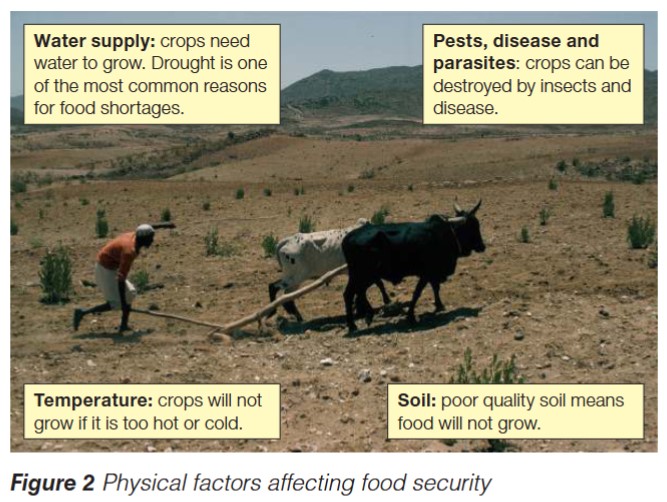
Physical factors are natural environmental conditions that affect how much food can be grown. These factors are largely beyond human control in the short term.
Note
Physical factors differ from human factors because they relate to the natural environment rather than society and human activities. While we can adapt to physical factors, changing them directly is often difficult or impossible in the short term.
Water supply
Crops require water to grow, and drought is one of the most common reasons for food shortages. Without adequate rainfall or irrigation, farmers cannot produce sufficient harvests. Many regions face increasing water stress, making it harder to grow enough food.
Pests, disease and parasites
Agricultural pests and diseases can destroy crops before harvest. Insects, plant diseases and parasites damage or kill food plants, reducing the amount of food available. This is particularly problematic in warmer climates where pests thrive.
Temperature
Crops need specific temperature conditions to grow successfully. If temperatures are too hot or too cold for a particular crop, it will fail to grow or produce a harvest. Climate plays a crucial role in determining which crops can be grown in different regions.
Soil quality
Poor quality soil means food will not grow properly. Soil needs the right nutrients, structure and pH levels to support healthy crop growth. Degraded or infertile soil produces lower yields or prevents crops from growing altogether.
Human factors influencing food security
Human factors relate to society and human activities that affect food security. Unlike physical factors, these can potentially be addressed through policy changes and human action.
Note
Human factors are often more complex than physical factors because they involve political, economic and social systems. However, this also means they can be changed through human intervention, making them potentially more solvable in the short term.
Poverty
People living in poverty might not be able to afford food, even when it is available in shops and markets. This creates food insecurity at the household level. Poverty means families must make difficult choices about purchasing food versus other necessities.
Distribution and infrastructure
Food may be available in one location, but poor roads and distribution networks mean that people who need it cannot access it. Inadequate transport infrastructure, lack of storage facilities and inefficient supply chains all contribute to food insecurity. The food exists but cannot reach those who need it.
Example
Real-World Example: Infrastructure Impact
Consider a harvest of fresh vegetables in a rural farming area. Without proper roads, refrigerated transport, or storage facilities, much of this food will spoil before reaching urban markets just 100 km away. The food is available, but poor infrastructure means it never reaches people who need it, creating local food insecurity despite adequate production.
War and conflict
Wars disrupt farming and food distribution systems. Armed conflict destroys agricultural land, prevents farmers from working their fields, and damages transport networks. People sometimes flee their homes and move to places without adequate food supplies. Conflict creates immediate and severe food crises.
Land ownership
Poor farmers often compete for land with large transnational corporations (TNCs). These companies grow food for export and send it out of the local area, rather than feeding local populations. When land is controlled by large corporations, small-scale farmers lose access to land they need to grow food for their families and communities.
Waste
Food is wasted due to poor transport and storage facilities, particularly in lower income countries. Without proper refrigeration, food spoils before reaching consumers. Inadequate packaging and handling also contributes to waste. This means that food which has been produced never reaches people who need it.
Climate change
Global warming caused by human activity is creating water shortages in some parts of the world. Changing rainfall patterns, more frequent droughts and extreme weather events make farming increasingly difficult and unpredictable. Climate change threatens long-term food security globally.
Important
Climate change is both a human factor (because humans cause it) and affects physical factors (like water supply and temperature). This shows how human and physical factors can interact to create complex food security challenges.
Exam guidance
Important
Essential Exam Strategies:
When answering questions about food security:
- Define food security using all three pillars (availability, access, utilisation)
- Describe physical and human factors with specific examples
- Explain how factors interact - for example, how climate change (human) affects water supply (physical)
- Assess which factors have the greatest impact in different contexts
Always provide specific examples to support your points - examiners reward detailed, real-world applications of concepts.
Remember!
Summary
Key Points to Remember:
- Food security means everyone has access to sufficient, safe and nutritious food at all times
- The three pillars of food security are availability, access and utilisation - all three must be achieved
- Physical factors affecting food security include water supply, pests and disease, temperature and soil quality
- Human factors include poverty, poor infrastructure, war and conflict, land ownership, waste and climate change
- Food security is influenced by both natural environmental factors and human activities
- Physical and human factors often interact, creating complex challenges for food security