Food Security Through Ethical Consumption (OCR GCSE Geography B (Geography for Enquiring Minds)): Revision Notes
📚Revision Notes
Food Security Through Ethical Consumption
Introduction to ethical consumerism
Food security is one of the most pressing global challenges we face. By 2050, the world's population is expected to reach nine billion people, and ensuring everyone has access to safe, nutritious, and affordable food requires new approaches. Ethical consumption represents one important strategy to address this challenge.
Note
Ethical consumerism involves purchasing goods and services that have beneficial effects on people, the economy, and the environment. This approach to food security recognises that our shopping choices can directly impact farmers, workers, and ecosystems around the world.
By choosing products that meet certain ethical standards, consumers in more developed countries can help create fairer and more sustainable food systems globally. The connection between individual purchasing decisions and global food security demonstrates the power of collective consumer action.
Making trade fairer through Fairtrade
What is Fairtrade?
The Fairtrade organisation works to improve the income and working conditions of farmers in Low Income Developing Countries (LIDCs). When products carry the Fairtrade label, it means they have been produced according to minimum standards that ensure fair treatment of producers.
Important
The Core Principle of Fairtrade
Farmers receive a guaranteed minimum price for their crops, which is typically higher than standard market prices. This financial security allows farming families to plan for their future with greater confidence, knowing they can meet their basic needs regardless of market fluctuations.
Benefits of Fairtrade
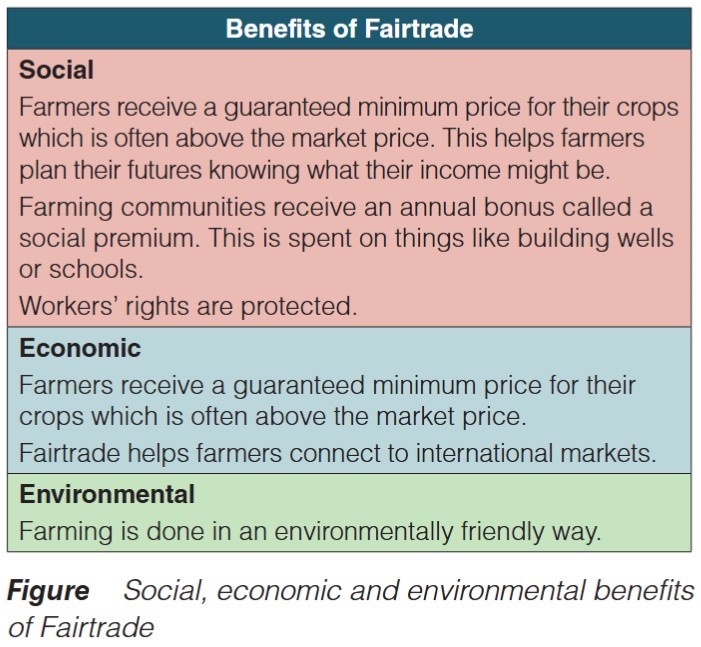
Fairtrade creates positive impacts across three key areas: social, economic, and environmental. Understanding these interconnected benefits helps explain why ethical consumption can contribute to food security.
Social benefits
The social advantages of Fairtrade extend beyond individual farmers to entire communities. Farmers receive a guaranteed minimum price for their crops, which provides stability and dignity. This price is intentionally set above typical market rates, helping farmers build better futures for their families.
Additionally, farming communities receive an annual bonus known as a social premium. This extra payment isn't kept by individuals but is invested democratically in community improvements.
Example
Worked Example: Social Premium in Action
When a Fairtrade-certified coffee cooperative receives its social premium, the community votes democratically on how to use these funds. Common investments include:
- Step 1: Community identifies needs (e.g., lack of clean water access)
- Step 2: Democratic vote determines priority (e.g., building a well)
- Step 3: Social premium funds the project
- Step 4: Entire community benefits from the improvement
These funds have been used to build essential infrastructure like wells, schools, and healthcare facilities, creating lasting benefits for future generations.
Worker protection is also fundamental to Fairtrade standards. Workers' rights are safeguarded through clear regulations, ensuring fair treatment and safe working conditions on Fairtrade-certified farms.
Economic benefits
Economically, Fairtrade creates more stable and sustainable livelihoods for farmers in LIDCs. The guaranteed minimum price protects farmers from the volatility of international commodity markets, where prices can drop suddenly due to oversupply or reduced demand.
Note
The guaranteed minimum price acts as a safety net against market fluctuations. When global prices drop, Fairtrade farmers maintain their income stability, while non-Fairtrade farmers face financial hardship. This protection is especially critical during periods of market instability.
Beyond price protection, Fairtrade helps farmers access international markets that might otherwise be difficult to reach. This market access is particularly valuable for small-scale producers who lack the resources and connections to export their goods independently. By connecting farmers directly with consumers in Advanced Countries (ACs), Fairtrade removes some of the intermediaries who might otherwise take a large share of profits.
Environmental benefits
Environmental sustainability is central to Fairtrade certification. Farming practices must be environmentally responsible, protecting soil health, water resources, and biodiversity. This requirement ensures that food production doesn't compromise the ability of future generations to meet their own needs.
Environmentally friendly farming methods supported by Fairtrade often include reduced pesticide use, soil conservation techniques, and protection of natural habitats. These practices not only protect the environment but can also improve long-term productivity of farmland.
The following table summarises these interconnected benefits:
Growth of ethical products in the UK
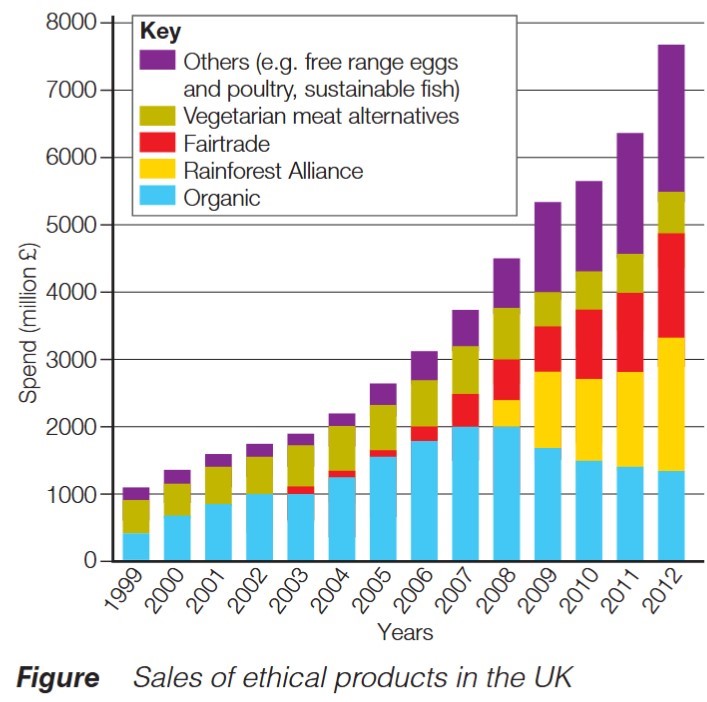
The market for ethically produced products has expanded dramatically in the United Kingdom over the past two decades. This growth demonstrates increasing consumer awareness and willingness to pay premium prices for products that align with their values.
Note
Remarkable Market Expansion
Between 1999 and 2012, sales of ethical products in the UK grew from approximately $1 billion to over $7.5 billion annually. This remarkable expansion includes multiple categories of ethical products:
- Organic products consistently formed the largest segment of the market
- Fairtrade products showed particularly strong growth in later years
- Other ethical categories include Rainforest Alliance certified products, vegetarian meat alternatives, free-range eggs and poultry, and sustainably sourced fish
This growth pattern indicates that ethical consumption has moved from a niche market to a mainstream consumer choice. The expansion suggests that many people are willing to pay slightly higher prices to support fairer and more sustainable food production systems.
Is Fairtrade sustainable?
While Fairtrade provides clear benefits, it's important to evaluate its long-term sustainability and potential limitations. Two key concerns deserve consideration when assessing Fairtrade as a strategy for food security.
Important
Key Sustainability Concerns
First concern: Dependency on AC consumers
Fairtrade's success depends heavily on consumers in Advanced Countries choosing to purchase these products. This reliance creates vulnerability. If economic conditions worsen in ACs, or if consumer preferences shift, demand for Fairtrade products could decline. Without guaranteed markets, the benefits for farmers would diminish. This dependency means that farmers' livelihoods remain partially controlled by decisions made thousands of miles away.
Second concern: Focus on primary products
Fairtrade encourages farmers to focus on producing primary products (raw materials like cocoa beans, coffee beans, or bananas) rather than manufactured goods (like chocolate bars or processed coffee). While this approach simplifies certification and trading, it means that most of the added value from processing and manufacturing stays in Advanced Countries. If farmers could produce finished goods, they might capture more of the final product's value, leading to greater economic development in their communities.
These concerns don't invalidate Fairtrade's benefits, but they highlight the need for multiple complementary approaches to achieving global food security.
Reducing food waste
The scale of the problem
A significant amount of food produced globally never reaches consumers' plates. In Advanced Countries, large quantities of perfectly edible food are discarded because of cosmetic imperfections. Consumers have become accustomed to selecting only the most visually perfect produce, leaving misshapen or blemished items unsold despite being equally nutritious and safe to eat.
This wasteful pattern creates problems across social, economic, and environmental dimensions. Understanding these interconnected issues helps explain why reducing food waste is a crucial component of food security strategies.
The Ugly Food Movement
The Ugly Food Movement challenges the expectation that all fruits and vegetables must look perfect. This initiative encourages consumers to purchase and eat "ugly" produce – items that are misshapen, scarred, or otherwise cosmetically imperfect but perfectly safe and nutritious.
Note
By accepting imperfect-looking food, consumers can help address food waste at multiple levels. The movement has gained support through creative marketing campaigns that celebrate the character of unusual-looking produce, such as bumpy carrots, oddly-shaped apples, or scarred potatoes.
Benefits of reducing food waste
Reducing food waste creates positive outcomes that mirror the social, economic, and environmental benefits of Fairtrade, demonstrating how ethical consumption strategies reinforce each other.
Social benefits: When consumers purchase imperfect produce, farmers in LIDCs can sell more of their harvest. Currently, significant portions of harvests are rejected for cosmetic reasons, representing lost income for farming families. By expanding the market for all produce regardless of appearance, farmers gain more reliable incomes. This financial security enables them to afford better and more nutritious diets for their own families, directly contributing to food security in producing regions.
Economic benefits: Selling previously wasted produce increases farmers' total sales revenue without requiring additional land, water, or labor inputs. This improved economic efficiency makes farming more profitable and sustainable as a livelihood. The additional income can be reinvested in farm improvements or used to improve family living standards.
Environmental benefits: Producing food requires substantial resources including water, energy, fertilizers, and land. When food is wasted, all these inputs are also wasted. By eating all food produced, we reduce the environmental pressure to expand agricultural production. Less waste means less energy is used in producing food that's never consumed, contributing to more sustainable food systems overall.
Important
Exam Tips: Answering Questions About Ethical Consumption
When answering questions about ethical consumption and food security:
-
Describe questions require you to state characteristics or features. For Fairtrade, you might describe the guaranteed minimum price system or the social premium.
-
Explain questions need you to give reasons or show how something works. Explain why Fairtrade benefits farmers economically (guaranteed prices protect against market fluctuations) or how reducing food waste helps the environment (reduces wasted resources).
-
Evaluate or assess questions require balanced consideration of advantages and disadvantages. Consider both the benefits of Fairtrade and concerns about its sustainability, reaching a supported conclusion about its overall effectiveness.
Always support your answers with specific examples, such as the growth in UK ethical product sales or the use of social premiums for community infrastructure.
Summary
Key Points to Remember
-
Ethical consumerism means choosing products with positive social, economic, and environmental impacts, contributing to global food security.
-
Fairtrade provides triple benefits:
- Social (guaranteed prices, social premiums, protected rights)
- Economic (stable incomes, market access)
- Environmental (sustainable farming practices)
-
UK ethical product sales grew from $1 billion to over $7.5 billion between 1999 and 2012, showing strong consumer support for ethical products.
-
Fairtrade sustainability concerns include dependency on AC consumers and focus on primary rather than manufactured products.
-
The Ugly Food Movement reduces waste by encouraging purchase of cosmetically imperfect but nutritious produce, benefiting farmers economically and reducing environmental pressure.