More Resources Please (OCR GCSE Geography B (Geography for Enquiring Minds)): Revision Notes
📚Revision Notes
More resources please
Understanding resource shortages
Global resource shortages are becoming increasingly evident, particularly affecting food, water and energy supplies. This situation arises because the supply of resources cannot match the pace of rising demand. There are three interconnected reasons explaining why resource shortages are intensifying across the planet.
Why demand for resources is outstripping supply
1. Population growth
Since 1950, global population has grown significantly and projections indicate it will reach 9 billion people by 2050. A larger population creates greater pressure on available resources. When there are more people on Earth, the demand for essential resources like food, water and energy naturally increases.
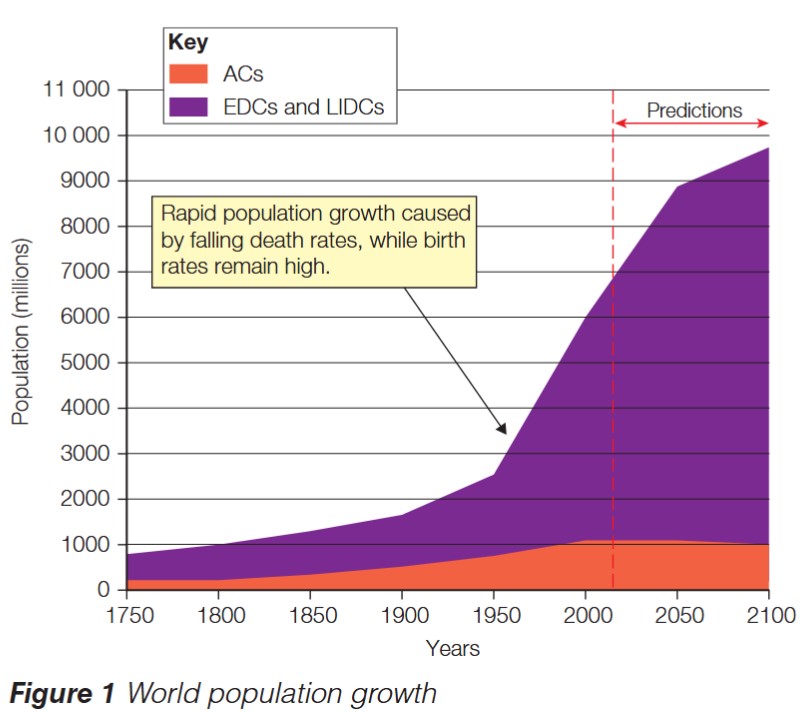
The population growth chart demonstrates how rapid expansion has occurred, particularly in Less Industrially Developed Countries (LIDCs) and Highly Developed Countries (HDCs). This growth was primarily caused by falling death rates whilst birth rates remained high, creating a demographic surge that continues to strain global resources.
Note
The rapid population increase since 1950 represents one of the most significant demographic shifts in human history. This expansion has not been evenly distributed globally, with LIDCs and HDCs experiencing the most dramatic growth rates. The resulting pressure on resources is compounded by the fact that population growth shows little sign of slowing in many regions.
2. Economic development
Residents of Advanced Countries (ACs) consume higher quantities of resources compared to people in less developed regions. This is because their lifestyles depend on modern amenities including central heating systems, private vehicles, numerous electrical appliances and piped water in homes. Additionally, people in ACs typically consume more food, especially meat products.
As Less Industrially Developed Countries (LIDCs) and Emerging and Developing Countries (EDCs) progress economically, their populations aspire to achieve similar living standards to those in Advanced Countries. This development process creates two major consequences for resource consumption:
- Industrial growth: Development drives increased industrial activity, which demands more energy to power factories, manufacturing plants and infrastructure
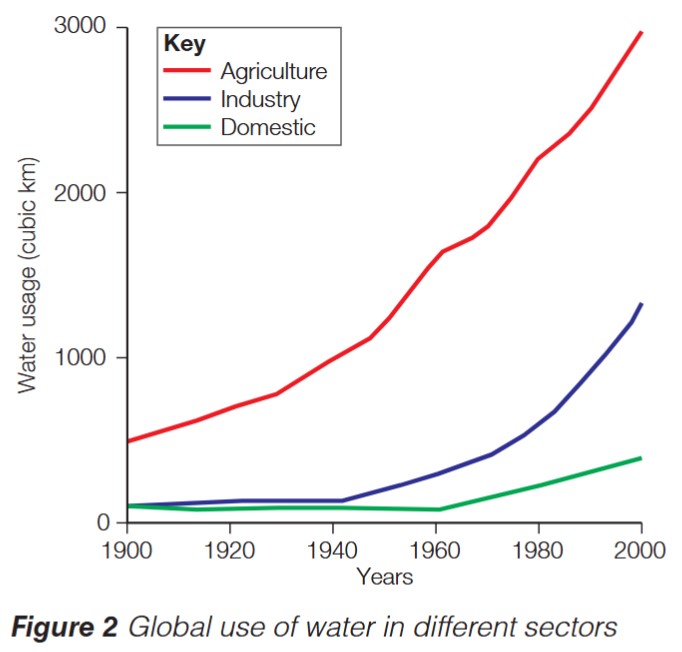
- Agricultural expansion: Growing populations with rising incomes require more food production, which significantly increases water consumption for irrigation and crop cultivation
Note
The water usage chart illustrates how different sectors have increased their consumption throughout the 20th century. Agriculture has become the dominant water consumer, with usage rising dramatically since 1950. Industrial water use has also grown substantially, whilst domestic consumption remains comparatively low but still increasing.
3. Finite and threatened supply
A finite supply means there is a limited quantity available. Critical resources including water, oil and gas are finite – once they are consumed, they cannot be replaced or replenished on human timescales. There are also constraints on the amount of food that can be produced globally.
Important
Understanding Finite Resources
Unlike renewable resources, finite resources exist in limited quantities that cannot be regenerated once depleted. This fundamental characteristic makes sustainable management of these resources critical for future generations. The finite nature of key resources like fossil fuels means that current consumption patterns are unsustainable in the long term.
Threats to food supply
Food production faces two significant challenges:
Biofuel production: Biofuels are crops grown specifically to be converted into fuel. When agricultural land is used to grow biofuel crops instead of food crops, this reduces the total area available for producing food to feed the global population.
Climate change impacts: Climate change is reducing the volume of freshwater available on Earth. This affects both drinking water supplies and the water needed for agricultural irrigation, potentially limiting future food production capacity.
Important
Critical Food Supply Threats
The combination of biofuel production and climate change creates a double threat to global food security. As agricultural land is diverted to biofuel crops and freshwater becomes scarcer due to climate change, the capacity to feed a growing population becomes increasingly compromised. This situation is particularly concerning given population projections reaching 9 billion by 2050.
Summary
Key Points to Remember:
- Three key reasons explain resource shortages: population growth, economic development and finite supply
- Global population is expected to reach 9 billion by 2050, dramatically increasing resource demand
- Economic development in LIDCs and EDCs means more people want lifestyles similar to those in ACs, multiplying resource consumption
- Essential resources like water, oil and gas are finite – they exist in limited quantities that cannot be replaced
- Food supply faces threats from biofuel production taking agricultural land and climate change reducing freshwater availability