The Great British Takeaway (OCR GCSE Geography B (Geography for Enquiring Minds)): Revision Notes
📚Revision Notes
The Great British Takeaway
Note
Learning objectives
You need to understand:
- What the most popular takeaway meals are in the UK
- Why people consume more takeaway meals today
- How food from other cultures becomes part of British cuisine
- Whether the UK is losing its global cultural significance
Changing eating habits in the UK
The way British people eat has been transforming significantly over recent decades. One of the most noticeable changes is the dramatic increase in takeaway meal consumption. Where families once cooked traditional meals at home, many now regularly order food from restaurants representing cuisines from across the world.
This shift in eating patterns reflects broader changes in British society, including economic development, lifestyle changes, increased global connections, and growing cultural diversity within the UK population.
Why are we eating more takeaways?
There are four key reasons why takeaway meal consumption has increased in the UK:
Rising incomes
Average household incomes have grown more quickly than the cost of takeaway meals. This means that ordering food has become more affordable for a larger proportion of the population. What was once considered an occasional treat has become a regular option for many families.
Busier lifestyles
Modern life in the UK tends to be more hectic than in previous generations. Many people work longer hours, have demanding schedules, or juggle multiple commitments. This leaves less time available for shopping, food preparation, and cooking elaborate meals at home. Takeaway meals offer a convenient solution that saves time.
Increased travel and global exposure
British people now travel internationally far more than previous generations. Through holidays, business trips, and gap years, they experience diverse cuisines from around the world. When they return home, they seek out these flavours through takeaway restaurants, creating demand for international food options.
Immigration and cultural diversity
More people from different parts of the world have made the UK their home. Many immigrants have established takeaway restaurants serving their traditional cuisines. This has expanded the variety of food available and introduced British people to new flavours and cooking styles. These restaurants have become an established part of British high streets and communities.
Popular takeaway meals in the UK
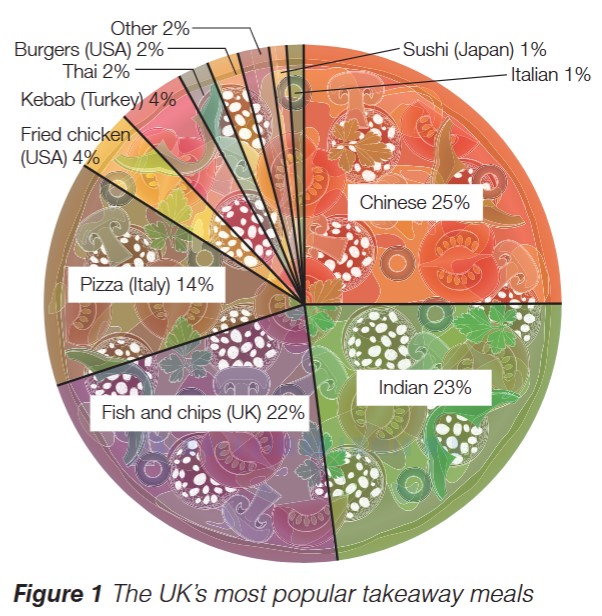
The pie chart above shows the distribution of the UK's most popular takeaway meals. The data reveals interesting patterns about British food preferences:
Top takeaway choices:
- Chinese food leads at 25% of all takeaway orders
- Indian cuisine follows closely with 23%
- Fish and chips (traditional British) accounts for 22%
- Pizza (Italian) represents 14%
- Fried chicken makes up 4%
- Kebabs (Turkish) also account for 4%
- Smaller segments include Thai (2%), burgers (2%), and sushi and Italian (1% each)
Note
Key observation: Foreign cuisines now dominate British takeaway culture. When combined, international food options account for approximately 78% of all takeaway orders, while traditional British fish and chips represents only 22%.
This demonstrates how significantly British eating habits have changed and how food from other cultures has been absorbed into everyday life.
Case study: Chicken tikka masala
Example
Case Study: Chicken Tikka Masala and Cultural Life
Chicken tikka masala provides an excellent example of cultural life – the way in which food from other cultures can be absorbed into and help enrich British cultural identity.
What is chicken tikka masala?
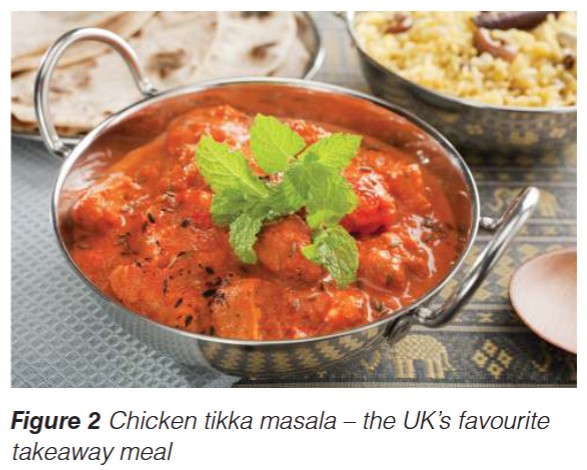
Chicken tikka masala has replaced fish and chips as the UK's favourite takeaway meal. Interestingly, it is not even a traditional Indian dish. Instead, it was probably invented in the UK to suit British tastes. The dish combines Indian cooking techniques and spices with adaptations that appeal to British palates, typically featuring a creamy tomato-based sauce.
Cultural significance
This dish illustrates several important geographical concepts:
-
Cultural adaptation: Food evolves when cultures meet. Chicken tikka masala represents a fusion where Indian cooking traditions were modified to create something new that appealed to British customers.
-
Cultural enrichment: Rather than replacing British food culture, international cuisines have added to it. The British diet has become more diverse and interesting as a result of immigration and globalisation.
-
Popular culture: Television programmes like Masterchef showcase international cuisines and cooking techniques, further encouraging British people to embrace food from around the world. This media exposure helps normalise and celebrate cultural diversity.
The UK's changing cultural influence
The increasing popularity of international takeaway meals raises interesting questions about Britain's cultural significance on the global stage. While the UK exports relatively little food culture internationally today (compared to its imperial past), it has become highly successful at absorbing and celebrating food from other nations.
This reflects the UK's position as a multicultural society where different traditions coexist and blend together. Rather than viewing this as a loss of British identity, geographers see it as evidence of successful cultural integration and openness to global influences.
Note
The UK's "soft power" – its cultural influence abroad – may have shifted from exporting its own culture to demonstrating how different cultures can successfully integrate within one society.
Important
Exam guidance
Command word tips:
- Describe questions about this topic might ask you to identify patterns in takeaway consumption using data from the pie chart
- Explain questions could ask you to give reasons why takeaway meals have become more popular
- Assess or evaluate questions might ask you to consider whether the dominance of international food represents a positive or negative change for British culture
Key case study details to remember:
- Chicken tikka masala was invented in the UK, not India
- It has replaced fish and chips as the nation's favourite
- It demonstrates cultural adaptation and enrichment
Summary
Key Points to Remember:
-
Takeaway consumption has increased dramatically due to higher incomes, busier lifestyles, more travel, and immigration creating a multicultural society
-
Chinese food is the most popular takeaway (25%), followed by Indian (23%) and fish and chips (22%) – international cuisines dominate
-
Chicken tikka masala exemplifies cultural life – it was invented in the UK by adapting Indian cooking to British tastes, showing how cultures blend and enrich each other
-
Cultural life means the way food from other cultures becomes absorbed into and enriches British culture, rather than replacing it
-
The UK's cultural influence is changing – rather than exporting its own food culture, Britain now demonstrates successful multicultural integration