An Urban World (OCR GCSE Geography B (Geography for Enquiring Minds)): Revision Notes
📚Revision Notes
An Urban World
What is urbanisation?
Urbanisation refers to the increasing percentage of a population that lives in urban areas rather than rural areas. It represents one of the most significant global demographic trends of recent times.
Note
Currently, more than half of the world's population lives in cities and urban areas. This represents a historic turning point in human settlement patterns, marking the first time in history that urban dwellers outnumber rural populations.
This proportion continues to grow, with projections suggesting that:
- 60% of people will live in urban areas by 2030
- 70% of people will live in urban areas by 2050
This shift represents a fundamental change in how humans organize their societies and where they choose to live.
Global patterns of urbanisation
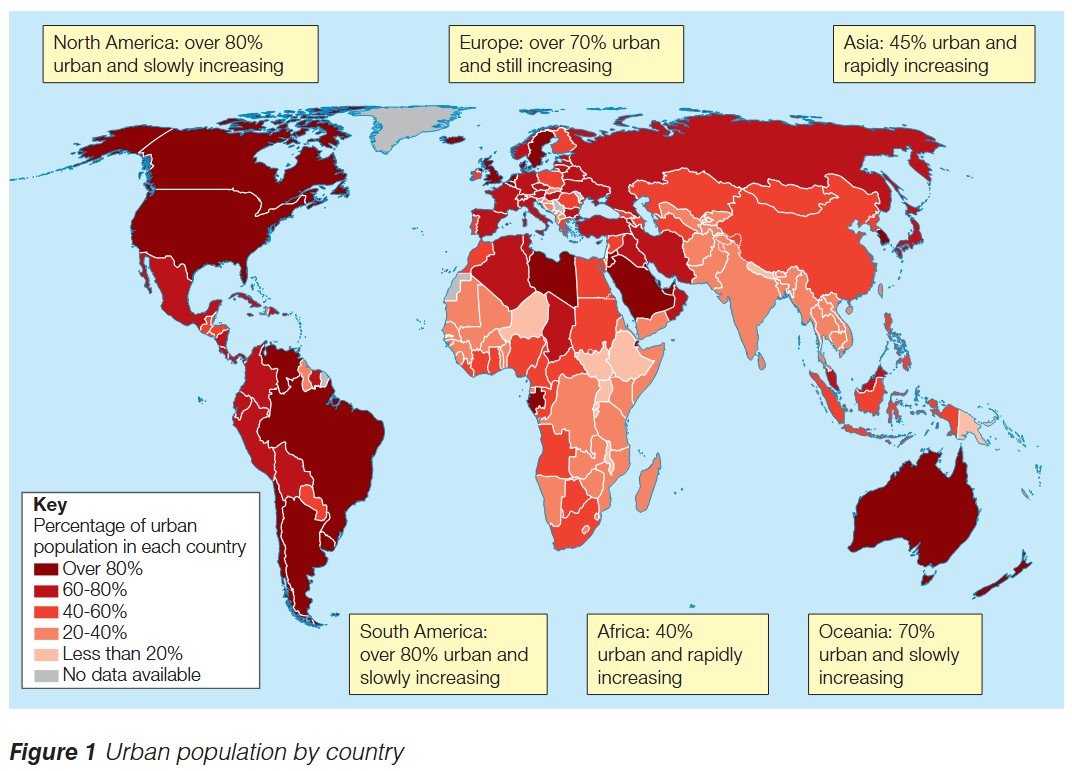
Urbanisation varies significantly across different continents and regions. Understanding these regional differences is crucial for examining global urban futures.
Important
The pace and pattern of urbanisation is not uniform across the world. While some regions are already highly urbanised with slowing growth rates, others are experiencing rapid urban expansion that creates both opportunities and challenges.
North America
- Over 80% of the population is urban
- Urbanisation is slowly increasing
- Already highly urbanised with most people living in cities
Europe
- Over 70% of the population is urban
- Urbanisation continues to increase, though at a measured pace
- Well-established urban centres with growing metropolitan areas
Asia
- 46% of the population is urban
- Urbanisation is rapidly increasing
- Contains the world's fastest-growing cities
- Significant variation between countries
South America
- Over 80% of the population is urban
- Urbanisation is slowly increasing
- One of the most urbanised continents globally
- High concentration of people in major cities
Africa
- 40% of the population is urban
- Urbanisation is rapidly increasing
- Experiencing some of the world's fastest urban growth rates
- Projected to see dramatic urban expansion
Oceania
- 70% of the population is urban
- Urbanisation is slowly increasing
- Highly urbanised, particularly in Australia and New Zealand
Urbanisation rates in different countries
The speed and pattern of urbanisation differs dramatically depending on a country's level of economic development. This relationship between development and urbanisation creates distinct patterns across different types of countries.
Advanced countries (ACs)
Advanced countries are the most urbanised nations globally. Key characteristics include:
- Already have very high percentages of urban population
- Urbanisation rates are now slowing down
- Most people already live in cities
- Urban growth is now modest and controlled
- Focus shifting to urban regeneration rather than expansion
Example
Example: Urbanisation in Advanced Countries
In the United Kingdom, approximately 83% of the population already lives in urban areas. Because such a large proportion of the population is already urbanised, the rate of urbanisation is now very slow – less than 0.5% per decade. The focus has shifted from building new cities to regenerating existing urban areas and improving the quality of urban life.
Emerging and developing countries (EDCs)
Emerging and developing countries are experiencing the most rapid urbanisation. Key features include:
- Currently less urbanised than advanced countries
- Urbanisation rates are much higher than in ACs
- Rapid migration from rural to urban areas
- Fast-growing cities with expanding populations
- Infrastructure struggling to keep pace with growth
Example
Example: Rapid Urbanisation in EDCs
China's urban population has grown from 26% in 1990 to over 60% today. Cities like Shenzhen have transformed from small towns into megacities with populations exceeding 12 million people in just a few decades. This rapid growth has created both economic opportunities and significant challenges for housing, transportation, and environmental management.
Low-income developing countries (LIDCs)
Low-income developing countries face unique urbanisation challenges:
- Currently the least urbanised countries
- Experiencing high urbanisation rates
- Rapid urban growth despite limited resources
- Cities growing faster than infrastructure can develop
- Significant rural-to-urban migration occurring
Important
Critical Challenge: In many LIDCs, cities are growing at rates of 4-5% per year, but the resources to build infrastructure, housing, and services are severely limited. This creates informal settlements and puts enormous pressure on existing urban systems.
Why does urbanisation matter?
Understanding urbanisation patterns is essential for planning our global future. The distribution and rate of urban growth affects virtually every aspect of human development.
Note
Urbanisation is more than just a demographic trend – it shapes economic development, environmental impacts, social structures, and future opportunities for billions of people worldwide.
Understanding urbanisation patterns helps us recognize:
- Where future population pressures will emerge
- Which regions need infrastructure investment
- How global development patterns are changing
- Where opportunities and challenges will arise
- How urban planning needs to adapt
The variation in urbanisation rates between ACs, EDCs, and LIDCs reflects different stages of economic development and presents distinct challenges for urban planning and sustainable development.
Key vocabulary
| Term | Definition |
|---|---|
| Urbanisation | The growth in the proportion of people living in cities and urban areas |
| Advanced countries (ACs) | Wealthy, developed nations with high levels of urbanisation |
| Emerging and developing countries (EDCs) | Countries experiencing rapid economic growth and urbanisation |
| Low-income developing countries (LIDCs) | The world's poorest countries with low but rapidly increasing urbanisation |
| Urban population | The percentage of a country's total population living in towns and cities |
Summary
Key Points to Remember:
-
Over half the world's population now lives in cities, and this proportion is growing rapidly – projected to reach 60% by 2030 and 70% by 2050.
-
Advanced countries are already highly urbanised (often over 70-80% urban), but their urbanisation rates are slowing down as most people already live in cities.
-
EDCs and LIDCs are urbanising rapidly despite being less urbanised currently, creating significant challenges for infrastructure, housing, and services.
-
Regional patterns vary dramatically: North and South America are over 80% urban, while Africa and Asia have lower percentages but are experiencing the fastest growth.
-
Urbanisation is a global process but occurs at different speeds and intensities depending on economic development levels and regional factors.