How Cities Began and Grew (OCR GCSE Geography B (Geography for Enquiring Minds)): Revision Notes
📚Revision Notes
How cities began and grew
Introduction to urbanisation
Urbanisation refers to the increase in the proportion of people living in urban areas (towns and cities). This process has been occurring for thousands of years, but has accelerated dramatically in recent centuries. Understanding how cities began and developed helps explain modern patterns of urban settlement.
Note
Today, more than half of the world's population lives in urban areas. This represents a major shift in how humans organise themselves and use space.
Historical development of cities
Early urban settlements (4000 BC onwards)
Urban settlements have existed for thousands of years. The earliest cities developed in fertile river valleys where agricultural surpluses allowed populations to grow beyond basic farming communities.
Key characteristics of early cities:
- Located in fertile river valleys (such as the Nile Valley in Egypt)
- Surplus food production enabled people to stop farming and pursue other activities
- Settlements grew as trade and exchange centres
- Initially served as places for people to trade goods and exchange ideas
Example
Example: Early River Valley Civilizations
The first cities emerged around 4000 BC in fertile river valleys such as:
- The Nile Valley in Egypt - where regular flooding created rich agricultural land
- The Indus Valley - supporting early urban centres in ancient India
- The Yellow River Valley in China - enabling food surplus and population growth
These locations provided the essential conditions for urbanisation: reliable water supply, fertile soil, and the ability to produce more food than needed for subsistence.
The Industrial Revolution and modern city growth (1800s onwards)
The pattern of urban growth changed dramatically during the Industrial Revolution in Britain in the 19th century. This period marked the beginning of modern city expansion.
How the Industrial Revolution transformed cities:
- Migration brought people from rural areas to cities
- People moved to work in factories located in urban areas
- Similar growth patterns occurred across Europe and North America
- Cities became centres of manufacturing and industry
- Urban populations grew rapidly as employment opportunities increased
Note
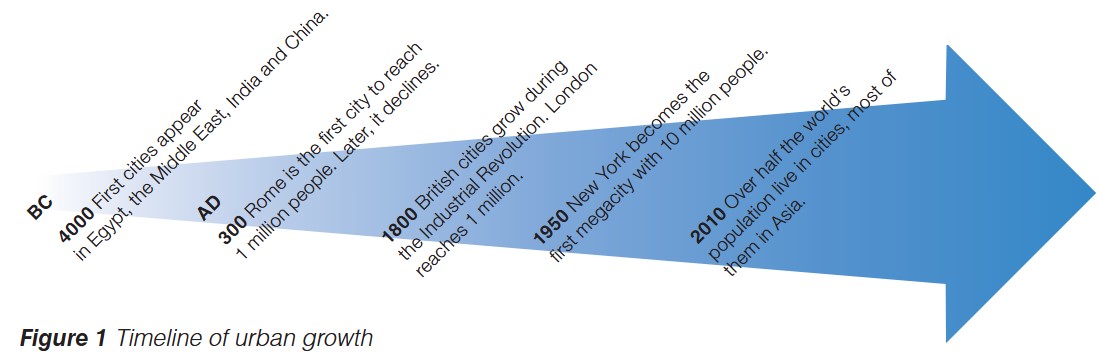
Timeline of urban growth
| Period | Event |
|---|---|
| 4000 BC | First cities appear in Egypt in the Nile Valley, India and China |
| AD 300 | Rome has half a million people and becomes an important centre for trade and business |
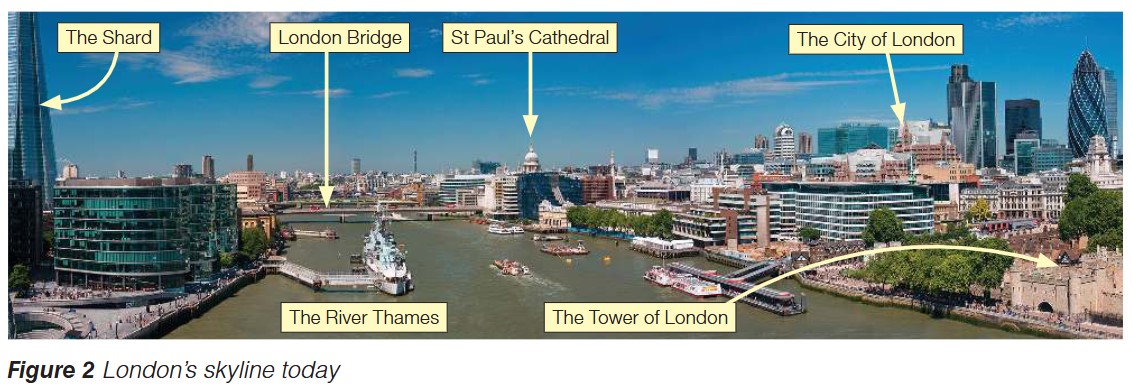
| 1801 | London becomes the first city to reach a million population. The Industrial Revolution leads to mass urbanisation in Europe |
| 1950 | More cities reach one million people. Growth of megacities with 10 million or more people |
| 2010 | Over half of the world's population lives in urban areas for the first time |
Urban functions
Cities serve multiple purposes, known as urban functions. These functions have evolved and changed throughout history as cities have developed.
What are urban functions?
Urban functions are the different roles and purposes that cities fulfil for their populations and surrounding areas. The first cities primarily served as places for trade and exchange of ideas. Over time, they have developed many additional functions.
Key urban functions
Modern cities typically perform several of the following functions:
- Market - centres for buying and selling goods and services
- Employment - providing jobs across various sectors
- Administration - governing and managing local and regional areas
- Defence - protecting populations and strategic locations
- Entertainment - offering leisure, cultural and recreational activities
- Religion - providing places of worship and spiritual centres
- Transport hub - connecting people and goods through various transport networks
- Residential - providing housing for populations
- Culture - preserving and developing arts, heritage and cultural identity
How urban functions have changed
Important
Urban functions are not fixed and have transformed significantly over time:
- Early cities focused primarily on trade and defence
- Industrial cities emphasised employment and manufacturing
- Modern cities often serve as multi-functional centres
- Some functions, like defence, have become less important in many cities
- New functions, such as entertainment and culture, have grown in significance
- Cities continuously adapt their functions to meet changing economic and social needs
Exam guidance
Important
Command Words and Exam Techniques
When answering questions about how cities began and grew:
- Describe questions: Focus on the sequence of events and key characteristics (e.g., fertile valleys → Industrial Revolution → mass urbanisation)
- Explain questions: Give reasons for urban growth (e.g., migration due to factory jobs, surplus food allowing non-farming activities)
- Use examples: Reference specific places like the Nile Valley or London to support your points
- Link historical developments to modern patterns of urbanisation
Command word tip: If asked to 'explain' why cities grew, don't just list factors—explain the connections between them (e.g., the Industrial Revolution created factory jobs, which attracted migrants from rural areas, causing cities to expand).
Remember!
Summary
Key Points to Remember:
- Cities have existed for thousands of years, beginning in fertile river valleys where agricultural surplus enabled settlements to grow.
- The Industrial Revolution in 19th century Britain marked the start of rapid, modern urban growth through factory-based employment attracting rural-to-urban migration.
- Cities perform many functions including market, employment, administration, defence, entertainment, religion, transport, residential and cultural roles.
- Urban functions have changed over time—early cities focused on trade and defence, while modern cities are multi-functional centres.
- By 2010, over half of the world's population lived in urban areas for the first time in history.