Istanbul on the Map (OCR GCSE Geography B (Geography for Enquiring Minds)): Revision Notes
📚Revision Notes
Istanbul on the Map
Introduction
Istanbul is a globally significant city with a unique geographical position and rich historical heritage. This case study examines Istanbul's location, growth, and importance throughout history, particularly during the Ottoman Empire period.
Note
Understanding Istanbul's geographical significance is crucial for comprehending its historical importance and modern development. As a transcontinental city, Istanbul serves as a living bridge between two continents and cultures.
Istanbul's geographical location
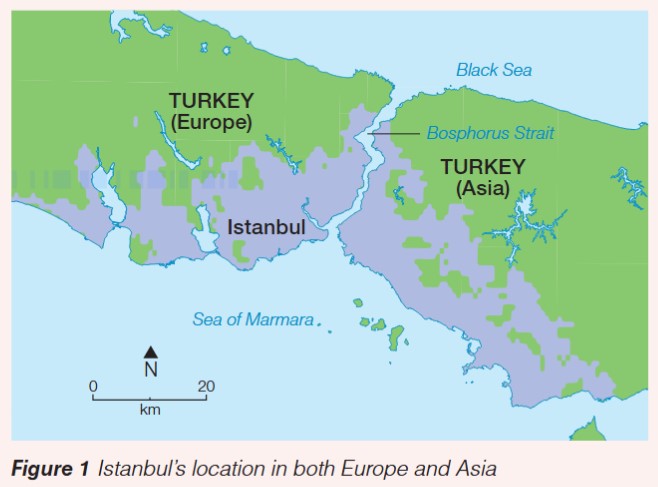
Istanbul occupies an exceptional position in the world as the only major city that straddles two continents. The city sits on the Bosphorus Strait, a narrow waterway that separates Europe and Asia, effectively placing Istanbul in both continents simultaneously.
Key geographical features:
- Located in Turkey
- Positioned on the Bosphorus Strait
- European side to the west of the Bosphorus
- Asian side to the east of the Bosphorus
- Connected to the Black Sea (north) and Sea of Marmara (south)
This strategic position has made Istanbul a crucial trading hub and cultural bridge between East and West for thousands of years.
Important
Exam tip: When describing Istanbul's location, always mention both its transcontinental nature and its position on the Bosphorus Strait. This demonstrates understanding of its unique geographical significance.
Population and urban growth
Istanbul has experienced rapid urbanisation and is now classified as one of the world's fastest-growing cities. The current population stands at approximately 15 million people, making it one of the largest urban areas in Europe and Asia.
Note
Istanbul's population has grown exponentially in recent decades due to rural-urban migration and economic opportunities. This rapid growth has created both opportunities and challenges for urban planning and infrastructure development.
The city has expanded significantly along the coastline of the Sea of Marmara, stretching both east and west of the Bosphorus Strait. This growth reflects patterns of urban development common in megacities across the world.
Historical development of Istanbul
Istanbul's importance extends back over two millennia, and the city has been known by different names throughout its history, reflecting the various empires that controlled it.
Byzantium (7th century)
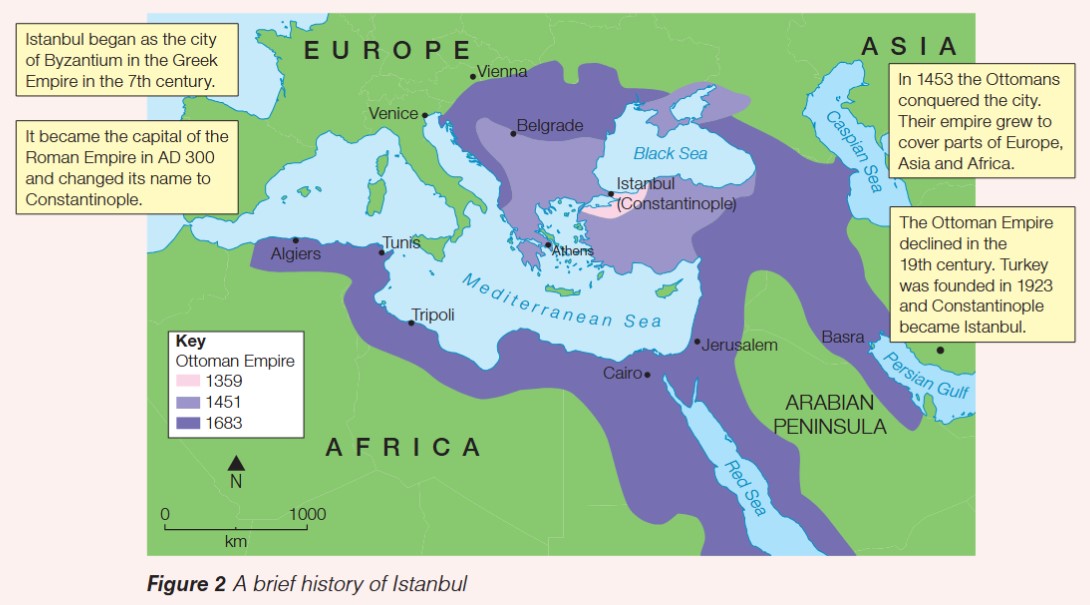
The city began as Byzantium, established by the ancient Greeks in the 7th century. During this period, it served as an important Greek settlement in the region.
Constantinople (AD 300 onwards)
In AD 300, the city became the capital of the Roman Empire. Following this transition, it was renamed Constantinople after the Roman Emperor Constantine. As the capital of the Roman (and later Byzantine) Empire, Constantinople became one of the most powerful and wealthy cities in the world.
Note
The transformation of Byzantium into Constantinople marked a pivotal moment in world history. Emperor Constantine's decision to relocate the Roman capital here reflected the city's strategic importance and set the stage for over a millennium of Byzantine civilization.
Ottoman period (1453-1923)
A major turning point occurred in 1453 when the Ottoman Empire conquered Constantinople. This marked the beginning of nearly 500 years of Ottoman rule.
The Ottoman Empire's significance:
- The empire expanded to control vast territories across three continents
- At its height, Ottoman lands covered parts of Europe, Asia, and Africa
- Constantinople (later Istanbul) served as the empire's capital and cultural heart
- The city became a centre of Islamic culture, art, and architecture
Note
The conquest of Constantinople in 1453 by Sultan Mehmed II, known as "Mehmed the Conqueror," was a defining moment that ended the Byzantine Empire and established Ottoman dominance in the region. This event is considered one of the most significant in medieval history.
The Ottoman Empire gradually declined during the 19th century, weakening through military defeats and internal challenges.
Modern Istanbul (1923 onwards)
Following the collapse of the Ottoman Empire after World War I, the modern nation of Turkey was founded in 1923. At this point, Constantinople was officially renamed Istanbul, marking the beginning of its modern identity as Turkey's largest city.
Important
Exam tip: Remember the chronological sequence: Byzantium → Constantinople → Istanbul. Each name change reflects a shift in political power and cultural influence.
Istanbul's importance in the Ottoman Empire
Istanbul held exceptional significance during the Ottoman period for several reasons:
Strategic importance:
- Controlled the Bosphorus Strait, a vital waterway connecting the Black Sea to the Mediterranean
- Positioned at the crossroads of major trade routes between Europe and Asia
- Served as a military and naval base for Ottoman expansion
Note
The control of the Bosphorus Strait gave the Ottoman Empire enormous strategic advantage. Ships passing between the Black Sea and Mediterranean Sea had to navigate through waters controlled by Istanbul, making it a critical chokepoint for maritime trade and military operations.
Cultural and political importance:
- Functioned as the empire's capital city and seat of government
- Became a major centre of Islamic learning, architecture, and culture
- Housed the Ottoman Sultan and administrative institutions
- Attracted people from across the empire, creating a diverse, cosmopolitan population
The city's architecture still reflects this Ottoman heritage today, with landmarks such as mosques, palaces, and historic districts remaining as evidence of this important period.
Note
Istanbul's cosmopolitan character during the Ottoman period was remarkable. The city was home to Muslims, Christians, and Jews who lived in different quarters but interacted in the bustling markets and public spaces. This diversity contributed to Istanbul's rich cultural tapestry and made it one of the most vibrant cities of its era.
Summary: Key points to remember
Summary
Essential facts about Istanbul:
- Istanbul is the only major city in the world located on two continents (Europe and Asia)
- The city sits on the Bosphorus Strait, which connects the Black Sea and Sea of Marmara
- Current population: approximately 15 million people
- One of the world's fastest-growing cities
Historical timeline:
- 7th century: Founded as Byzantium (Greek Empire)
- AD 300: Became Constantinople (Roman Empire capital)
- 1453: Conquered by the Ottoman Empire
- 1923: Renamed Istanbul when modern Turkey was founded
Key terms:
- Bosphorus Strait: The narrow waterway separating Europe and Asia
- Transcontinental city: A city that spans two continents
- Ottoman Empire: Major Islamic empire that ruled from Istanbul (1453-1923)
- Megacity: An extremely large urban area with over 10 million inhabitants
Significance:
- Strategic location made Istanbul vital for trade and military control
- Served as capital for multiple empires across different civilisations
- Cultural bridge between East and West
- Historical importance in the Ottoman Empire as its political and cultural centre
Exam guidance:
- When asked to describe Istanbul's location, mention both continents and the Bosphorus Strait
- When asked to explain Istanbul's importance, link its geographical position to trade, defence, and cultural exchange
- Be prepared to assess how Istanbul's location has influenced its development throughout history