Slumming It (OCR GCSE Geography B (Geography for Enquiring Minds)): Revision Notes
📚Revision Notes
Slumming It
What is a slum?
A slum is a crowded urban area where large numbers of people live in poor quality housing with inadequate living conditions. Slums can take two main forms:
- Old urban areas where existing buildings have fallen into disrepair and deteriorated over time
- Squatter settlements where residents have built their own makeshift homes on any land they can find, often without legal permission
Note
Squatter settlements represent a distinct type of slum formation where residents actively construct their own informal housing, rather than occupying deteriorating existing structures. This self-built approach is particularly common in rapidly growing cities.
Squatter settlements are particularly common in rapidly growing cities, where people construct homes from whatever materials are available, such as corrugated iron, wood, and plastic sheeting.
Where are slums found?
Slums are most commonly found in LIDCs (Low Income Developing Countries) and EDCs (Emerging Developing Countries). These are regions where cities are experiencing rapid urbanisation, with populations growing faster than the ability of governments and planners to provide adequate housing and services.
Note
The concentration of slums in LIDCs and EDCs reflects the rapid pace of urban transformation in these regions. Cities in these countries often experience population growth rates of 3-5% annually, far exceeding the capacity to develop formal housing infrastructure.
The rapid pace of urban growth in these countries means that many people end up living in informal settlements because there simply aren't enough planned, affordable homes available.
Why do slums grow?
Slums develop as a consequence of rapid urbanisation. Several interconnected factors explain why these settlements expand:
Rural-urban migration: Large numbers of people continuously move from rural areas to cities in search of better opportunities. This constant influx of new arrivals puts enormous pressure on urban housing supplies. Cities cannot build homes quickly enough to accommodate everyone who arrives.
Unemployment and poverty: Many migrants struggle to find stable, well-paid employment in cities. Without regular income, they cannot afford decent housing in formal residential areas. This forces them to seek cheaper alternatives in slum areas or to build their own shelters.
Poor urban planning: In rapidly growing cities, governments often lack effective planning systems to manage urban expansion. There may not be enough homes being built for new residents, and housing developments cannot keep pace with population growth.
Poor infrastructure: Inadequate infrastructure makes the situation worse. Cities may lack sufficient transport networks, reliable power supplies, and clean water systems. This means that even when housing is built, it may not have access to essential services, making conditions difficult for residents.
Important
These factors don't operate in isolation – they reinforce each other in a cycle of urban poverty. Rural-urban migration increases demand for housing, while unemployment prevents people from affording formal housing, forcing them into slums where poor infrastructure limits economic opportunities.
Hazards of living in a squatter settlement
Life in a squatter settlement presents numerous serious hazards that threaten the health, safety, and wellbeing of residents. These dangers stem from the poor quality of housing, lack of proper infrastructure, and overcrowded conditions.
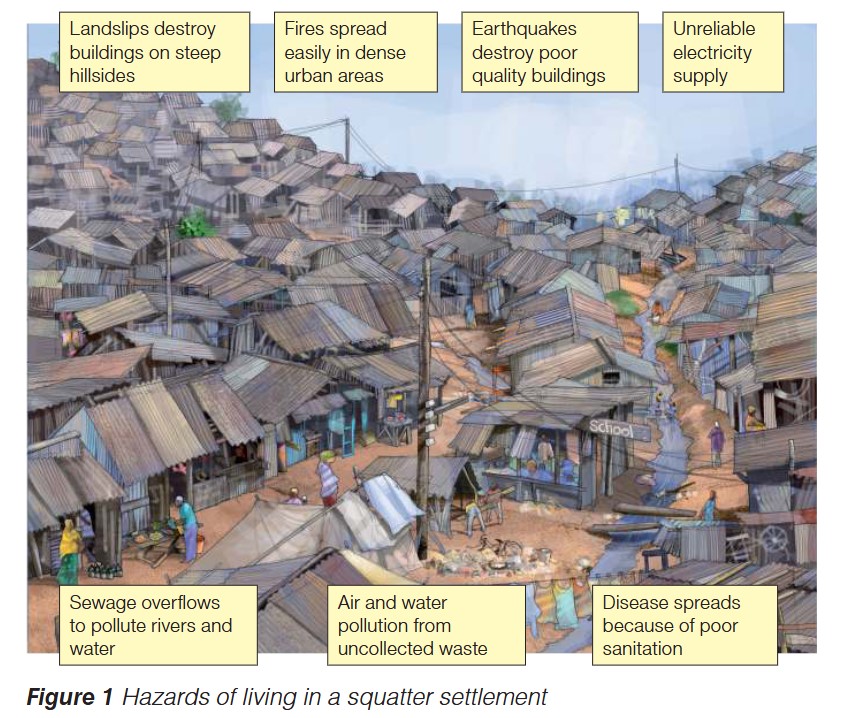
Landslips on steep hillsides: Many squatter settlements are located on marginal land that formal developers avoid, such as steep hillsides. Buildings constructed on these slopes are vulnerable to landslides, especially during heavy rainfall. The structures often lack proper foundations, making them unstable and prone to collapse.
Important
Steep hillside locations are particularly dangerous because squatter settlements are often built on the most hazardous land that nobody else wants. During heavy rainfall, the combination of poor drainage, lack of vegetation, and unstable construction creates catastrophic landslide risks.
Fires spread easily in dense urban areas: The closely packed nature of squatter settlements means that homes are built very near to each other, sometimes with shared walls. Most buildings are constructed from highly flammable materials like wood and corrugated iron. If a fire breaks out, it can spread rapidly from one home to another, destroying large areas before emergency services can respond. Many settlements lack proper access roads, making it difficult for fire engines to reach affected areas.
Earthquakes destroy poor quality buildings: The makeshift construction methods used in squatter settlements mean that buildings are not earthquake-resistant. They lack the structural reinforcement and proper foundations needed to withstand seismic activity. During earthquakes, these poorly constructed homes collapse easily, causing injuries and deaths.
Unreliable electricity supply: Many squatter settlements either lack formal electricity connections or have illegal, unsafe wiring systems. This creates fire risks from electrical faults and means that residents have inconsistent access to power for lighting, heating, and cooking. Some people resort to dangerous alternatives like kerosene lamps or open fires indoors.
Note
The electricity situation in squatter settlements creates a vicious cycle: without legal connections, residents use dangerous makeshift solutions that increase fire risks, but authorities are reluctant to provide formal services to illegal settlements, perpetuating the unsafe conditions.
Sewage overflows pollute rivers and water: Squatter settlements typically lack proper sewage systems and drainage. Raw sewage often flows through open drains or directly into nearby rivers and streams. This contamination pollutes water sources that communities may rely on for drinking, washing, and cooking. The sewage creates unhygienic conditions and foul smells throughout the settlement.
Air and water pollution from uncollected waste: Without formal waste collection services, rubbish accumulates in streets and open spaces. Waste piles attract rats, flies, and other disease-carrying pests. Some residents burn rubbish to reduce it, creating toxic smoke that pollutes the air. Rainwater washes waste into water supplies, causing further contamination.
Disease spreads because of poor sanitation: The combination of overcrowding, contaminated water, inadequate sewage disposal, and poor waste management creates ideal conditions for diseases to spread. Residents face increased risks of waterborne diseases (like cholera and typhoid), respiratory infections, and parasitic illnesses. Limited access to healthcare facilities makes it difficult for people to get treatment when they fall ill.
Important
The health hazards in squatter settlements are interconnected and self-reinforcing. Poor sanitation contaminates water, leading to disease. Overcrowding accelerates disease transmission. Lack of healthcare access allows diseases to spread unchecked. Breaking this cycle requires coordinated improvements across multiple areas.
Summary
Key Points to Remember:
- A slum is a crowded urban area with inadequate housing and poor living conditions, found mainly in LIDCs and EDCs where rapid urbanisation is occurring
- Squatter settlements form when people build their own homes on any available land, often without legal permission or access to proper services
- Slums grow due to rural-urban migration, unemployment, poor urban planning, and inadequate infrastructure that cannot keep pace with population growth
- Living in squatter settlements exposes residents to multiple hazards including landslides, fires, earthquake damage, unreliable electricity, sewage pollution, waste accumulation, and disease spread
- These hazards are interconnected – poor sanitation leads to disease, lack of infrastructure increases fire risk, and marginal locations increase vulnerability to natural hazards