Changes in punishment including the introduction of the ‘Bloody Code’ (OCR GCSE History B (Schools History Project)): Revision Notes
📚Revision Notes
Changes in punishment including the introduction of the 'Bloody Code'
Changes in punishment
Note
Due to growing poverty during the Tudor era, many left their homes to seek help and food. As a response, Parliament enacted the Vagabond Act in 1495, which granted officers the authority to arrest and hold vagabonds.
However, according to historian Mark Rathbone, the Vagabond Act was vague.
- The term "vagabond" was loosely defined by Parliament. It covered those who were unemployed, looking for employment and those who opted to live the life of a vagabond.
- Moreover, the Act did not recognise the impotent poor, including the sick, elderly and disabled.
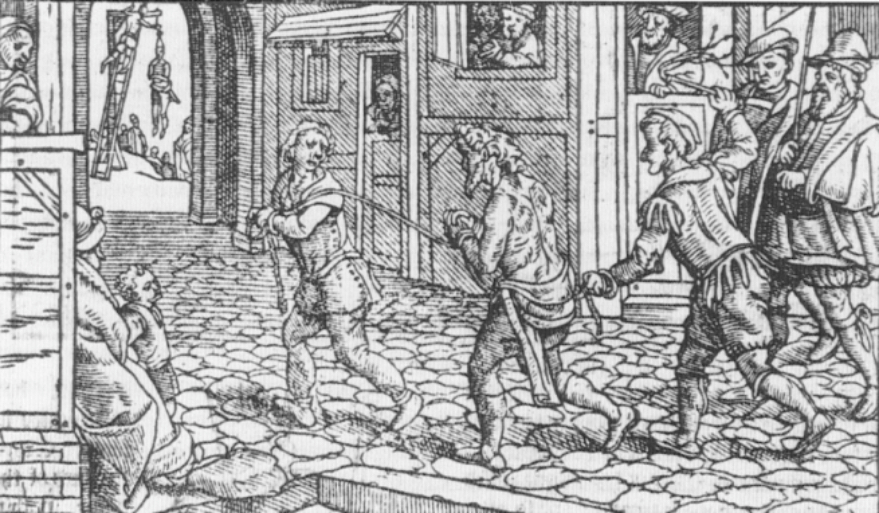
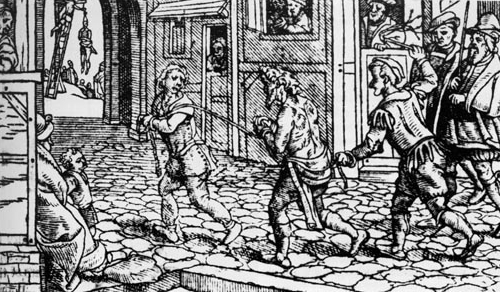
16th-century vagabonds
The problem with vagrancy in the Tudor period was addressed in a couple of ways:
- Flogging or branding was used to scare people away from becoming vagrants;
- The government passed the responsibility of addressing this problem to local towns.
- Poor Laws were enacted in 1598 and 1601, which passed the responsibility of aiding vagrants onto the local parish.
In order to deter vagabonds, laws were passed in the 16th century.

1530: The Vagabonds Act decreed that strong vagabonds should be whipped and returned to the place of their birth. Repeat offenders could be mutilated or even executed.
1547: A further Vagabonds Act declared that people caught begging, or those who refused to work, could be forced to become a slave. They could be branded and chained. If a slave ran away three times, they could be sentenced to death.
1572: This Act also said that if a vagabond was caught, they could be whipped and have a hole burnt through their ear. As with the previous Acts, people who continued to offend faced the death penalty.
1593: This law allowed people who were found to be committing acts of vagrancy or vagabondage to be forcibly sent overseas (transportation), as part of early attempts to establish a colony in North America.
Note
Between the 16th and 19th centuries, capital punishment was the sentence for serious crimes. It was in 1868 when the last capital punishment was carried out in public. Most mediaeval towns and cities had a specific place for public executions. The most notorious execution site was Tyburn in London. Other public execution sites in London included Smithfield, Newgate Prison, Tower of London and Tower Hill, Lincoln Inn Fields, Banqueting House and Charing Cross.
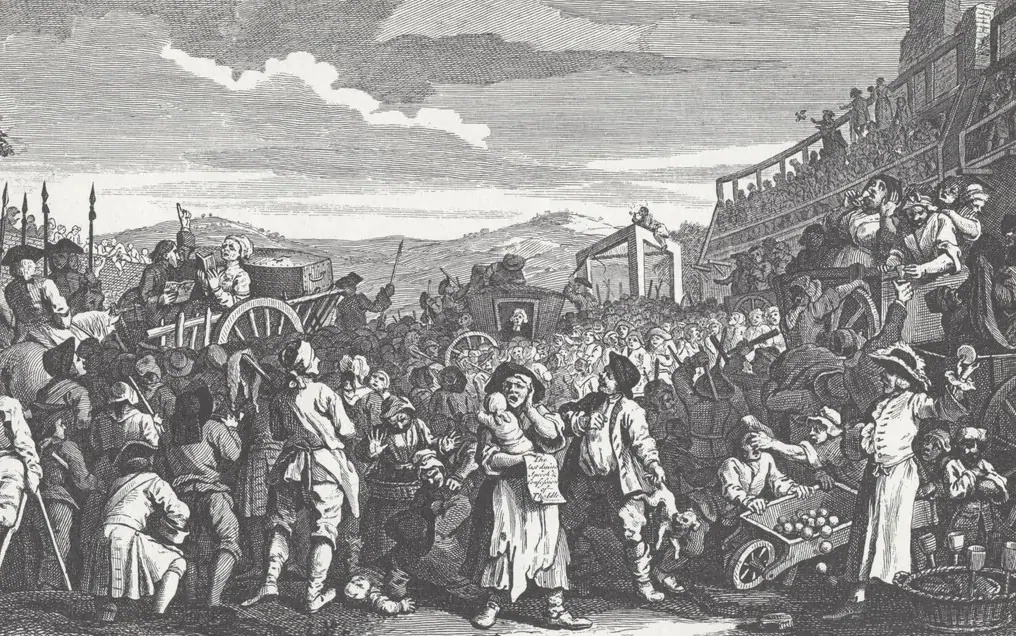
Hogarth's The Idle 'Prentice Executed at Tyburn
Public executions
Prisoners who were publicly executed at Tyburn were often dragged from Newgate Prison. Ringleaders of the Pilgrimage of Grace were sentenced by Henry VIII to death in 1537. As a punishment for heresy, offenders were executed in public by hanging or burning at the stake. The last woman to be burned at the stake in England was Catherine Murphy who was charged with counterfeiting. In 1587, Mary, Queen of Scots was beheaded for treason during the reign of Elizabeth I.
In 1605, people who were convicted of drunkenness were also put in stocks for six hours and fined up to 3 shillings.
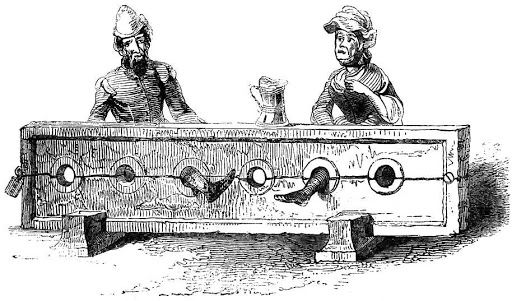
Note
Stocks are heavy wooden frames with holes to hold a person's ankles, whilst pillory was the same but confined a person in standing position with head or wrists in holes.
Some believed that stocks were typically used on members of the lower class, while a pillory was used on those of a higher social status. The use of stocks and pillory as a punishment by humiliation existed until the mid-19th century. Another type of punishment by humiliation was branding. A famous example was the character in Nathaniel Hawthorne's The Scarlet Letter who wore a huge letter A for adultery.
Abolition of stocks and pillory
Peter James Bossy was the last to be punished with pillory for 1 hour for perjury in 1830. In addition to pillory, Bossy was imprisoned for six months and sentenced to transportation to Australia for seven years. In 1837, pillory was abolished in England and Wales. Unlike pillory, stocks were never formally abolished. It was in 1872 when the last punishment of stocks was recorded in Newbury, England.
THE BLOODY CODE
In the years after 1660, the number of offences carrying the death penalty increased enormously. You could be executed for around 50 crimes in the middle of the 17th century. That figure had increased to 160 by 1750 and then to 225 by 1815.
Note
You could be hanged for:
-
stealing goods worth 5 shillings
-
stealing from a shipwreck or a naval dockyard
-
cutting down a young tree
This series of laws was later called "The Bloody Code."
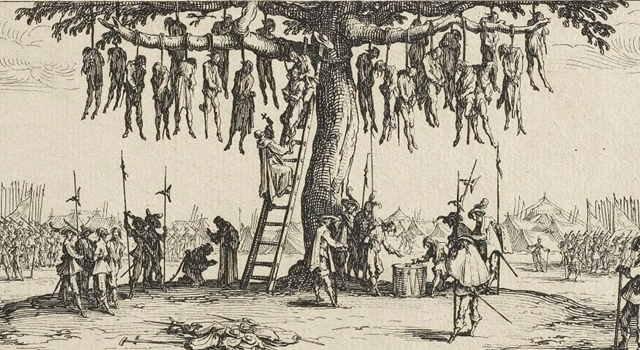
18th-century punishment in England
The Bloody Code that existed between 1688 and 1815 in England particularly aimed to protect properties from criminals. Even the smallest property crime was punished by the death penalty. The book Crime and Punishment by Frank McLynn explains the nature of the Bloody Code in 18th-century England.
Note
Glossary of Terms:
VAGRANCY
Being in the state of a vagabond; a homeless and unemployed person travelling from town to town looking for work.
JUSTICES OF THE PEACE
Appointed local landowners who held trials and hearings in manorial courts. They assisted sheriffs.
BLOODY CODE
Term referring to the large number of crimes that could be punished by death.
HERESY
Not believing in the accepted state religion.
WATCHMEN
They patrolled at night to protect people and properties from robberies, fire and other disturbances
STOCKS and PILLORY
Stocks are heavy wooden frames with holes to hold a person's ankles, whilst pillory was the same but confined a person in a standing position with head or wrists in holes.
Note
Example Assessment Question: DISCUSSION
- Write an essay explaining how and why new crimes came into existence during in the early modern period.
- Think about what these new crimes were. What was happening in the country at that time to lead to these changes? Consider religious issues, government and power and social changes. SOURCE A:
Note
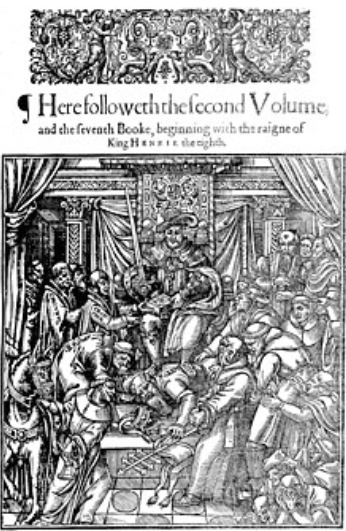
Example Assessment Question: INFERENCE Given your understanding of religious changes in England during this period and examination of the source, answer the questions provided.
- Who are being depicted in the source?
- What was its implication to the nature and cause of crime during this period?
- How significant was this religious change to crime and punishment in the early modern period? SOURCE B:
Note
Example Assessment Question: ANALYSIS SOURCE C:
It is a melancholy truth, that among the variety of actions which men are daily liable to commit, no less than a hundred and sixty have been declared by Act of Parliament to be felonious without benefit of clergy; or, in other words, to be worthy of instant death. — Jurist William Blackstone
Examine the source and answer the questions provided.
- Based on the source, what is the Bloody Code?
- To what extent do you agree with the statement?