Catholics (OCR GCSE History B (Schools History Project)): Revision Notes
📚Revision Notes
Mary Queen of Scots, the Armada and war with Spain
Mary Queen of Scots
Mary Stuart, known as Mary, Queen of Scots (1542-1567), was the daughter of James V of Scotland, making her Elizabeth's cousin. She became Queen of Scotland at 6 days old but political instability meant that for her safety she was raised in France by her mother's family. She was a Stuart, Catholic, beautiful and accomplished, making her a nemesis of sorts to Elizabeth.
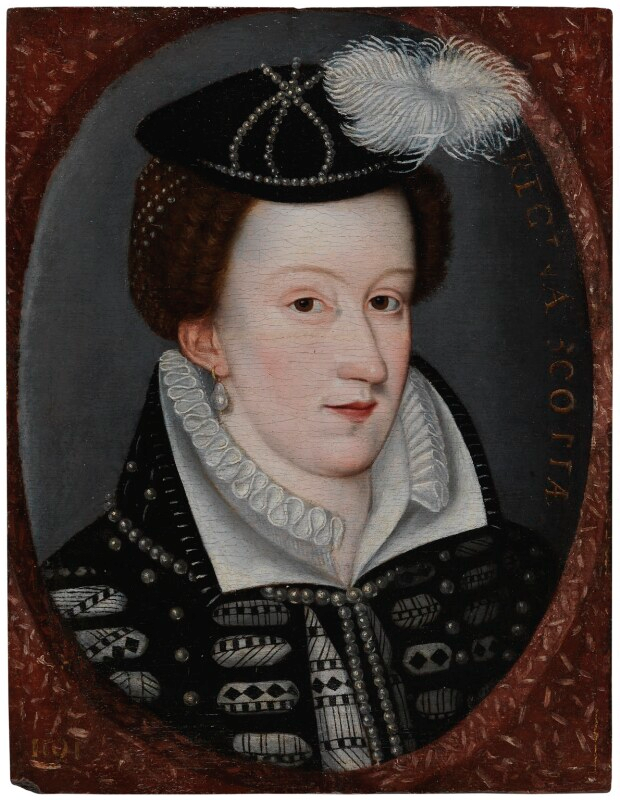
Mary, Queen of Scots
Mary's Timeline
Raised in France whilst Scotland was ruled by regents.
Married Francis II, King of France, in 1558. He died 1560.
Mary returned to Scotland in 1561 and married Lord Darnley, in 1565. She had James in 1566.
Scandal erupted and Mary was forced to abdicate in July 1567.
In February 1567, Darnley was found suspiciously murdered.
Three months later, Mary married James Hepburn.
She fled to England, seeking protection from her cousin, Elizabeth.
Feeling threatened, Elizabeth imprisoned her in various residences for 19 years.
Why was Mary a threat to Elizabeth?
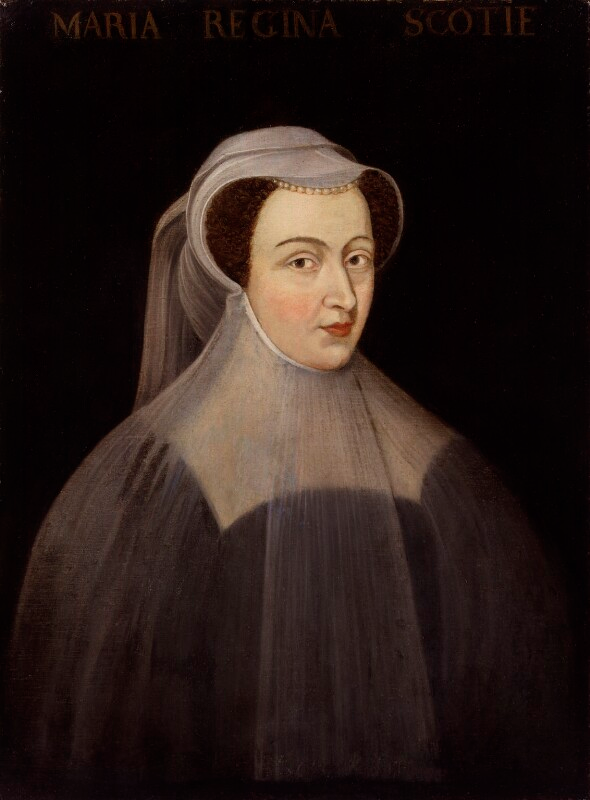
Portrait of Mary, Queen of Scots, c1559
Mary was implicated in several plots to remove Elizabeth over the years, but there was never sufficient evidence to charge her of treason. Through Walsingham, Elizabeth had a sophisticated intelligence network with which to monitor the situation.
England and Scotland had always had a difficult relationship.
- Elizabeth's refusal to marry and produce an heir complicated the matter of succession.
- As a Stuart, Mary was a potential heir to the throne and her claim deeply threatened Elizabeth.
- As a Catholic heir, she posed a threat to Elizabeth's Protestant movement and had powerful Catholic allies in England.
- In an attempt to control Mary, Elizabeth suggested Robert Dudley marry her.
- Instead, Mary married her drunk and violent cousin, Darnley, to strengthen the Stuart claim to the throne, which enraged Elizabeth.
- Mary's arrival in England was unwelcome news to Elizabeth as it fuelled questions of her legitimacy.
- Elizabeth worried that Mary's arrival in England would increase Catholic rebellion, which it did in 1569.
Note
Elizabeth knew that removing Mary would create big problems for England, internally and from abroad, and refused to approve her execution for involvement in earlier plots. Whilst imprisoned in Tutbury Castle in late 1585, Mary was strictly guarded.
Note
Mary's strict imprisonment did not stop a plot from developing. After years of imprisonment and isolation, Mary was resentful. She began secret correspondence with a French Ambassador and Anthony Babington, a Catholic recusant.
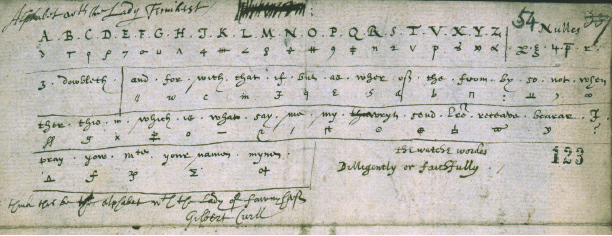
The Babington Plot cypher
Note
Letters written in code were smuggled out of Tutbury Castle but Walsingham knew about them and wanted Mary to entrap herself. When Mary consented to the assassination of Elizabeth, she was placed on trial and found guilty of treason.
- Whilst Mary's six co-conspirators were hung, drawn and quartered, Elizabeth initially refused to sign Mary's death warrant, which angered the Privy Council.
- A year later, under threat of a Spanish invasion, Elizabeth signed the warrant but ordered it not to be sealed.
- The Privy Council met without her and sealed the death warrant.
- Mary was executed on 8 February 1587 in a bloody and botched beheading.
- Elizabeth was furious and wracked with guilt. She banished Cecil for 6 months and imprisoned her secretary in the Tower of London.
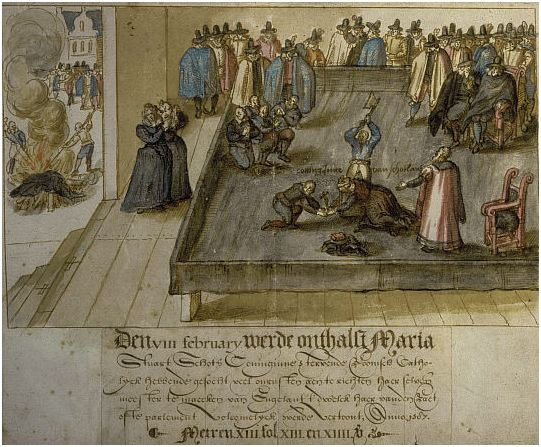
Mary, Queen of Scots', execution in February 1587
Note
Whilst English Catholics did not rise up, it worsened matters in the war with Spain.
Armada and war with Spain
There were several factors that led to Spain declaring war on England:
- Spain was a powerful and influential Catholic country when Elizabeth acceded.
- Elizabeth's push for Protestantism created tension.
- Spain had colonies in the New World and English pirates would plunder the gold-ladened Spanish galleons.
- Tensions were high by 1585 as a consequence of privateering and England supporting the Low Countries against Spain, while Spain supported assassination plots against Elizabeth.
- Mary's execution in 1587 was the trigger to launch an invasion of England in 1588.
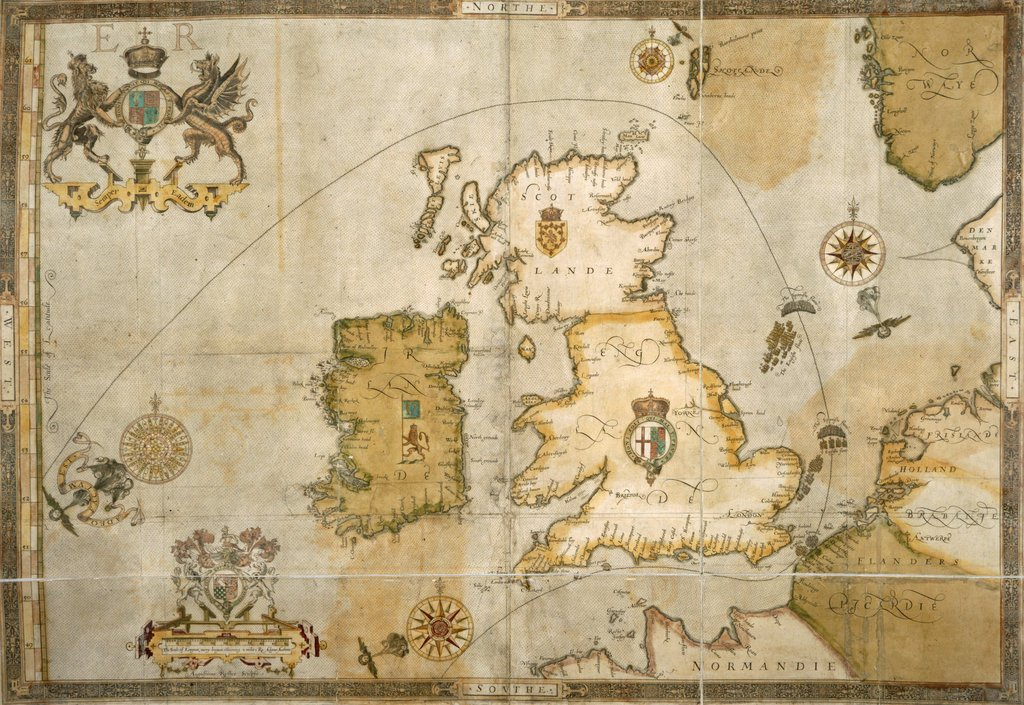
Historical map of the Spanish Armada and the British Isles
Comparing adversaries: Commanders
SPAIN
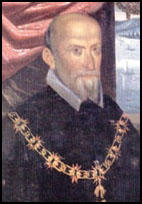
Duke of Medina Sidonia
- A high-born courtier
- Competent soldier and distinguished administrator
- No naval experience
- Expressed doubts about the campaign but his message was blocked from getting to King Philip because courtiers believed God would see them succeed.
ENGLAND
Lord Howard of Effingham
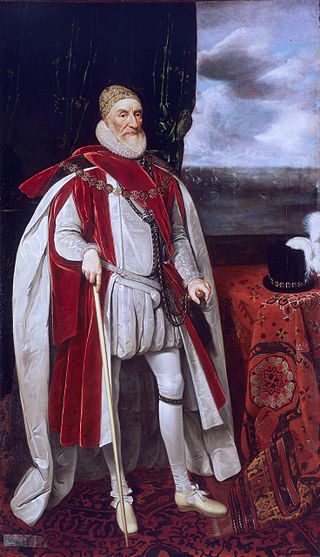
- Statesman and Lord High Admiral
- Little experience fighting at sea
Francis Drake
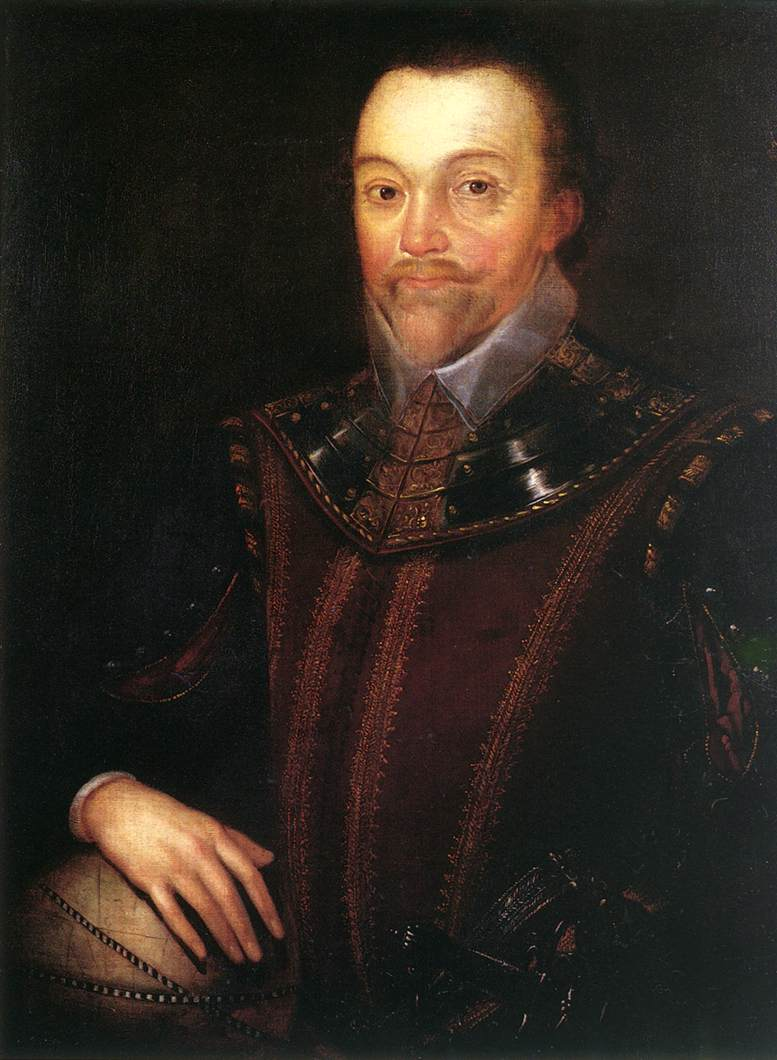
Highly competent sea captain, privateer, slave trader, naval officer and explorer
John Hawkins
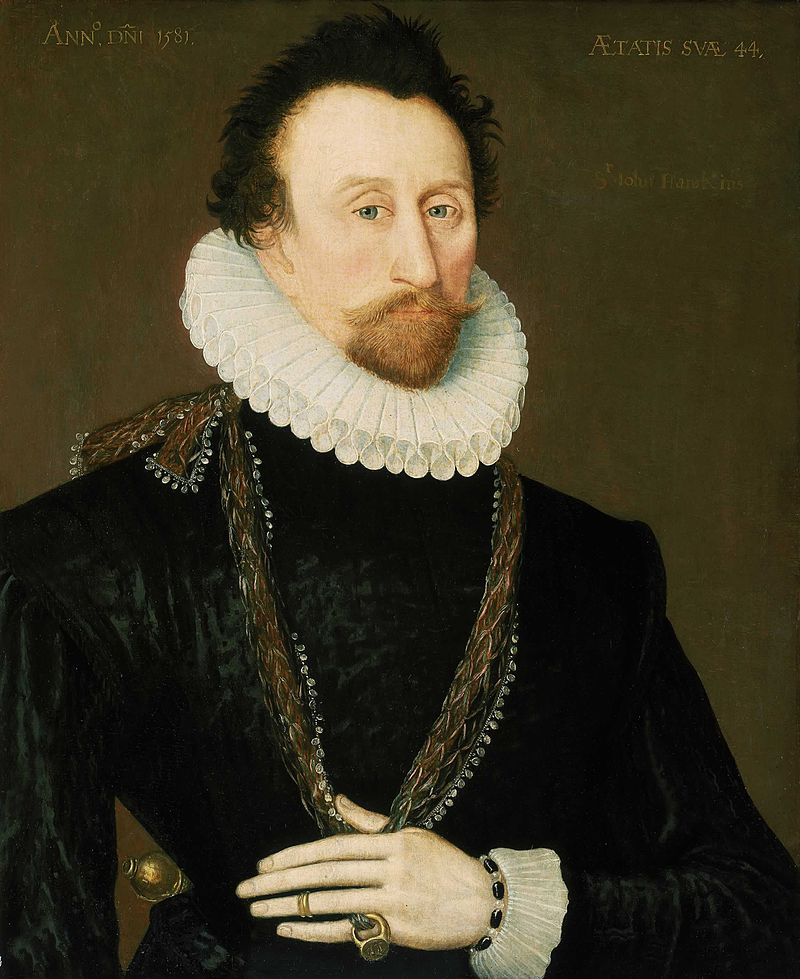
Highly competent slave trader, naval commander and administrator, merchant, navigator, shipbuilder and privateer.
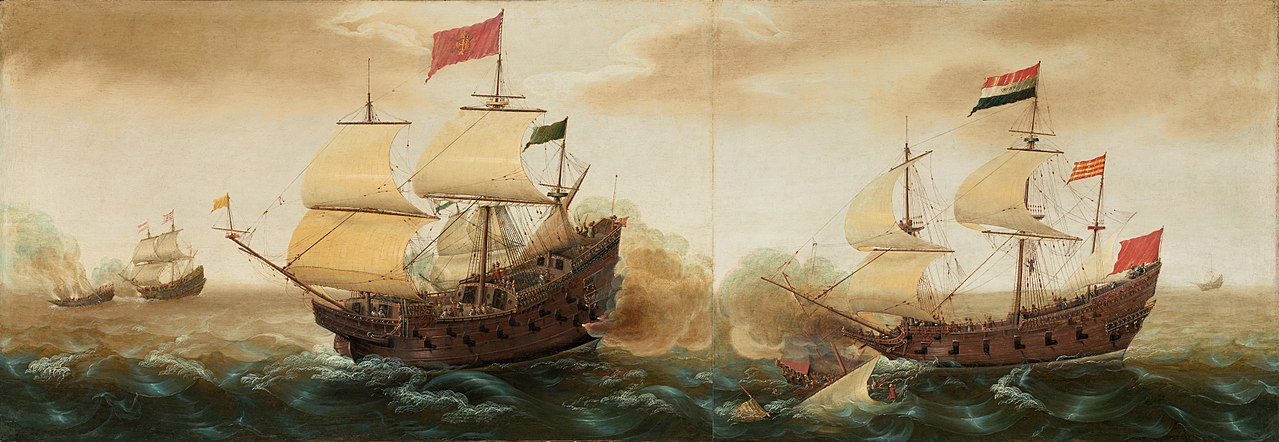
Comparing adversaries: Navies
SPAIN
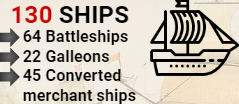
- The Spanish treasure-fleet galleons were cumbersome and heavy.
- They carried up to 2,000 powerful cannons – best for short distances and slow to reload.
- Floating fortresses crowded with 20,000 soldiers ready for close combat.
ENGLAND
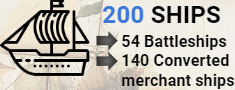
- Hawkins developed the English galleon, which was lower, sleeker and consequently much faster and more manoeuvrable than Spanish galleons.
- The fleet had 200 smaller cannons that could fire over a long distance and quick to reload.
- 14,000 men on board armed with longbows.
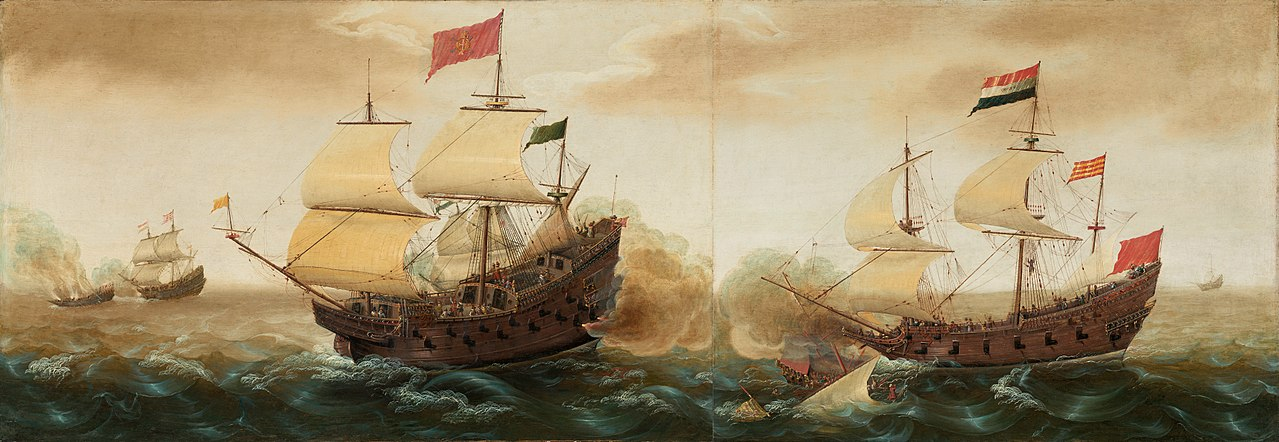
The Armada sets sail
- The Spanish Armada attempted to leave Lisbon, Spain, on 28 May 1588.
- Storms and the need for repairs caused delays and it finally set sail two months later, on 21 July.
- With knowledge that a siege was coming, beacons along the south and southeastern coast were manned by watchmen around the clock.
- The Armada was sighted by the English from Lizard Point in Cornwall. The warning beacons were lit and quickly spread the word that the Spanish were coming.
- The Armada entered the Channel and took a fleet of 66 English ships by surprise, but they were not attacked.
- English ships prepared for battle and began chasing the Armada but little damage was suffered.
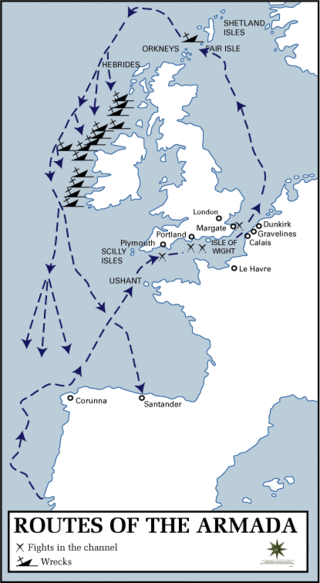
Route of the Armada
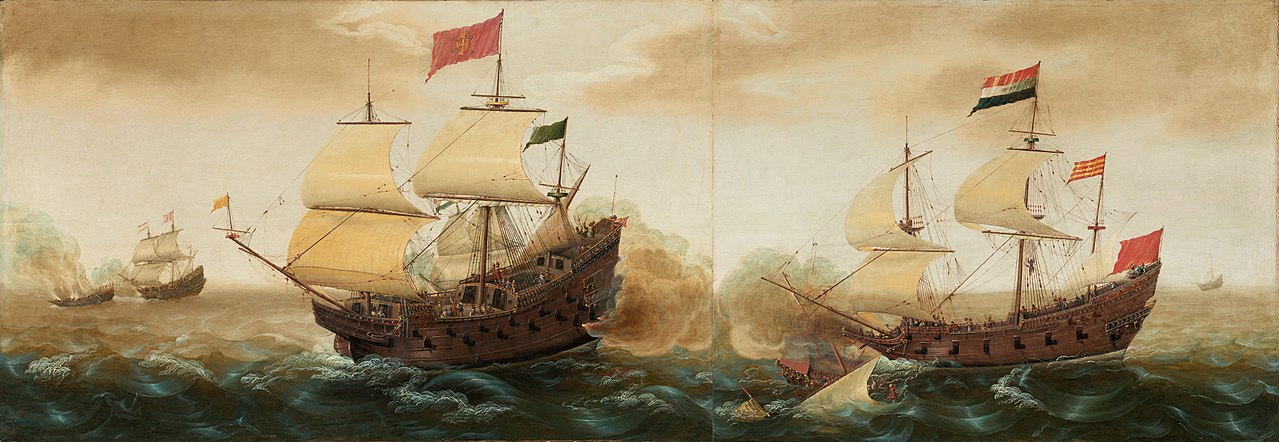
Calais
- The Armada anchored near Calais. More troops from the Netherlands were meant to join but didn't as they couldn't anchor to pick them up.
- The English deployed fire ships, which scattered the fleet and they broke formation.
- Upon scattering, the Spanish ships were blown towards dangerous sandbanks.
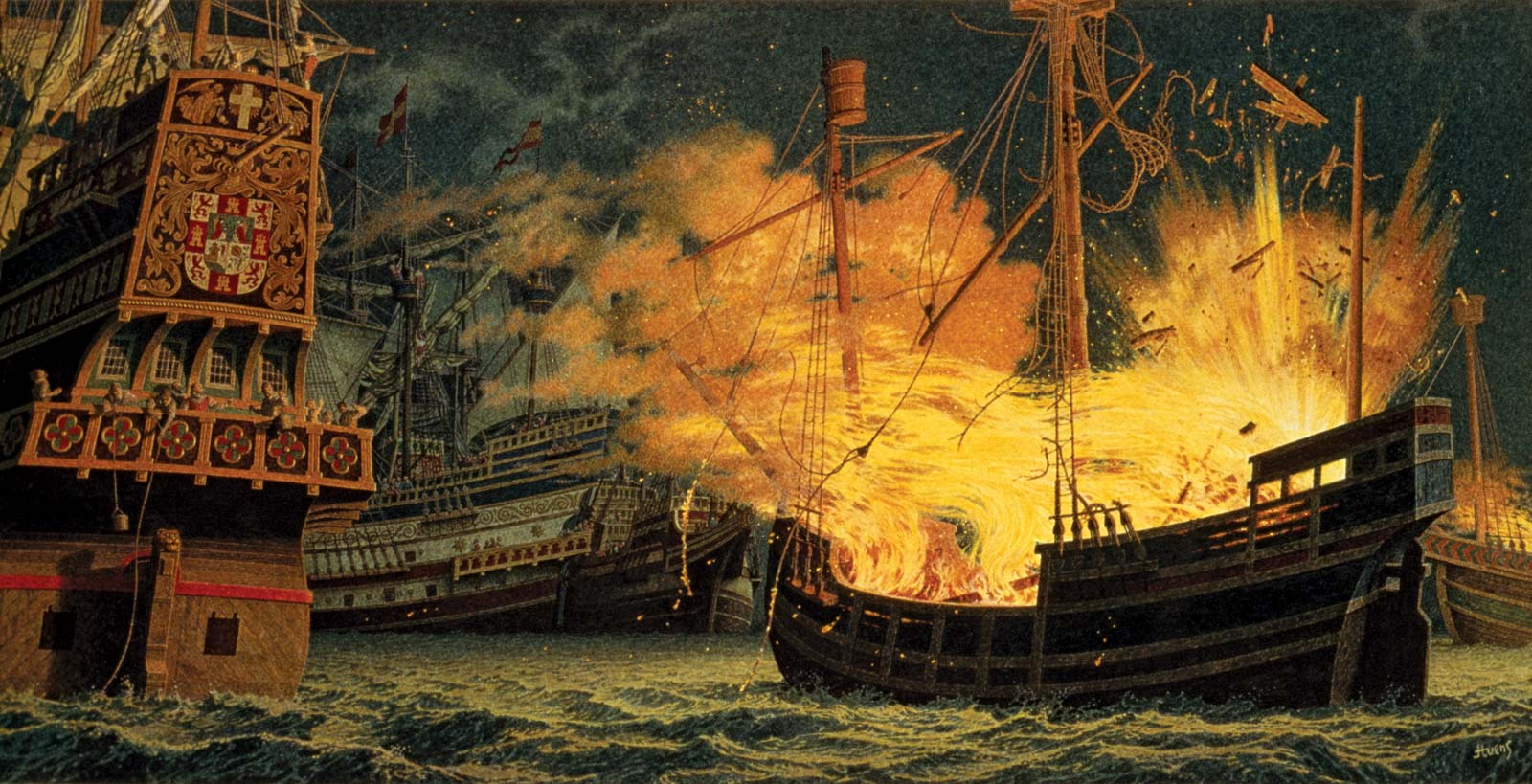
Painting depicting the battle between the British fleet and the Spanish Armada, 1588, Jean-Leon Huens
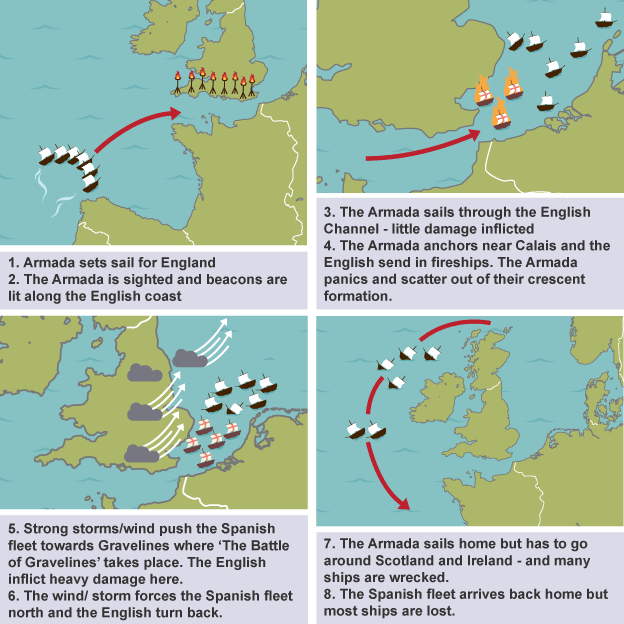
- The Armada sails through the English Channel - little damage inflicted.
- The Armada anchors near Calais and the English send in fireships. The Armada panics and scatter out of their crescent formation
Gravelines
- The English attacked again in the Battle of Gravelines. The battle was at close range, and despite Spain's preference for close battle, they experienced significant damage.
- The Armada was forced north around the east coast of Britain and the English fleet turned back after food and ammunition supplies ran low.
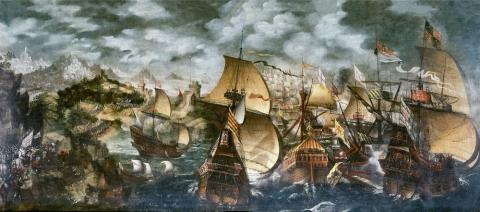
The Battle of Gravelines, 1588 by Nicholas Hilliard
-
English fire ships broke the Spanish formation on the night of 7 August.
-
Sidonia's ships famously 'scattered in a thousand directions'.
-
The English were wary of engaging but with wind and strong currents in their favour and the Spanish in danger of being driven onto the shore, England held the advantage.
-
The Spanish anticipated English troops boarding their ships, but without this happening, they were unable to make use of their larger manpower.
-
The Armada had used a lot of its ammunition with front-line ships before the English closed in.
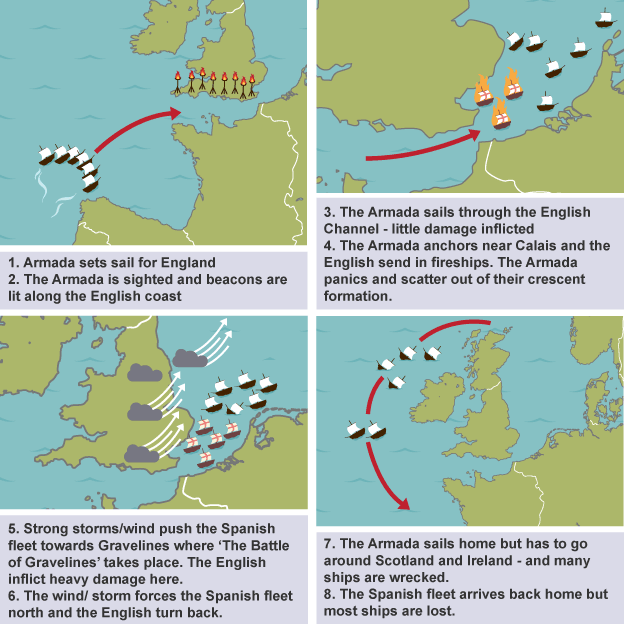
-
Strong storms/wind push the Spanish fleet towards Gravelines where 'The Battle of Gravelines' takes place. The English inflict heavy damage here.
-
The wind/storm forces the Spanish fleet north and the English turn back.
-
In the Battle of Gravelines, England suffered almost no damage whilst the Spanish incurred significant damage.
-
With the Spanish drifting towards the shoals, England broke off the fight in the evening.
-
The following day, the winds shifted and the Spanish were able to move away from their dangerous situation and escape northwards.
-
The Armada sailed north to go around Scotland and, though not followed by England who had turned back to resupply, that's where their troubles really began.
Trouble for the Armada
To return to Spain, the Armada needed to go around the top of Scotland and along the Irish coast. Severe weather caused significant losses for the fleet. Many ships sank or were wrecked on the coast and thousands of Spanish sailors drowned. Almost half their fleet was destroyed by the time they arrived back in Spain. The English celebrated the events as a major victory over the strongest nation in Europe.
Act of God
Spain: The defeat by the English was regarded as punishment by God.
England: The defeat of the Spanish was regarded as proof that God was on their side.
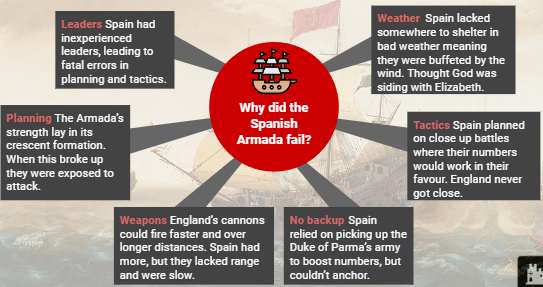
Glossary of terms
Recusant
Catholics who refused to adopt Protestantism during Elizabethan times, thereby going against her authority
Middle Way
Religious and political arrangements made for England during the reign of Elizabeth I
Transubstantiation
The Catholic belief in the transformation of a eucharist symbol into the body and blood of Christ
Excommunicate
Officially excluding someone from the church
Papal bull
An edict issued by the Pope
Act of Supremacy
An act that gave the monarch supreme power over a nation rather than the foreign power of the Pope in Rome
Espionage
The practice of spying or of using spies, typically by governments to obtain political and military information
Armada
A fleet of warships. Spain sent a force in 1588 to invade England but it failed due to storms
Exam Practise
Task 1
Note
Analyse the sources and answer the questions which follow:
- What do you think were the effects of the sources on the attitude of English Catholics towards Elizabeth I?
- How real was the Catholic threat based on your analysis of the sources?
SOURCE A
This very woman, having seized the crown and monstrously usurped the place of supreme head of the Church in all England together with the chief authority and jurisdiction belonging to it, has once again reduced this same kingdom- which had already been restored to the Catholic faith and to good fruits- to a miserable ruin…
- Pope Pius V's bull against Elizabeth I, 1570
SOURCE B
Since that guilty woman [Elizabeth] ... is the cause of so much injury to the Catholic faith... there is no doubt that whosoever sends her out of the world... not only does not sin but gains merit... And so, if those English gentlemen decide actually to undertake so glorious a work, your Lordship can assure them that they do not commit any sin.
- Pope Gregory XIII, 1580
Task 2
Note
Using your knowledge and analysis of the source, write about the reasons for the failure of the Spanish Armada. Include in your discussion the impact of the Armada's defeat on the Elizabethans.
SOURCE C
The Invincible Armada of the Imperial Spanish Fleet was for the first time conquered. But not by the men, nor by the squadrons, it put out to fight. It was vanquished by the elements, against which valour and human daring are impotent, because it is God who rules the seas. Only against the hurricane and the gales did we lose, because the Lord wished it, the naval supremacy of the world.
L. Ortiz Munoz, 1940