The persecution of witches (OCR GCSE History B (Schools History Project)): Revision Notes
📚Revision Notes
The persecution of witches
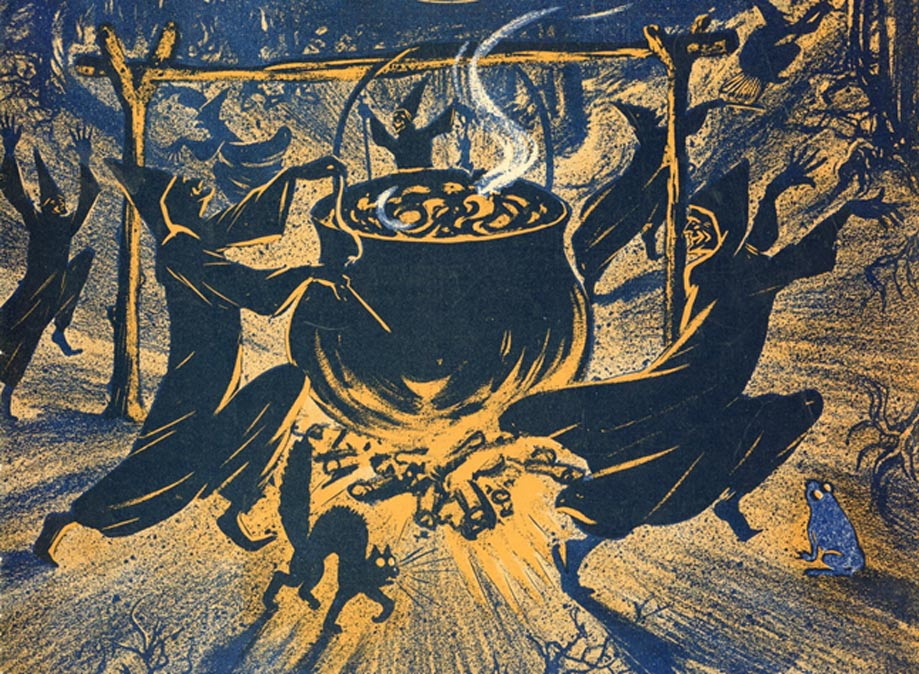
The persecution of witches
Religion played a huge role in the lives of Elizabethans, and that made the church and the priest central to their daily lives. It was the law to attend church service once a week and people placed great importance in the will of God. Belief in the Devil was also prominent at the time and superstitions were obeyed to prevent bad luck. Additionally, Elizabethans believed in magic and witchcraft - both good and bad.
Note
Interest in magic and witchcraft became widespread as the printing press became a powerful tool in distributing information and allowing circulation of prints with religious and supernatural themes.

Why did Elizabethans believe in witchcraft and witches?
- Belief in the supernatural became a coping mechanism for Elizabethans facing challenges in their lives.
- Witches were the obvious target whenever there were unexplainable events such as frequent outbreaks of the deadly plague, death from terrible disease, bad harvests, houses that burnt down and miscarriages.
- Limited medical knowledge and facilities meant that something or someone had to be blamed for these unforeseen tragedies.
Timeline of witchcraft and witches in Elizabethan England
1562 Elizabethan Witchcraft Act was passed
1566 First witch trial in England in Chelmsford, Essex
1579 The second Chelmsford witch trials
1579 The Windsor witch trials
1582 St. Osyth Witches of Essex, whose case was tried at Chelmsford
1584 The Discoverie of Witchcraft was published by Reginald Scot
1587 Clergyman George Gifford published A Discourse Concerning the Subtle Practices of Devils by Witches and Sorcerers
1589 The third Chelmsford witch trials
1593 The trial of the Warboys witches of Huntingdon
1593 George Gifford published A Dialogue Concerning Witches and Witchcrafts
Witchcraft Act 1563
Prior to Elizabeth's An Act Against Conjurations, Enchantments and Witchcrafts, Henry VIII's Act of 1542 defined witchcraft as a felony, a crime punishable by death and the forfeiture of goods and chattel, but Edward VI repealed this during his reign in 1547. The Witchcraft Act of 1563, which was passed early in Elizabeth's reign, was considered to be more merciful towards those found guilty of witchcraft than its predecessor. Punishments could range from a term of imprisonment for lesser offences to death penalty when harm had been caused.
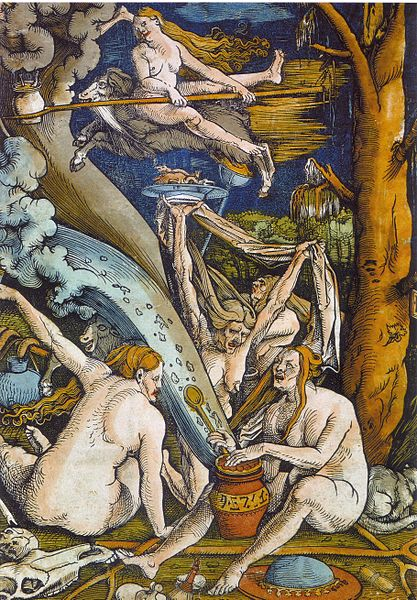
Witches by Hans Baldung, 1502
Witchcraft in numbers
Following the passage of the act, indictment for homicide caused by witchcraft began to appear:
- Witch trials increased in the 1570s and peaked in 1580s
- 228 out of 1,158 homicide victims were suspected to be caused by witchcraft
- Half were acquitted out of 157 people accused of killing with witchcraft
- 90% of the accused were women
Cunning folk and black witches
People in Elizabethan England believed in the powers of cunning folk, known as wise women or white witches, and black witches. They distinguished these two: people sought help from cunning folk whilst they accused black witches of causing harm.
Cunning folk were known to:
Cure disease
Provide charms
Foretell the future
Give love spells
Find lost property
Counter dark magic
Black witches were known to:
Practise hexing
Invoke demons
Cause harm (e.g. destroy crops)
Engage in devil worship
Have 'familiars'
Note
Familiars were animals that witches could turn into so they could spy on people and move around without being seen.
Elizabethan witch trials
Note
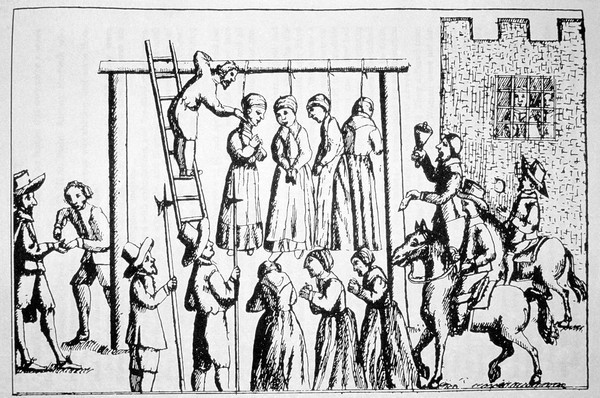
Between 1570 and 1609, fifty-three accused of witchcraft were hanged in Essex.
The first witch trial in England was in Chelmsford, Essex in 1566. Agnes Waterhouse, along with two other women, was accused of using witchcraft to cause illness to William Fynne. She was the first woman executed for witchcraft in England.
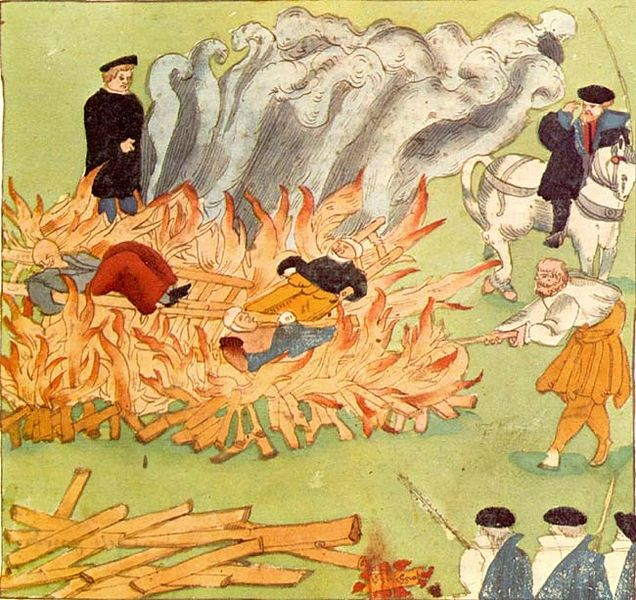
Execution of three witches in Switzerland, 1585
Those who were found guilty of using witchcraft were executed by hanging in England whilst death by burning was the punishment for witchcraft in other European countries at that time.
Why was there an increase in witchcraft accusations in late Elizabethan times?
Village tensions
Disputes between neighbours in the village could lead to witchcraft accusations when cursing was followed by a person falling ill.
Repression of women
Women were usually accused of witchcraft, particularly those who were poor, old, unprotected, single or widowed.
Prominence of Puritans
Puritans believed that the Devil was harming people through the witches. Aside from their desire to end Catholic traditions, they also fought to end pagan practices. Puritanism was prominent in Essex, where most witchcraft accusations took place.
Note
Elizabeth believed in witches but her attitude towards the practice was more lenient than in other countries. It has been suggested that this was because her mother, Anne Boleyn, was accused of sorcery. Additionally, she took an interest in astrology.
Some of the witch trial tests were:
- Swimming test
- Prayer test
- Witch's marks
- Touch test
Glossary of terms
Merry England
A utopian conception of English society and culture based on the way of life that was allegedly prevalent in Early Modern England
Puritan
English Protestants who sought to purify the Church of England of Roman Catholic practices
Censorship
The suppression of information, on the basis that such material is considered objectionable, harmful and sensitive
Witchcraft Act 1563
An act that made the crime of "killing or destroying" by use of witchcraft punishable by death
Witchcraft
The exercise or invocation of alleged supernatural powers to control people or events
Hexing
Casting an evil spell
Familiars
Supernatural entities that would assist witches in their practice of magic
Exam Practise
Task 2
Note
Analyse the sources and discuss the changing attitudes to theatre that occurred over Elizabeth's reign. Include the views and the impact of the authorities and Puritans to theatre and popular pastimes.
SOURCE A
"The blast of the trumpet will call a thousand people to see a filthy play. An hour's tolling of a bell would only bring a hundred people to a sermon."
- John Stockwood preaching in 1578
SOURCE B
Our late Queen Elizabeth of blessed memory, how well she approved of plays, calling them 'harmless splendours of time'. She gave countenance to their endeavours and encouraged them…
- Richard Braithwaite, from The English Gentleman (1641)
Task 3
Note
Use your knowledge and analysis of the source to answer the questions which follow:
- What were the reasons for the increased witchcraft persecution in Elizabethan England?
- To what extent do you agree with the source? Cite facts to substantiate your perspective.
- Mary Kilbourne Matossian, Poisons of the Past: Moulds, Epidemics, and History, 1989
SOURCE C
In Early Modern Europe witchcraft persecution occurred at time of widespread impairment of the health of people and animals. The distribution of illness, often interpreted as a sign of bewitchment, mimics the pattern of the incidence of ergotism [...] When the incidence of these symptoms increased, so did the incidence of witchcraft persecution. We today should avoid the mistake made by the witch-burners of long ago by not overlooking the physical cause for the events that mystify us.