Roanoke: England’s attempt at an American colony (OCR GCSE History B (Schools History Project)): Revision Notes
📚Revision Notes
Roanoke: England's attempt at an American colony
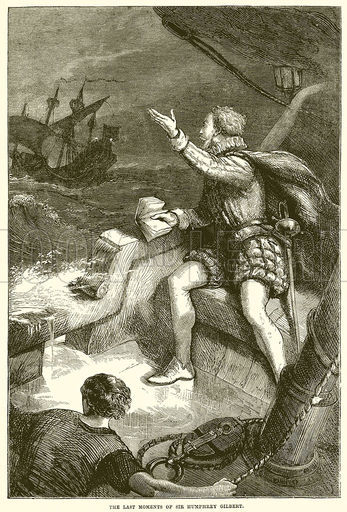
Last moments of Sir Humphrey Gilbert before dying at sea
The queen granted a charter to Sir Humphrey Gilbert in 1578 to explore and colonise territories unclaimed by Christian kingdoms. Gilbert had claimed St. John's, Newfoundland, in 1583 as the first North American English colony by royal prerogative of the queen. Following Gilbert's death, the charter was then divided between his brother Adrian Gilbert and his half-brother Walter Raleigh. Much of the land awarded to Raleigh was already claimed by Spain.
The charter issued to Raleigh on 25 March 1584 detailed that a colony should be established by 1591 and Raleigh was to "discover, search, find out, and view such remote heathen and barbarous Lands, Countries, and territories… to have, hold, occupy, and enjoy."
Note
Whilst the power granted to Raleigh was broad, he oversaw the operations from London and was forbidden to leave the queen's side.
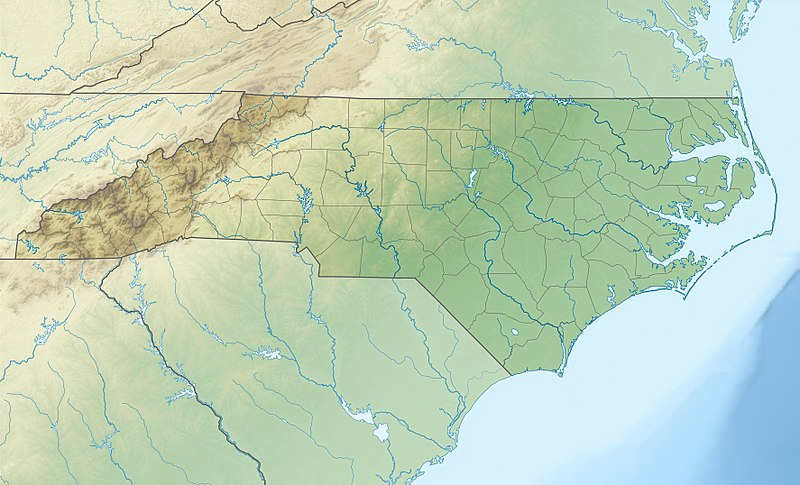
Location of Roanoke colony within what is now North Carolina
Note
The name of the island was named after the Roanoke Carolina Algonquian people who inhabited the area.
What happened to the lost colony?
Failed attempt to return to England The colonists might have attempted to sail back to England and the ship could have been lost.
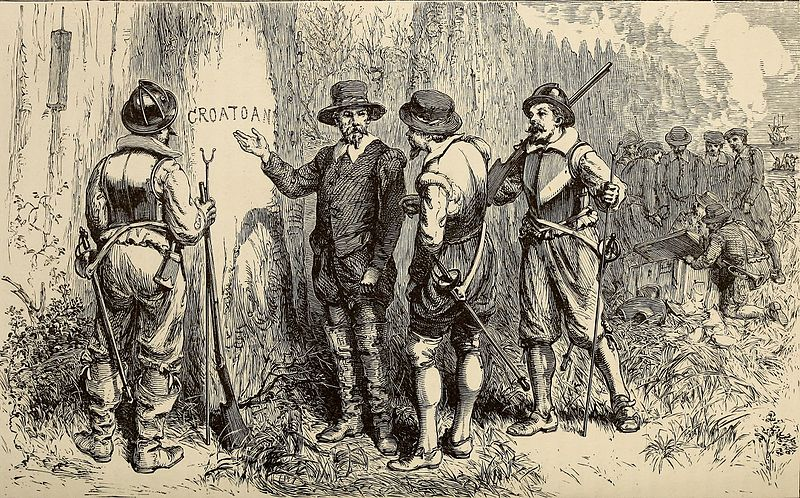
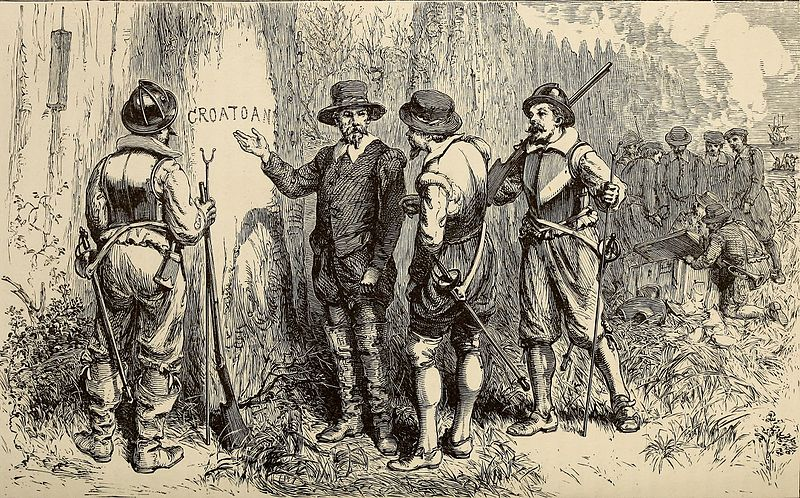
Relocation The word 'Croatoan' was carved into a fence post and might be a clue to what happened to the colony.
Conflict It has been suggested that the colonists were slaughtered by the natives.
Spanish attack It is also thought that the colony was wiped out by the Spanish, an enemy of England.
Note
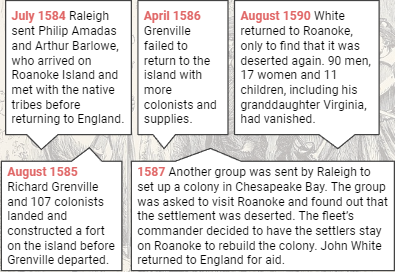
John White returned to the Roanoke Colony in 1590 to discover the settlement abandoned. A palisade had been constructed since White's departure in 1587, and the word "CROATOAN" was found carved near the entrance.