The growth of big business, cities and mass migration (OCR GCSE History B (Schools History Project)): Revision Notes
📚Revision Notes
The growth of big business, cities and mass migration
Following the Reconstruction Era was the Gilded Age. The Gilded Age can be described as a period of very fast economic growth, especially in the north, which was less affected by the Civil War and was an industrial economy, and the West, where gold, oil and other natural resources were being extracted in abundance.
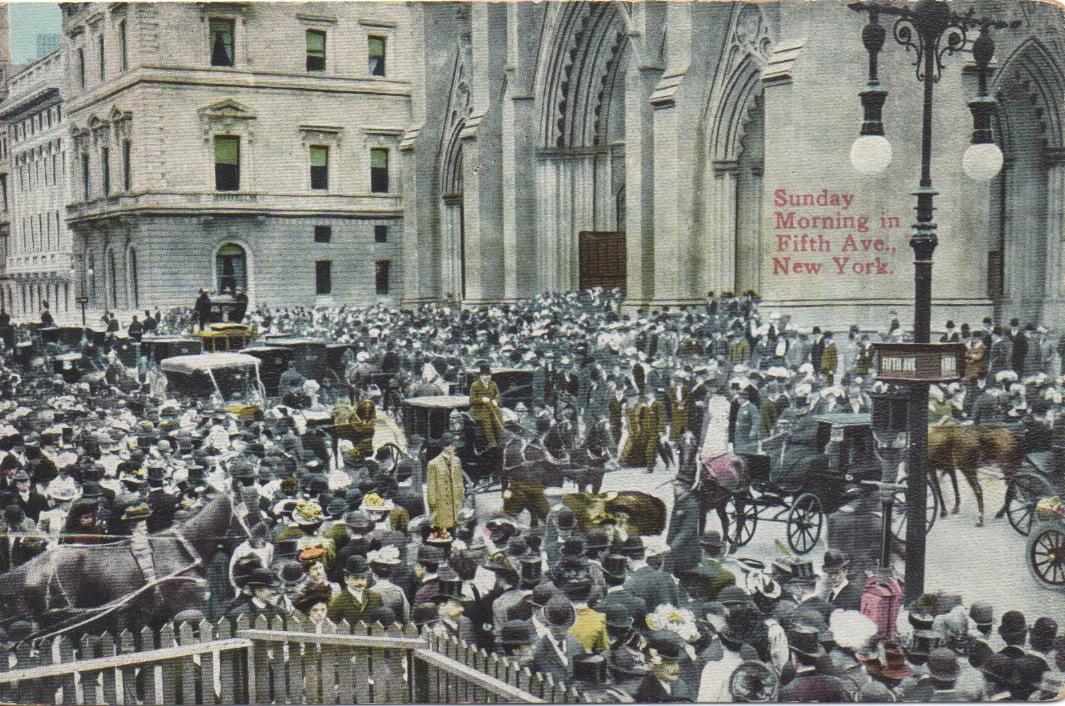
Fifth Avenue NY during the Gilded Age
Note
For the average American, rapid industrial growth meant that wages grew by 60% between 1860 and 1890, and were higher than those in Europe, especially for skilled workers. This encouraged many aspiring Europeans to immigrate in search of a better life. On the west coast, immigrants from Europe and eastern states saw industries such as farming,
Ranching and mining increase.
Railroads
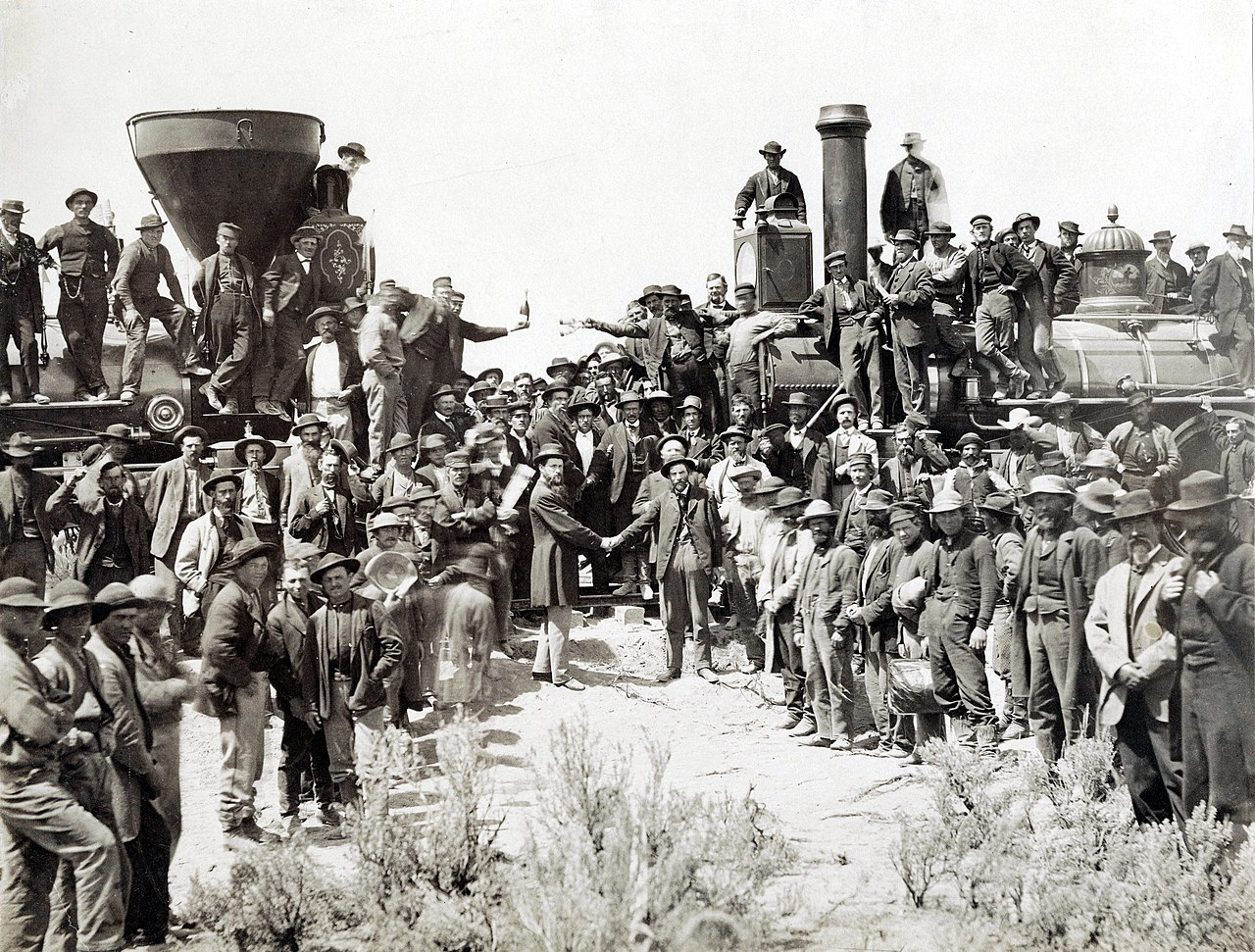
Celebration of the meeting of the railroad in Utah on May 1869
Note
Railroads were the major growth industry. Railway lines were built to connect the east coast with the west coast, and this allowed people, resources and business to connect. It also facilitated the growth of factories, mining and finance industries.
Note
By 1850, over 9,000 miles (14,000 km) of railroad lines had been built. Railroad companies in the north and midwest constructed networks that linked nearly every major city by 1860. The railroads were central to the development of a national market and paved the way for organising, managing and financing a large corporation.
Immigration
Note
After 1880, steam-powered ships offering lower fares were able to bring even greater numbers of immigrants to America seeking better wages, work opportunities, better living conditions and escape from persecution. Young people between 15 to 30 years old came in a wave of immigration.
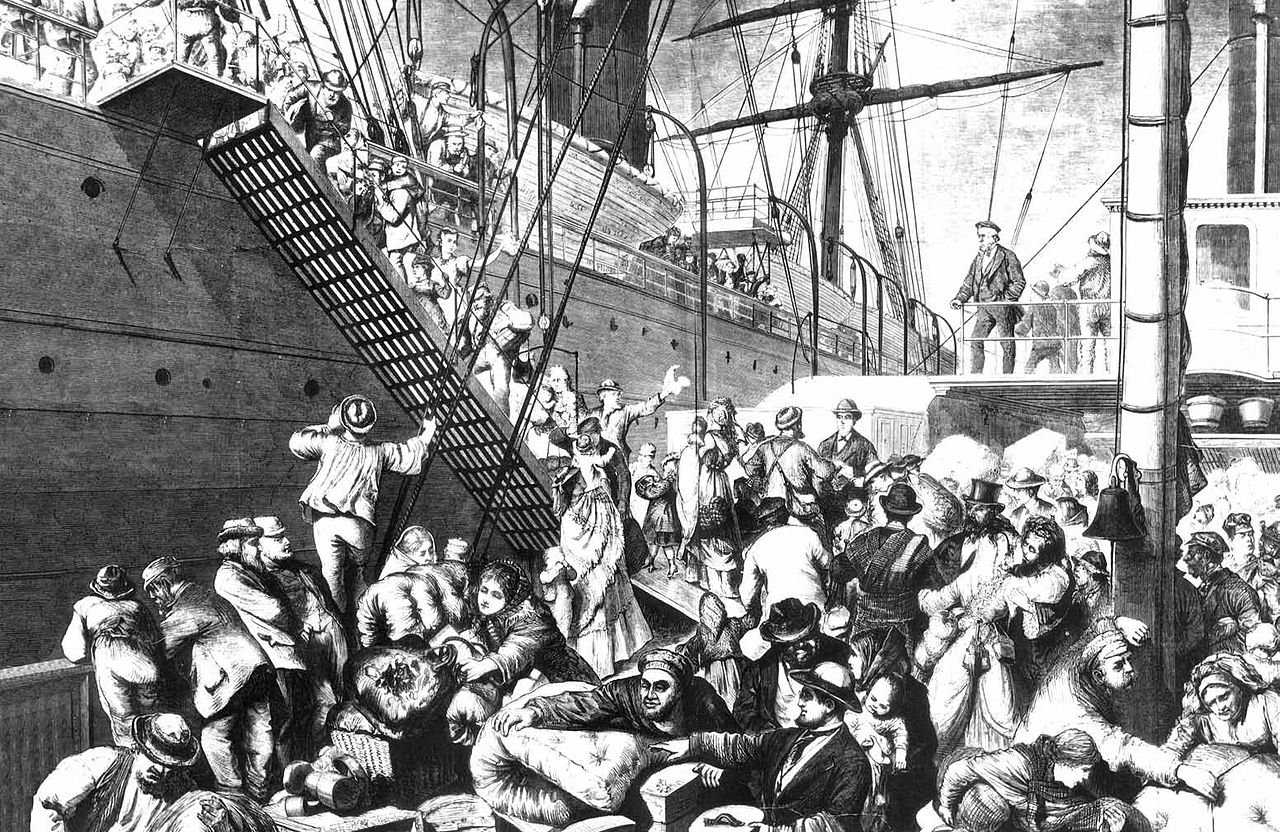
A scene depiction of German emigrants boarding a steamer in Hamburg and arriving in New York
Note
In total, it's estimated that 25 million Europeans came to the U.S. They consisted of Italians, Greeks, Hungarians, Poles and other Slavic peoples. Each group had a distinct migration pattern but they primarily flocked to cities and made up the bulk of the U.S. industrial labour force. By 1890, such numbers of immigrant arrivals also saw an uptick in xenophobia and many saw them as a serious danger to the culture of America.
Note
After 1880, the old immigration of Germans, British, Irish and Scandinavians tapered off. Because the U.S. was still generating large numbers of new unskilled jobs every year, a new wave of immigrants came. They were predominantly from Italy, Poland, Austria, Hungary, Russia, Greece and other points in southern and central Europe.
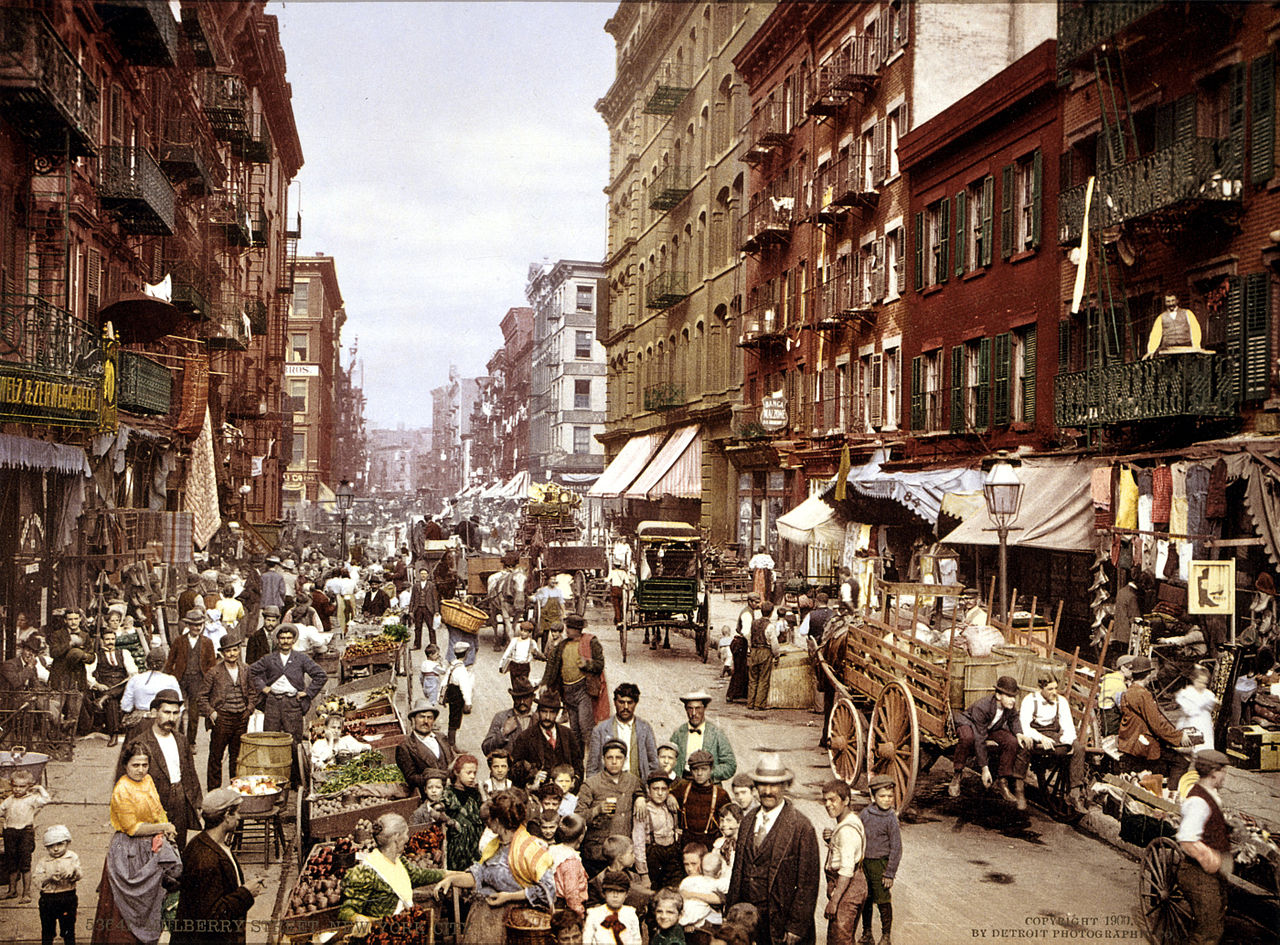
Mulberry Street, along which Manhattan's Little Italy is centred. Lower East Side, circa 1900
Note
Other new immigrants included Catholic and Jewish immigrants from southern and eastern Europe. The majority of immigrants came through Ellis Island in New York, thus, it was a city of large foreign settlements.
Glossary of Terms
Jim Crow Laws
Refers to the series of laws that legalised racial segregation from the end of the Reconstruction period in 1877 until the enactment of the Voting Rights Act in 1965
Exoduster Movement
Migration of African Americans to Kansas (literal meaning: exodus to the dusty west)
Reservations
These are areas of land "reserved" by the U.S. government for the Plains Indians.
Massacre
An act of deliberate and violent murder on a large number of people in a certain area.
Dawes Act of 1887
A law that authorised the federal government to divide the land of the Plains Indians.
Ghost dance
In 1889, a Paiute Indian named Wovoka said that if they performed a sacred dance, known as the ghost dance, they would be able to reclaim the Great Plains.
Gilded Age
Following the Reconstruction Era was the Gilded Age. The Gilded Age can be described as a period of very fast economic growth, especially in the north.
Task 1: Analysing Images
Note
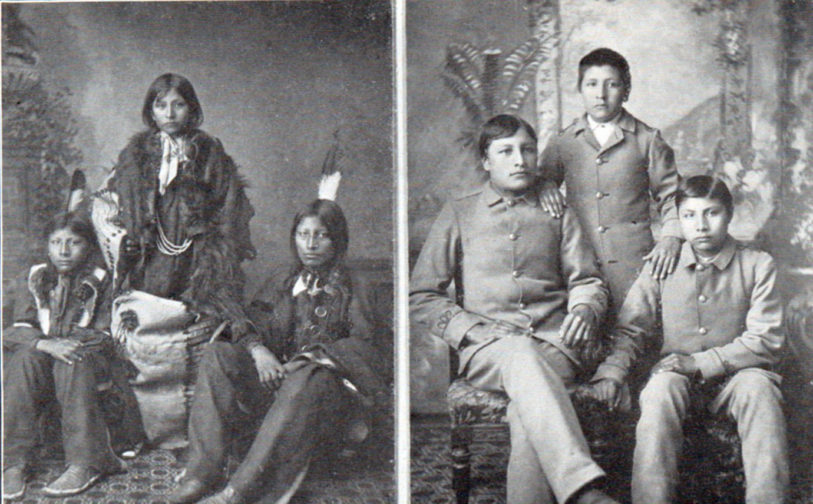
Carefully examine the source showing three Lakota boys' arrival at the Carlisle Indian Boarding School in Pennsylvania (left), and three years later (right). Based on the photos, what changes can be observed in the Lakota boys as a result of attending an Indian boarding school? Using your historical background knowledge, how did this affect their lives?
Task 2: Sourcing
Note
Carefully read the source. According to the document, in what way did the Ku Klux Klan terrorise African-Americans? How did they affect African-Americans' participation in the political processes in the United States, given that they were freed slaves?
. . . We believe you are not familiar with the description of the Ku Klux Klans riding nightly over the country, going from county to county, and in the county towns, spreading terror wherever they go by robbing, whipping, ravishing, and killing our people without provocation, compelling [forcing] coloured people to break the ice and bathe in the chilly waters of the Kentucky river.
The [state] legislature has adjourned. They refused to enact any laws to suppress [stop] Ku Klux disorder. We regard them [the Ku-Kluxers] as now being licensed to continue their dark and bloody deeds under cover of the dark knight. They refuse to allow us to testify in the state courts where a white man is concerned. We find their deeds are perpetrated [carried out] only upon coloured men and white Republicans. We also find that for our services to the government and our race we have become the special object of hatred and persecution at the hands of the Democratic Party. Our people are driven from their homes in great numbers, having no redress [relief from distress] only [except] the United States court, which is in many cases unable to reach them.
We would state that we have been law-abiding citizens, pay our taxes, and in many parts of the state our people have been driven from the polls, refused the right to vote. Many have been slaughtered while attempting to vote. We ask, how long is this state of things to last? . . .
Task 3: Interpretation
Note
One of the famous books regarding racial segregation is Harper Lee's To Kill a Mockingbird, first published in 1960. Give your analysis on the excerpt from the award-winning novel and examine its context based on the events that occurred in the U.S. regarding racial discrimination.
"There's something in our world that makes men lose their heads — they couldn't be fair if they tried. In our courts, when it's a white man's word against a black man's, the white man always wins. They're ugly, but those are the facts of life."
- Lee, Harper. To Kill a Mockingbird. London: Penguin Books, 1985.