Divisions over slavery and the causes of the Civil War (OCR GCSE History B (Schools History Project)): Revision Notes
📚Revision Notes
Divisions over slavery and the causes of the Civil War
The American Civil War, widely known in the United States simply as the Civil War, was a war fought from 1861 to 1865 to determine the survival of the Union or independence for the Confederacy. The issue of slavery primarily divided the northern and southern states.
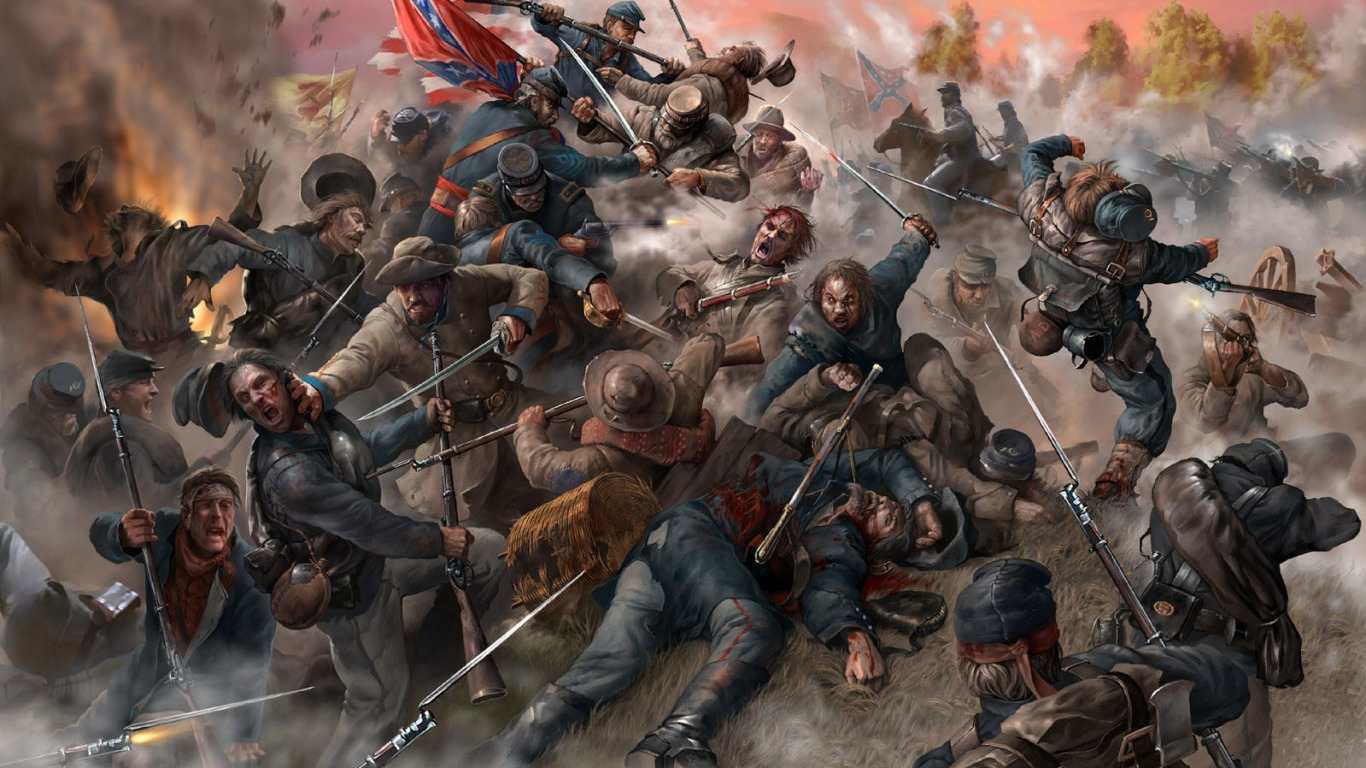
A scene depiction of the bloody Civil War between the Union and Confederacy
Note
Prior to the 1861 Civil War, the United States of America was divided between the north and south. Matters such as disagreements over slavery, economy and states' rights as well as the events of the westward expansion, abolitionist movement, and southern secession, marked the demarcation line.
The Institution of Slavery
Differences and disagreements over the institution of slavery was the main cause of the Civil War.
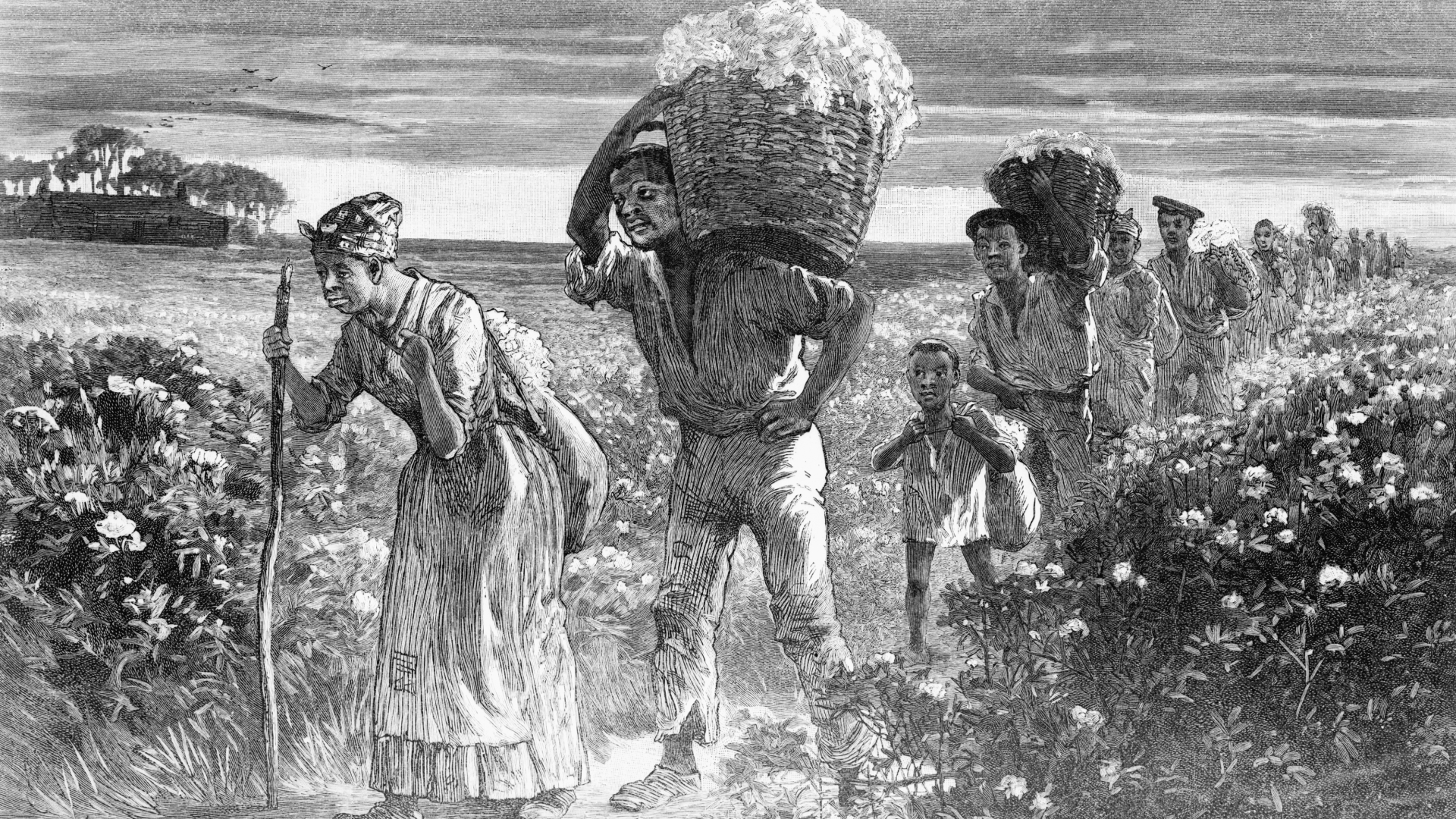
Slavery on southern cotton plantations
Note
After the Revolutionary War, the original U.S. Constitution acknowledged the system of slavery. Article 1, Section 2, also known as the three-fifths compromise, stated that enslaved people counted as three-fifths of a person for the purpose of taxation and representation in Congress. The three-fifths compromise was debated among those who wanted to exclude and include enslaved people.
While the southern states became highly dependent on slave labour, the northern states became less dependent on it due to industrialisation.
Note
With the invention of the cotton gin in 1793 and the continued demand and supply of enslaved people, southern states were able to deliver more than 70% of cotton to Great Britain.
Note
Geographically, the north had bays and harbours good for industries such as fishing and shipbuilding. The south had swamps and marshes more suitable for agriculture.
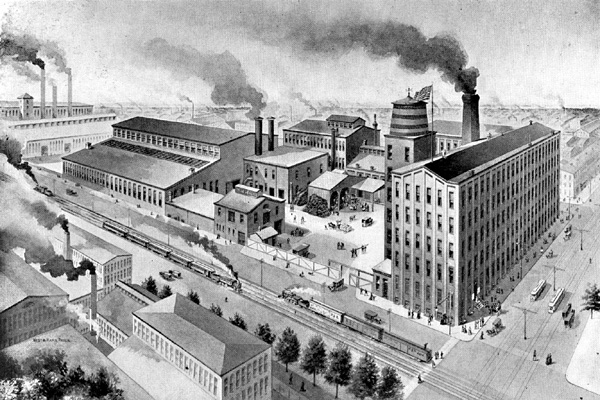
A depiction of the Union's industrial economy
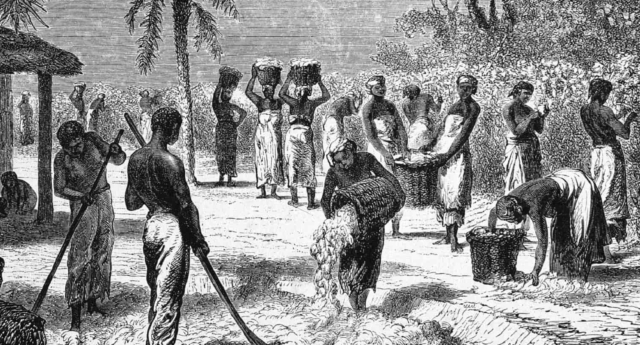
A depiction of the Confederacy's slavery dependent economy
States' Rights
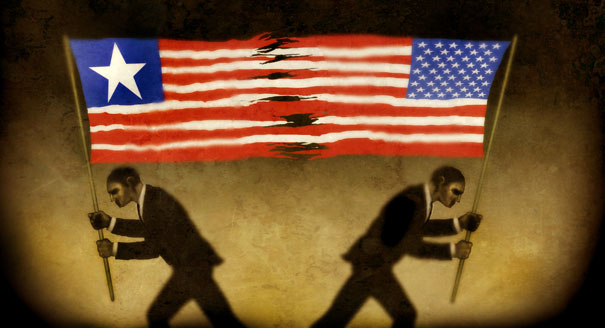
A depiction of the Union at the outset of division
The issue on states' rights was rooted in whether to abolish or permit slavery. Since its inception in 1792, the Democratic-Republican Party of Thomas Jefferson favoured states' rights which included popular sovereignty. Meanwhile, federalists like Alexander Hamilton argued that a centralised government should decide and rule.
Note
This struggle over political power widened the division between northern and southern states. Southern states believed that the federal government was weak in addressing the issue of each state, particularly in the institution of slavery.
Westward Expansion
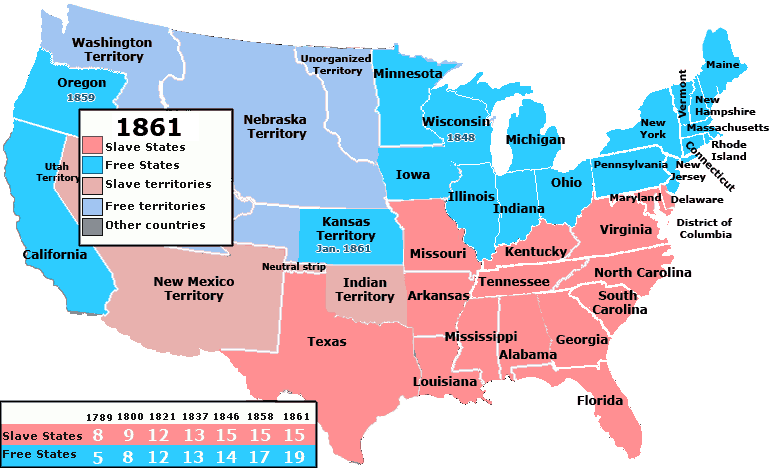
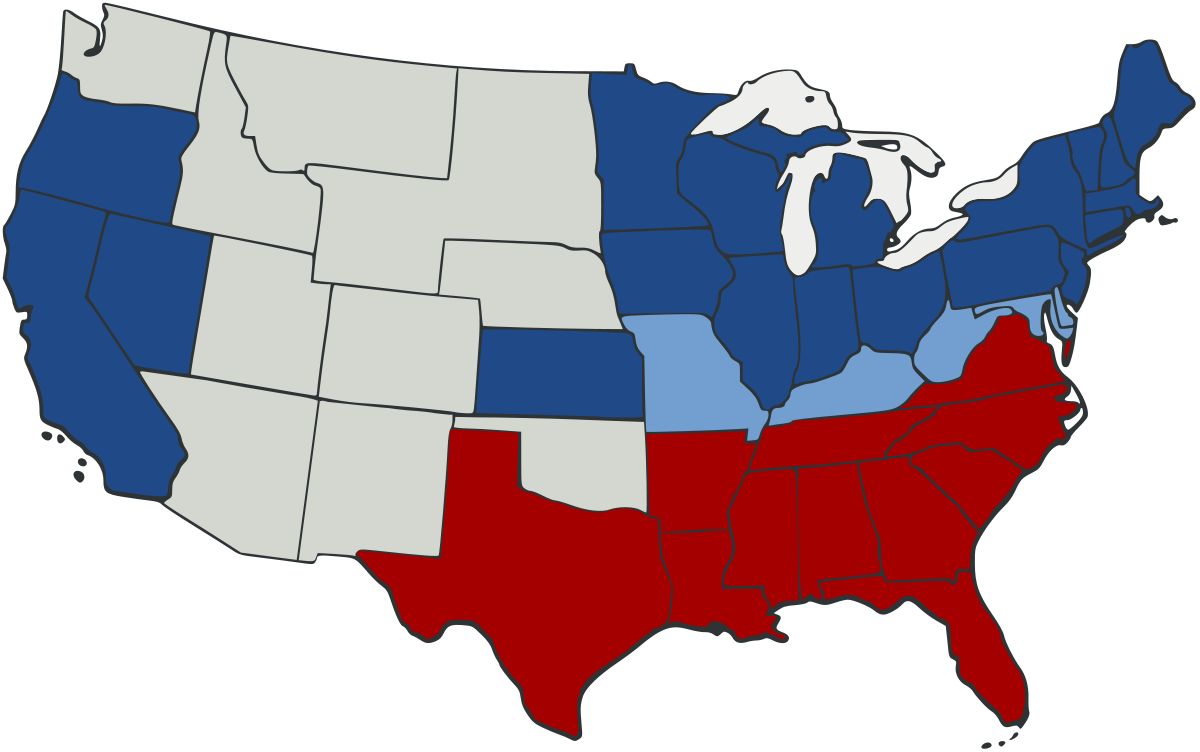
The map of free states and slave states at the start of the Civil War
Following Thomas Jefferson's Louisiana Purchase, territorial expansion and slavery became an intertwined cause. In order to balance power and vote to pass legislations, Congress assured that there was an equal number of slave and free states.
Note
However, when new territories applied for statehood, free and slave states extended their influence to ensure both of their economic and political interests. Before the outbreak of the Civil War in 1861, there were 19 free states and 15 slave states, commonly identified as the north and the south, respectively.
Abolitionist Movement
The abolitionist movement refers to the collective effort to end the institution of slavery.
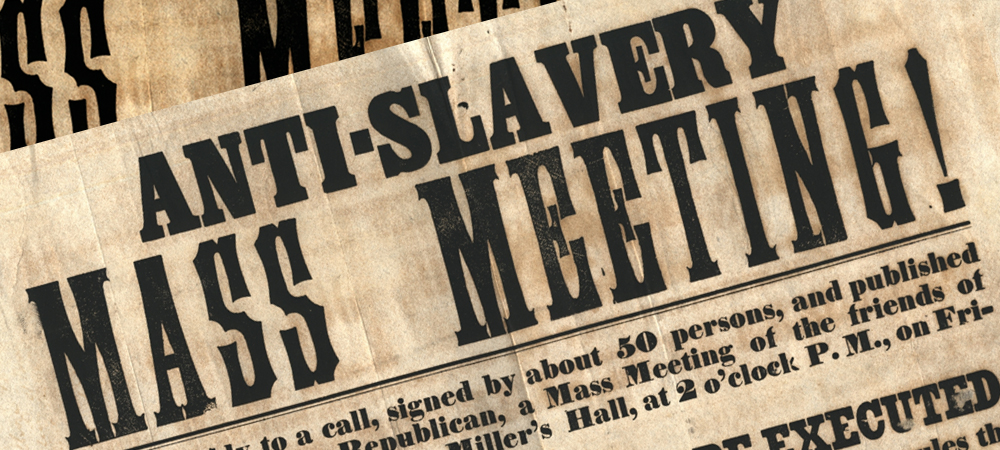
An advertisement for an abolitionist meeting in 1859
Note
Even during the American Revolutionary War, the abolitionist feeling had already emerged. With heated disputes and violence between the pro-slavery and anti-slavery, the movement became a controversial political issue which divided much of the country and resulted in the Civil War.
Southern Succession
On 20 December 1860, South Carolina called a state convention which formally announced their secession from the Union due to the 1860 election of Lincoln.
Note
Between January and February 1861, the cotton states of Mississippi, Florida, Georgia, Alabama, Louisiana and Texas followed. After the states from the deep south, Virginia, Tennessee, Arkansas and North Carolina soon followed. Early in February 1861, representatives met in Montgomery, Alabama, to draught their own constitution.
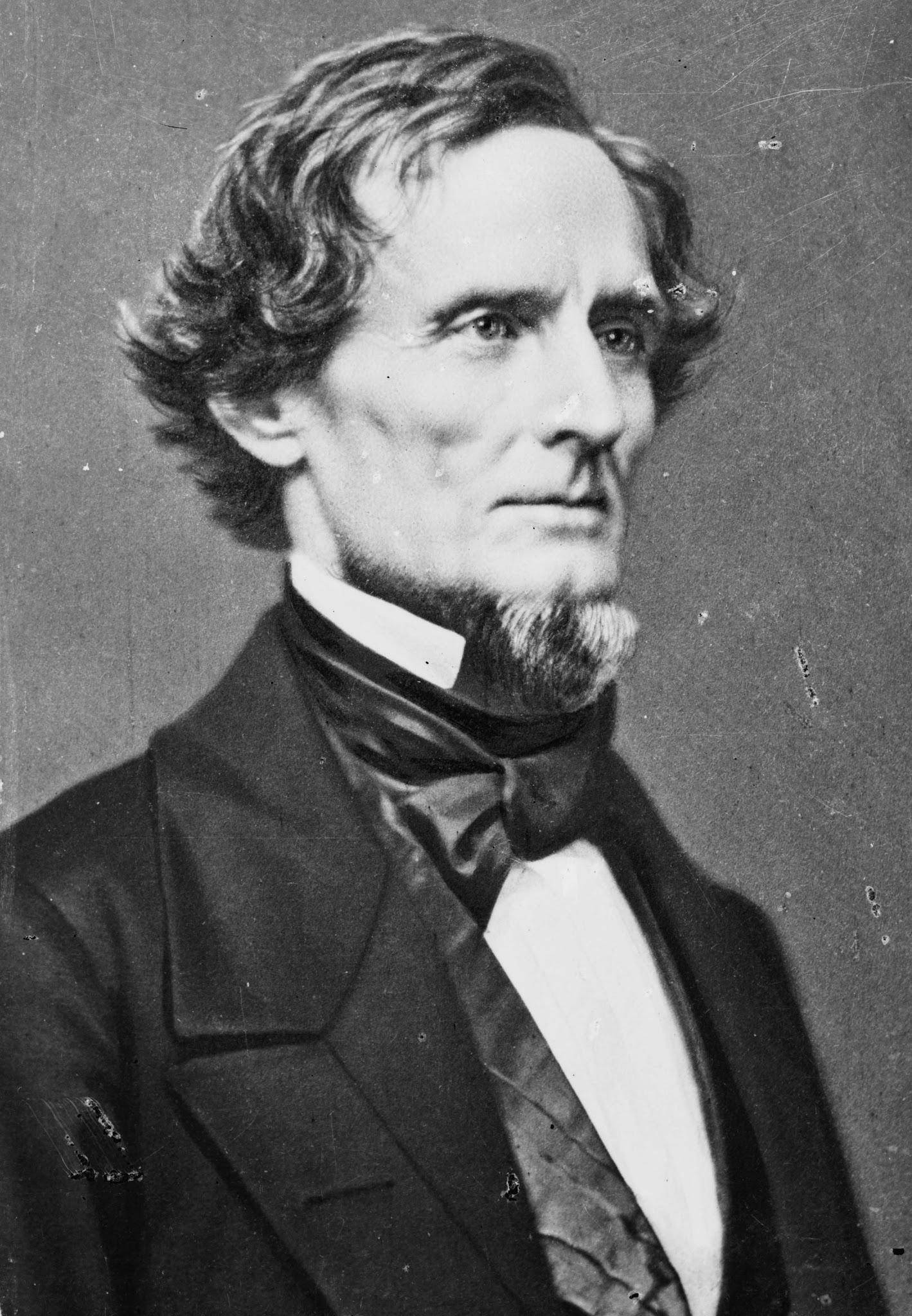
Jefferson Davis
Note
They also elected Jefferson Davis, senator from Mississippi, as president, and Alexander Stephens of Georgia, as vice president. On 11 March, 1861, the Confederates permanently adopted a constitution that was almost the same as the federal one, but with more distinct states' rights. On 23 May 1861, the Confederate capital was proposed to transfer from Montgomery, Alabama, to Richmond, Virginia.
The Union
Refers to the national government of the United States of America during the Civil War.
Consisted of 20 free states and four border states. Free states included California, Illinois, Iowa,
Minnesota, Maine, New Jersey, New Hampshire, Rhode Island, Oregon, Wisconsin, Connecticut,
Pennsylvania, Indiana, Kansas, New York, Nevada, Vermont, Ohio, Michigan and West Virginia.
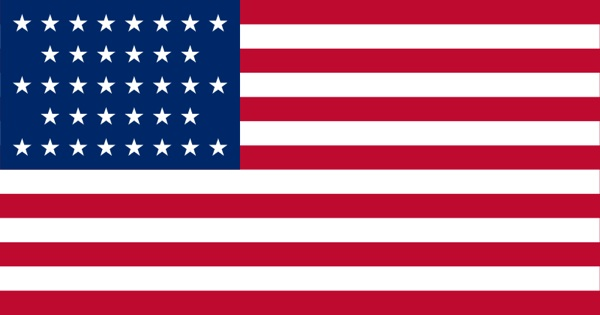
Union Flag
The Confederacy
A breakaway republic formed by slaveholding states in 1861.
The original seven southern states were South Carolina, Mississippi, Alabama, Florida, Georgia, Louisiana
and Texas, followed by the upper south (Virginia, Tennessee, Arkansas and North Carolina).
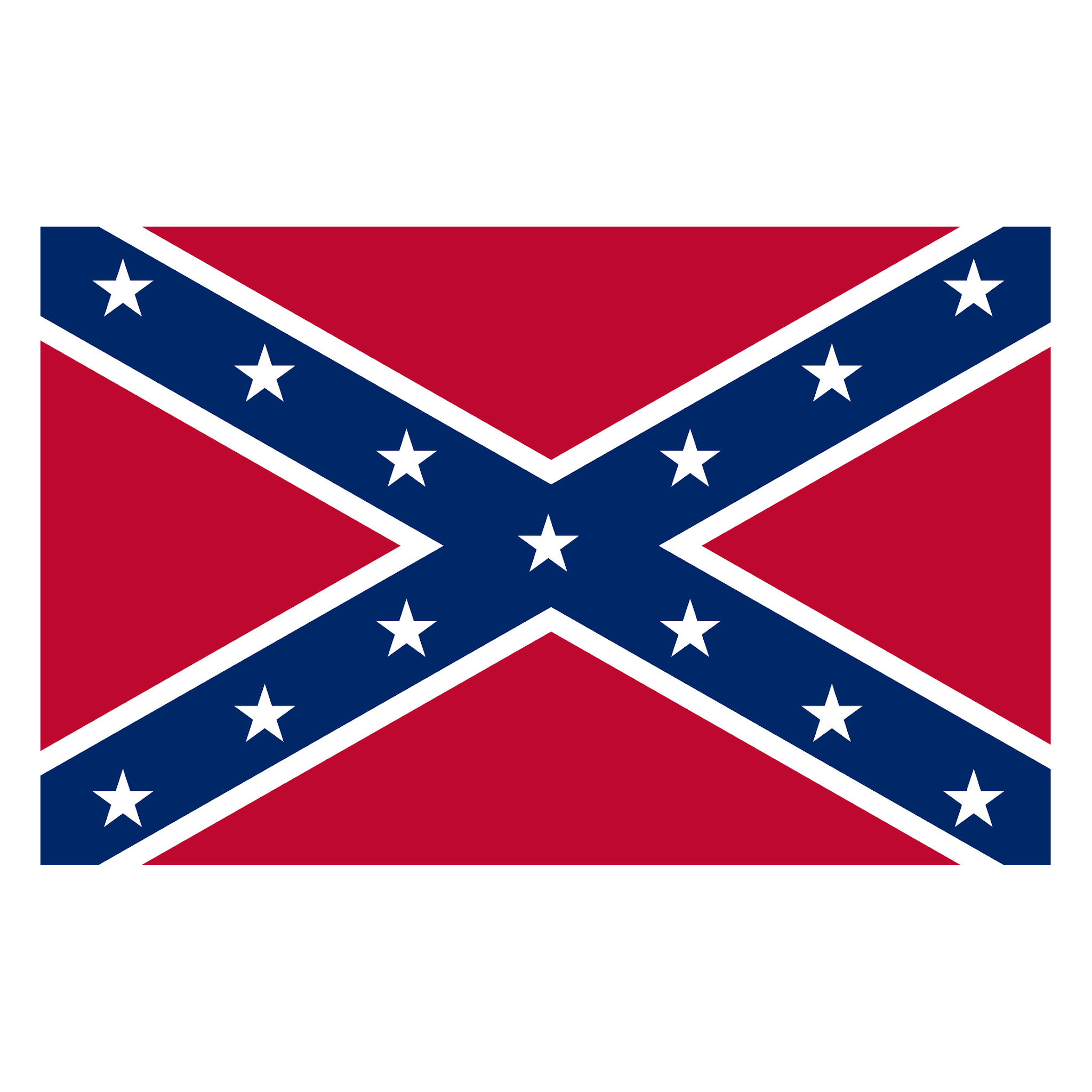
Confederacy Flag