Reconstruction and continuing limitations to African American liberty (OCR GCSE History B (Schools History Project)): Revision Notes
📚Revision Notes
Reconstruction and continuing limitations to African American liberty
The Reconstruction was a turbulent era that occurred in the United States from 1865 to 1877, specifically from the end of the Civil War until the Compromise of 1877 that began the presidency of Rutherford B. Hayes. The era was an attempt by the U.S. to rebuild the Union and provide freedom and equality to African-Americans through Constitutional Amendments and Reconstruction Acts. Though there were good intentions, the era was marked by intense controversies.
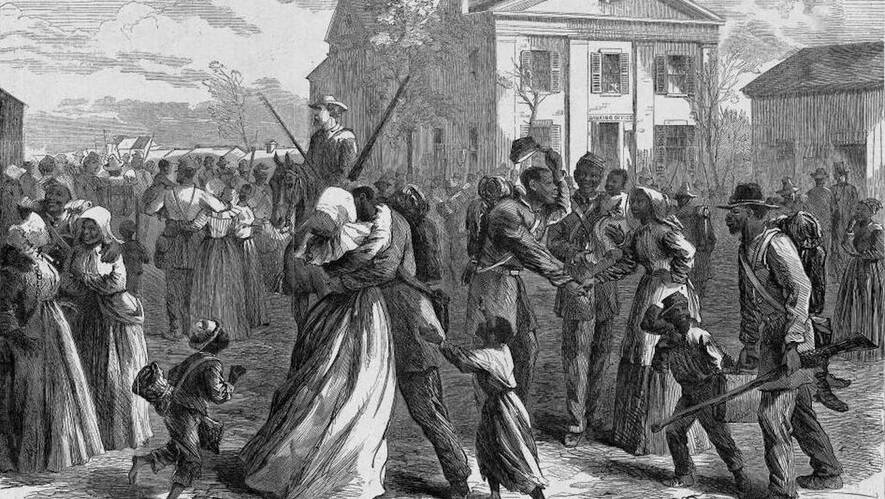
African-Americans reunite with their families in Arkansas after the Civil War
The Thirteenth Amendment
On 18 December 1865, the Congress ratified the Thirteenth Amendment, the first of the three Reconstruction Period amendments approved after the Civil War.
Note
The amendment banned slavery and involuntary servitude except as a punishment for crime. The amendment also gave powers to Congress to pass legislation to support its implementation.
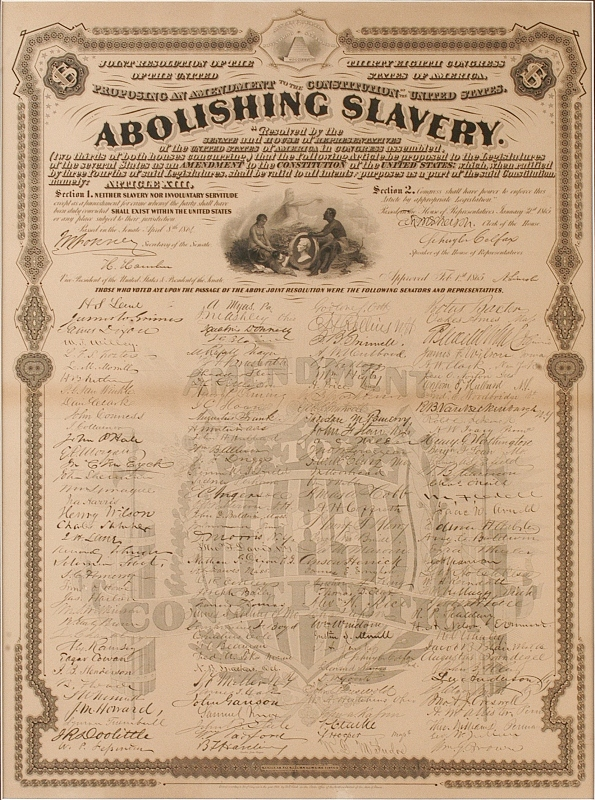
The Thirteenth Amendment that abolished slavery
The Black Codes
The Black Codes, a series of laws that undermined the freedom and civil rights of African-Americans, caused widespread resistance among African-Americans in the south. The northern states argued that the laws undermined the principles of free labour.
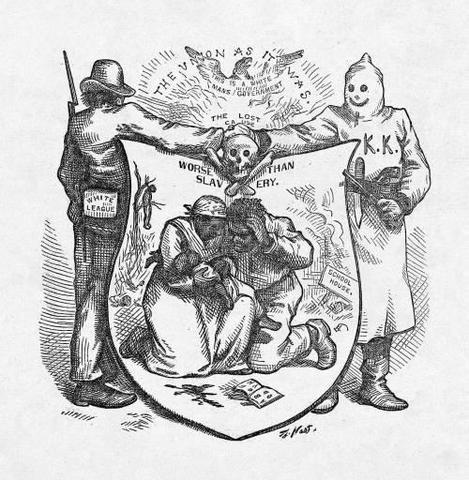
Cartoon depiction of a southerner and KKK undermining the freedom of blacks
Note
Because of this, the Civil Rights Act of 1866 was enacted with the purpose of preserving the black community's rights. Despite the attempt to integrate formerly enslaved people into society, however, the Civil Rights Act of 1866 did not have much success and 'failed to protect' the African-Americans against segregation, racism and intimidation (African-American Civil Rights Movement, no date).
The Fourteenth Amendment
The Fourteenth Amendment was passed by Congress in 1866 and was ratified in 1868. It was proposed not only to protect the rights and relevant issues of the American people, but also the protection of the citizenship rights and equal protection of their formerly enslaved after the American Civil War.
Note
Thaddeus Stevens, a member of the House of Representatives, introduced the amendment. It squashed the Dred Scott of 1857 which provided that black people were not eligible for citizenship.
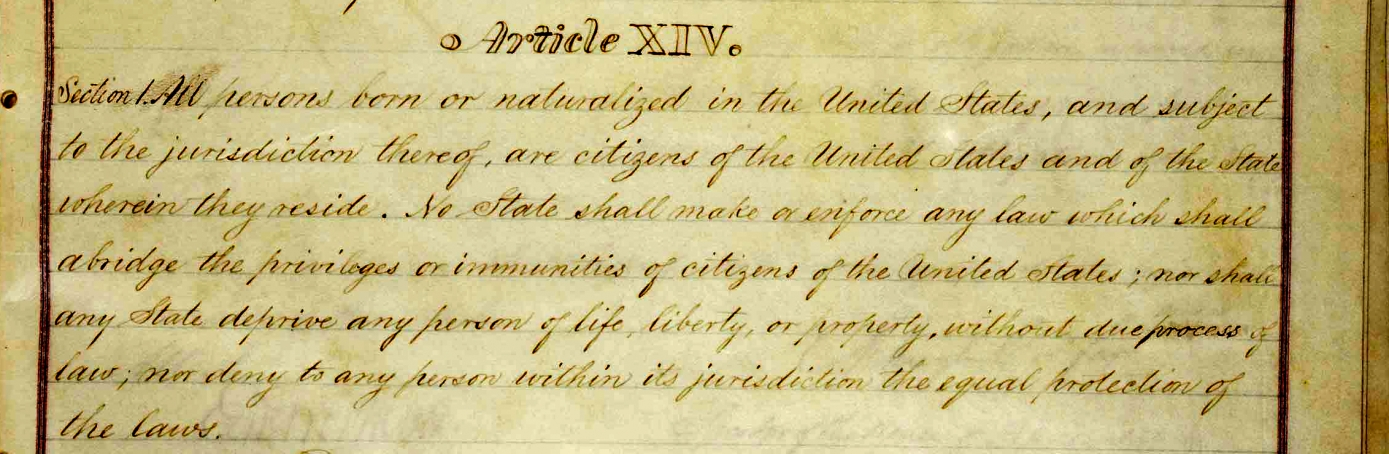
The 14th Amendment excerpt
The Fifteenth Amendment
In 1869, the Republicans introduced the Fifteenth Amendment which was ratified in 1870. The amendment granted universal male suffrage to African-Americans and gave Congress the power to enact legislation for the proper implementation of the amendment. With this came the first African-American vote on 31 March 1870, by Thomas Mundy Peterson.
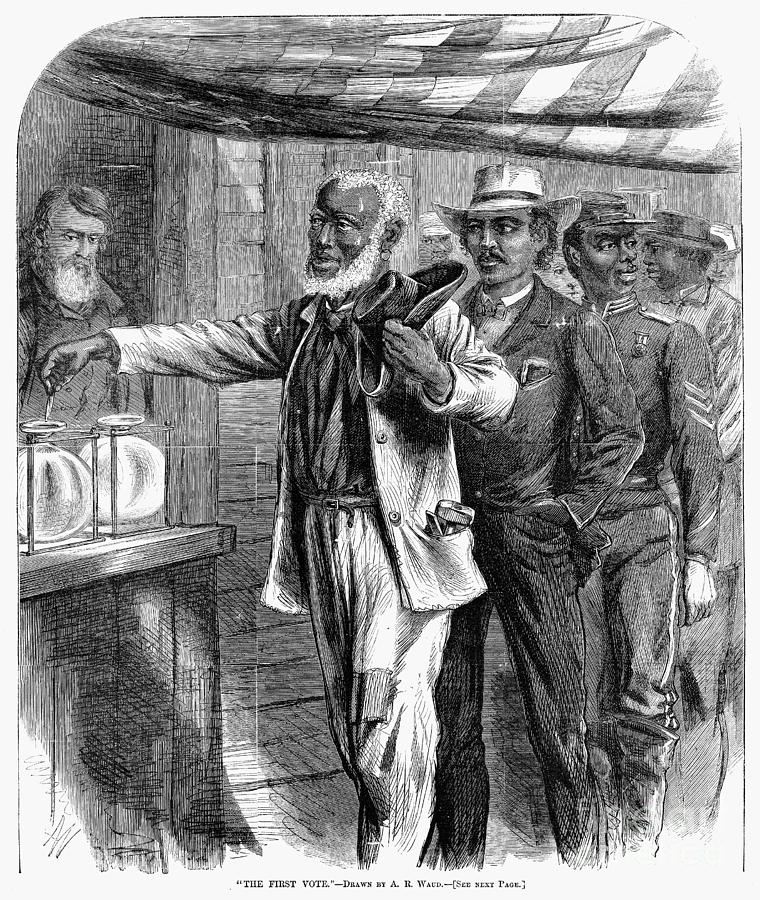
The first African-American vote
The Civil Rights Act of 1875
The Civil Rights Act of 1875 was the last major Reconstruction Era act that guaranteed to protect African-Americans' civil and legal rights. The act provided for equal treatment regarding public transport, public accommodation and jury service.
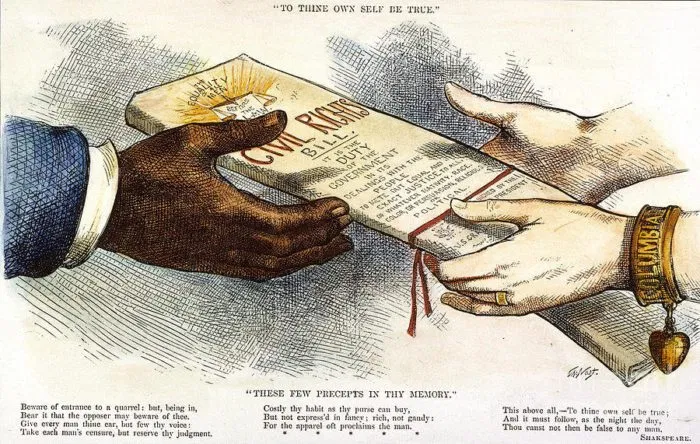
Cartoon depiction of a black man receiving the civil rights bill that provides equal treatment
Note
After eight years of effectivity, the Civil Rights Act of 1875 was deemed unconstitutional in 1883. The act had little practical impact. Despite this, many provisions from the act were adopted by Congress during the Civil Rights Movement.
The Electoral College
Note
In 1876, Rutherford B. Hayes became president in one of the most contentious elections in United States history. During the popular vote, Hayes lost to Democrat Samuel J. Tilden. Rutherford, however, turned the tables when he won in the intensely disputed electoral-college vote. The Congressional commission awarded him 20 contested electoral votes. His victory was down to a compromise he had reached with the Democrats.
The compromise, known as the Compromise of 1877, reached an agreement with the Democrats that in exchange for allowing his declaration as the winner in the election, he would acknowledge the Democrats to control the entire south.
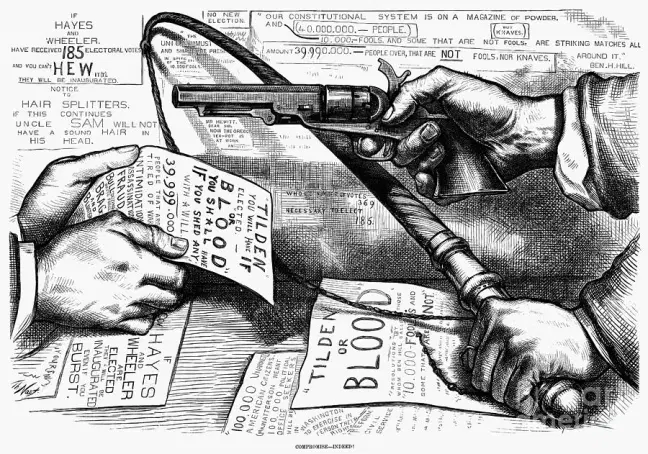
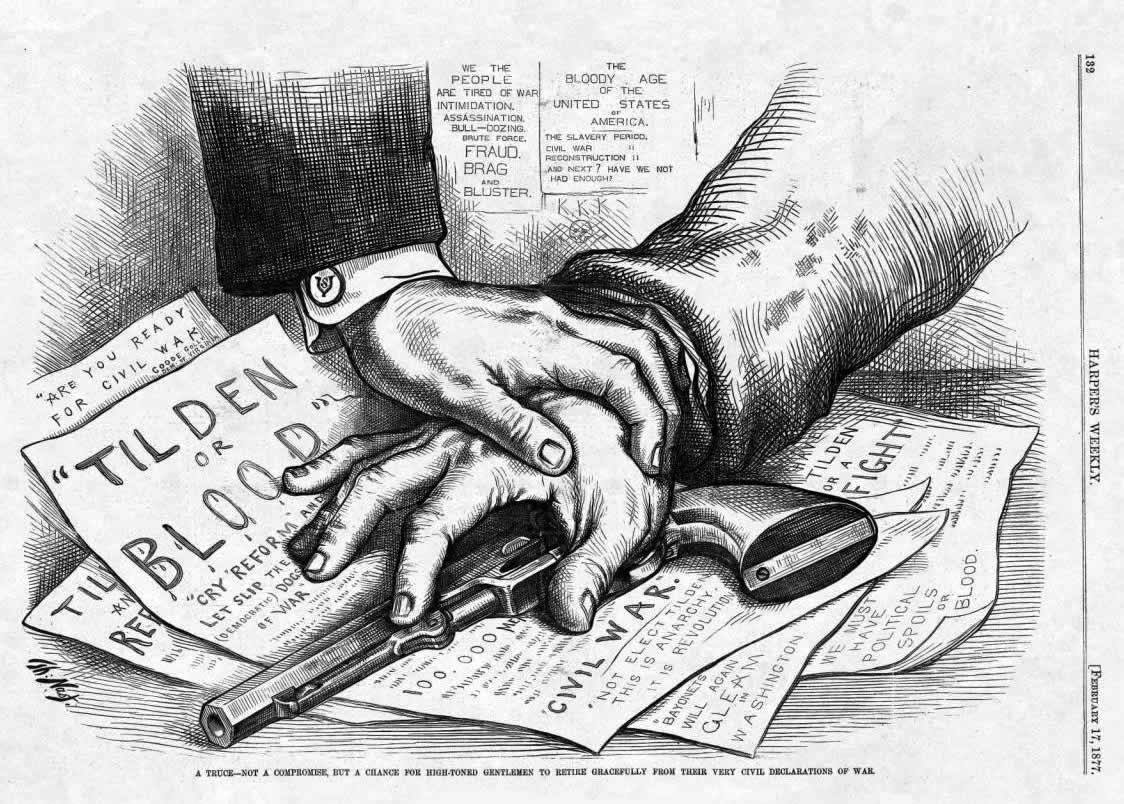
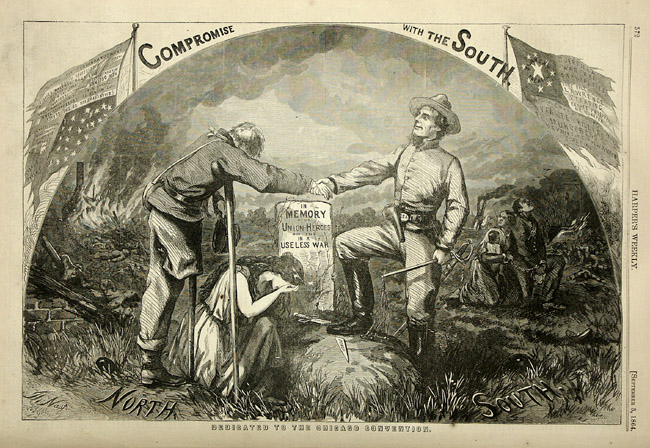
A series of political cartoons by Thomas Nast depicting the Compromise of 1877
Note
The root of the Compromise looked more like a truce with the south rather than a compromise; thus, it signalled the end of the Republican Party's commitment to protect the rights of the African-Americans. With the withdrawal of the federal troops after the Compromise, any hope of reconstructing the south into a racially egalitarian society had ended, signalling the end of the Reconstruction Era.
<img src="https://simplestudy-assets-prod.s3.eu-west-1.amazonaws.com/assets/backend/uploads/manually-styled-note-images/5395f58c-82c6-49f8-966a-c11664dfd2b5.png" width="541" height="800" alt="Thomas Nast: "This Is a White Man's Government"" />
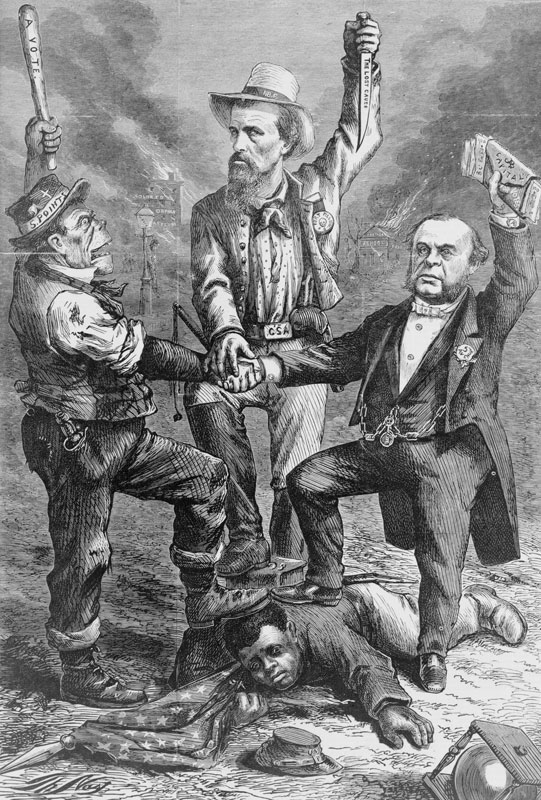
Thomas Nast: "This Is a White Man's Government"
Note
However, though the Compromise ended the Reconstruction, its legacy would be revived a century later with the Civil Rights Movement. The end of the Reconstruction ushered the Jim Crows laws and the Black Codes that significantly undermined the Constitutional safeguards that the African-Americans had celebrated with the Reconstruction Act and the Constitutional Amendments.
Glossary of Terms
Civil War
A war fought from 1861 to 1865 to determine the survival of the Union or independence for the Confederacy
Slave States
Southern states in the U.S. that permitted the existence of slavery. They were the states that seceded the Union upon Lincoln's presidency
Slavery
A legal institution of servitude and enslavement of Africans in the United States since the 18th century
Free States
Mostly in the north, these were states that opposed slavery
Union
Refers to the national government of the United States of America during the Civil War
Abolitionist Movement
Refers to the collective effort to end the institution of slavery
Confederacy
A breakaway republic formed by slaveholding states in 1861
Emancipation Proclamation
A proclamation by Abraham Lincoln that granted freedom to enslaved people in territories under rebellion
Reconstruction
A turbulent era that occurred in the United States from 1865 to 1877 and which was an attempt by the U.S. to rebuild the Union and provide freedom and equality to African-Americans through Constitutional Amendments and Reconstruction Acts
Task 1: Critical Thinking
Note
Read an excerpt from Abraham Lincoln's Emancipation Proclamation. What do these words mean and how are they significant to the history of slavery? Use historical facts to support your answer.
"That on the first day of January, in the year of our Lord one thousand eight hundred and sixty-three, all persons held as slaves within any State or designated part of a State, the people whereof shall then be in rebellion against the United States, shall be then, thenceforward, and forever free."
- Abraham Lincoln 1863 from the Emancipation Proclamation

Task 2: Inferencing
"There are few, I believe, in this enlightened age, who will not acknowledge that slavery as an institution is a moral and political evil. It is idle to expatiate on its disadvantages. I think it is a greater evil to the white than to the coloured race. While my feelings are strongly enlisted in behalf of the latter, my sympathies are more deeply engaged for the former. The blacks are immeasurably better off here than in Africa, morally, physically, and socially. The painful discipline they are undergoing is necessary for their further instruction as a race, and will prepare them, I hope, for better things. How long their servitude may be necessary is known and ordered by a merciful Providence."
- Robert E. Lee's letter to President Franklin Pierce
regarding slavery,
27 December, 1856
Note
Read the text and infer the stance of the author regarding slavery.
Task 3: Analysing Images
Note
Analyse the cartoon by Thomas Nast. Explain how this relates to the Compromise of 1877. Use historical facts to justify your answer.