The causes and nature of white American exploitation of the Plains (OCR GCSE History B (Schools History Project)): Revision Notes
📚Revision Notes
The causes and nature of white American exploitation of the Plains
The westward expansion of the 1860s saw the settlers migrate to the Plains and exploit the lands of the Plains Indians. The pressures on the Native Americans upon the settlers' arrival were felt on railroads, ranches and in cow towns.
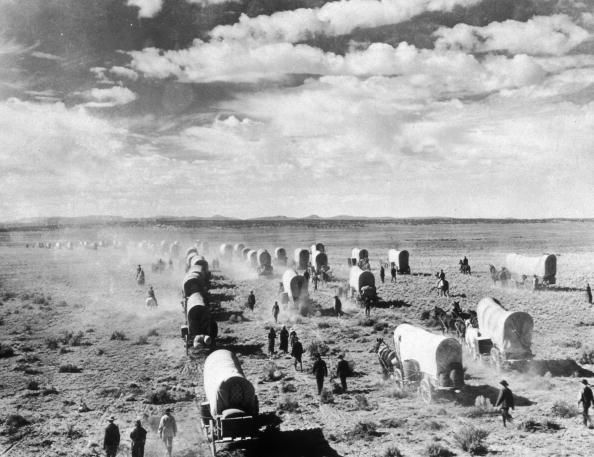
Wagon trains of American homesteaders on their way to the Plains
The Pacific Railroad Act
As the Civil War divided the nation, Lincoln introduced the Pacific Railroad Act in 1862 to offer some hope to Republican supporters as it promised a chance for land in the west and a railroad to make settlement possible.
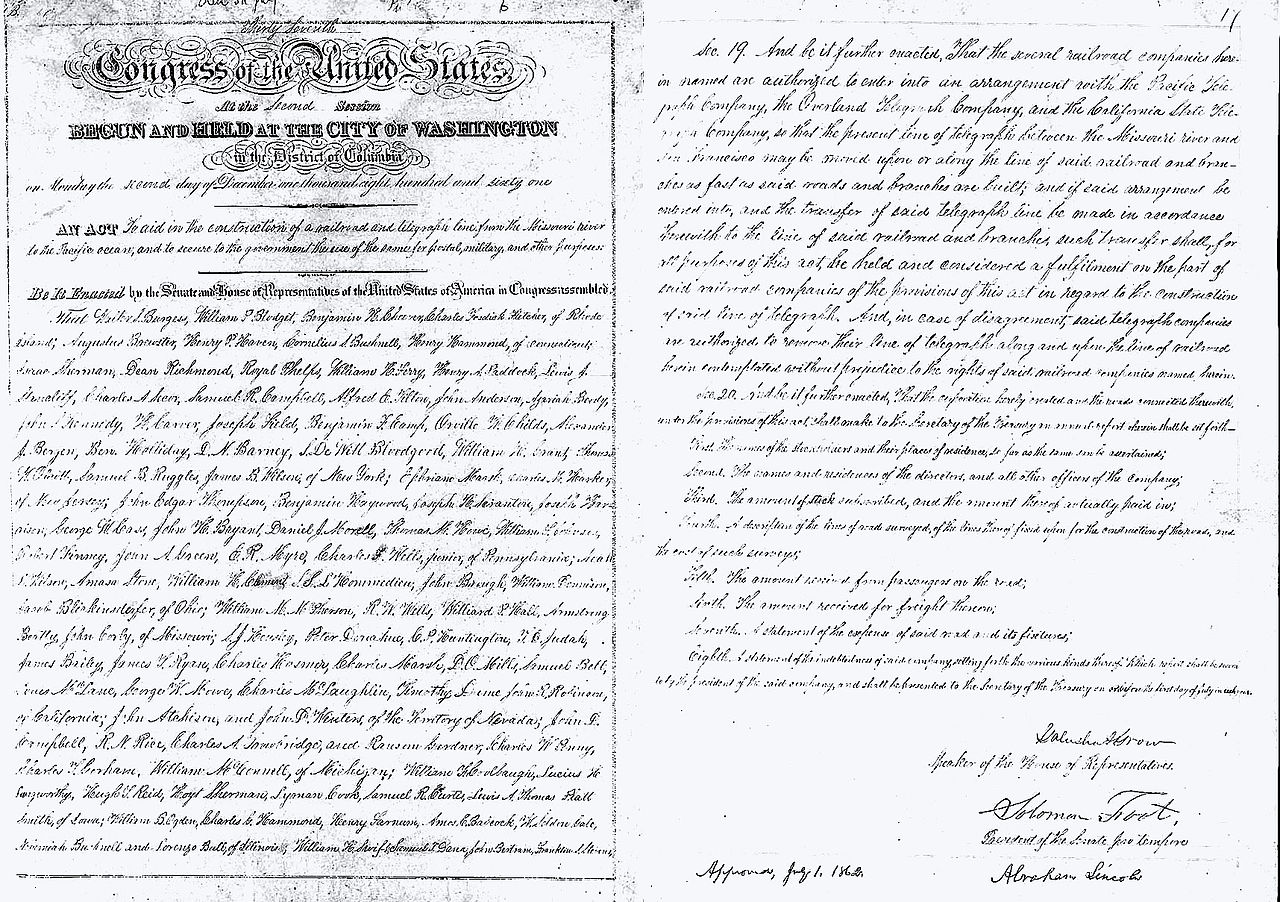
An excerpt of the first and last pages of the original manuscript of the Pacific Railroad Act of 1862
The Need for Railroads in the United States
- The U.S. government needed to establish national unity by connecting the eastern and western areas
- It would make migration easier, thus, more territories could be secured (fulfil Manifest Destiny)
- Railroads would allow U.S. troops to travel more easily to control uprisings on the Great Plains
- It made enforcing law and order easier since federal law officers could move about easily
- It would allow for the transport of more goods from the east to the west (ports in Oregon and California)
- Railroads would result in an economic boom with trading relations established
Note
The Pacific Railroad Act created the first Transcontinental Railroad that connected the east to the west of the United States. Two companies were tasked with the project - the Central Pacific (East) and the Union Pacific (West).
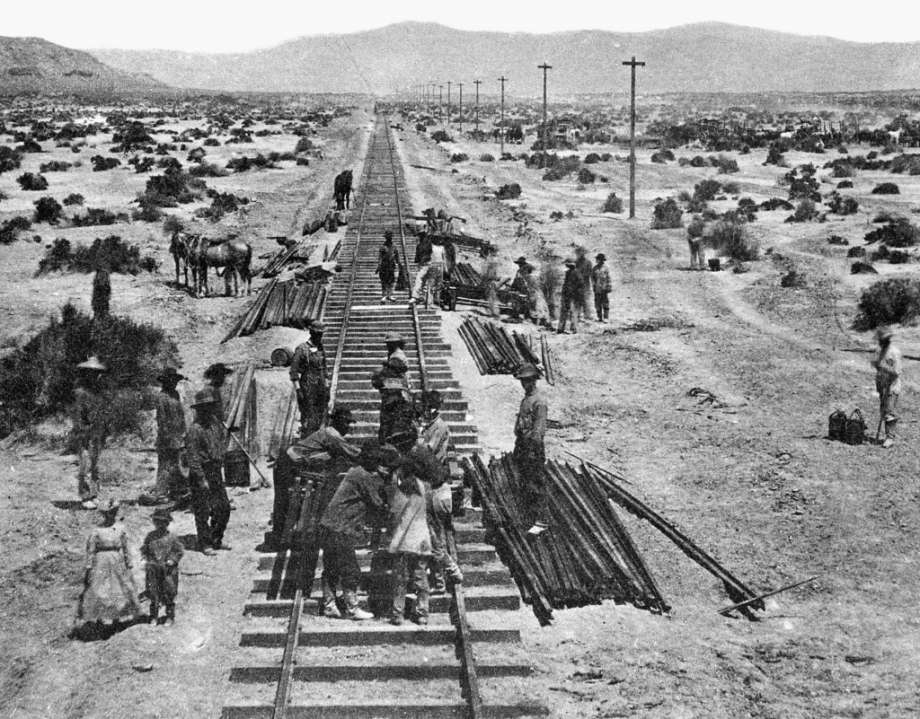
The track work of the Transcontinental Railroad
Note
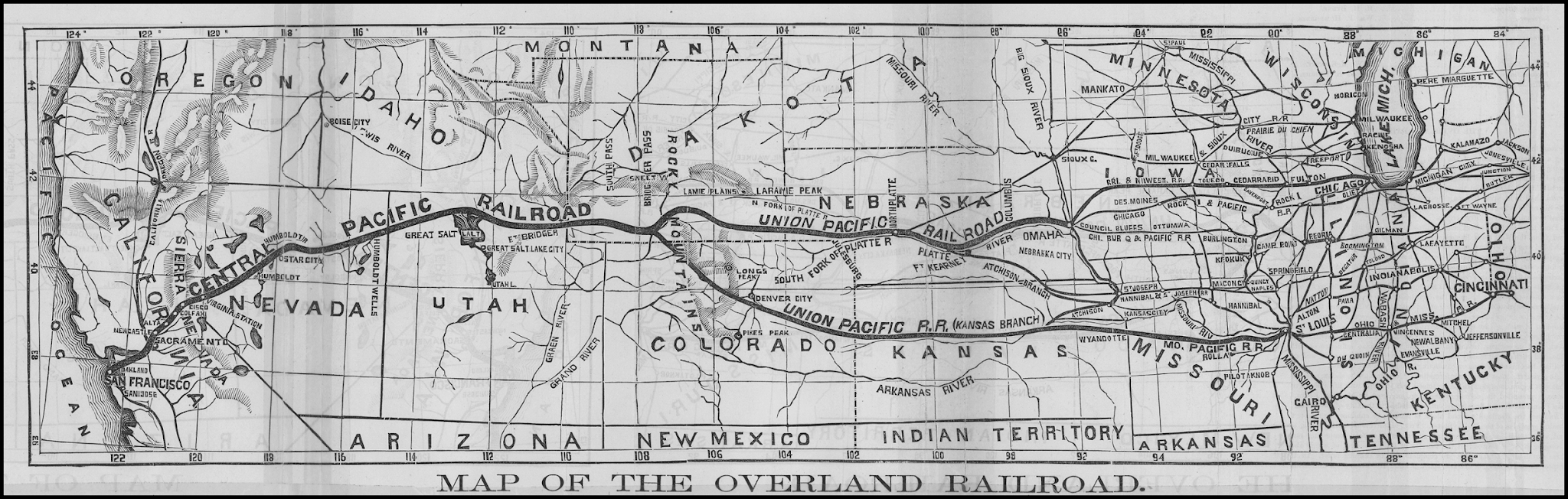
The Central Pacific Railroad would begin in Sacramento in the east, while the Union Pacific Railroad was from Omaha in the west. The two would meet in the middle to form the Transcontinental Railroad. The U.S. government loaned each company $16,000 per mile of track ($48,000 for areas that were mountainous). Plains Indians' rights to the land were stripped to enable construction. Some of the problems included 12,000 deaths while building the railroad, and companies almost going bankrupt which saw them lie in order to receive more loans and funds.
Note
Railroad built by the Central Pacific Railroad Company
Note
Start of the Union Pacific Railroad: Omaha
Note
Start of the Central Pacific Railroad: Sacramento
Note
Railroads built by the Union Pacific Railroad Company
The impact of the completion of the Transcontinental Railroad in 1869
Travelling to the west was easier and cheaper, thus settlements in the area grew
Towns were more developed along the railroad, thus the west was no longer an isolated territory
The cattle industry boomed, and trade between the east and the west, as well as with China and Japan, boosted the economy
Homestead life became easier since people could travel and visit friends, and have access to manufactured goods/products
Negative impacts include:
- Plains Indians being driven away from the railroad even if it ran through their territory
- Workers killed buffalo for meat and disrupted buffalo hunting, which caused the Plains Indians to attack workers
- As railroad lines were built, large herds of cattles were driven by cattlemen and cowboys to the railroads. These would then be sold to the Indians in the east which led to the construction of cow towns along the railroad.
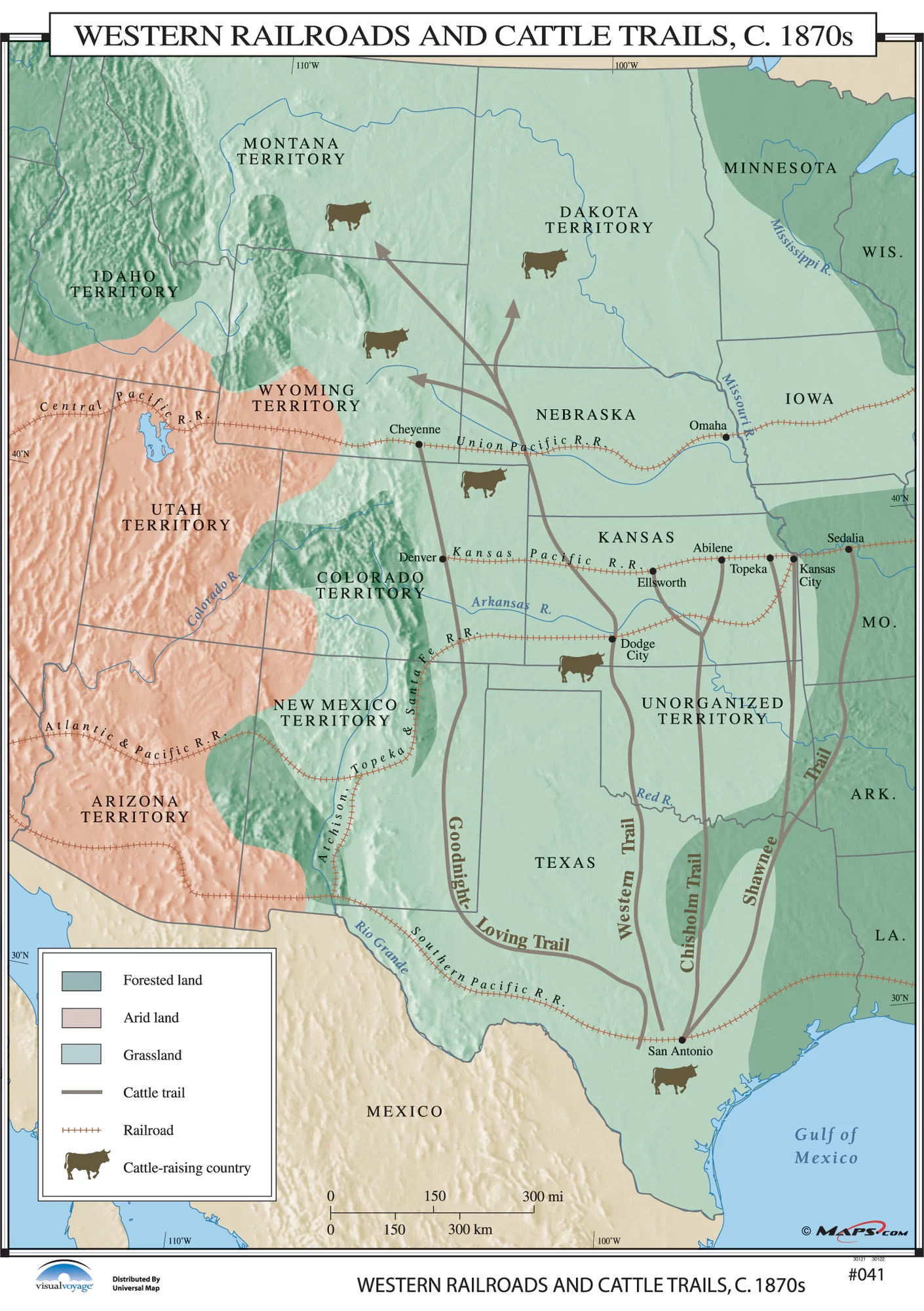
A cattle drive
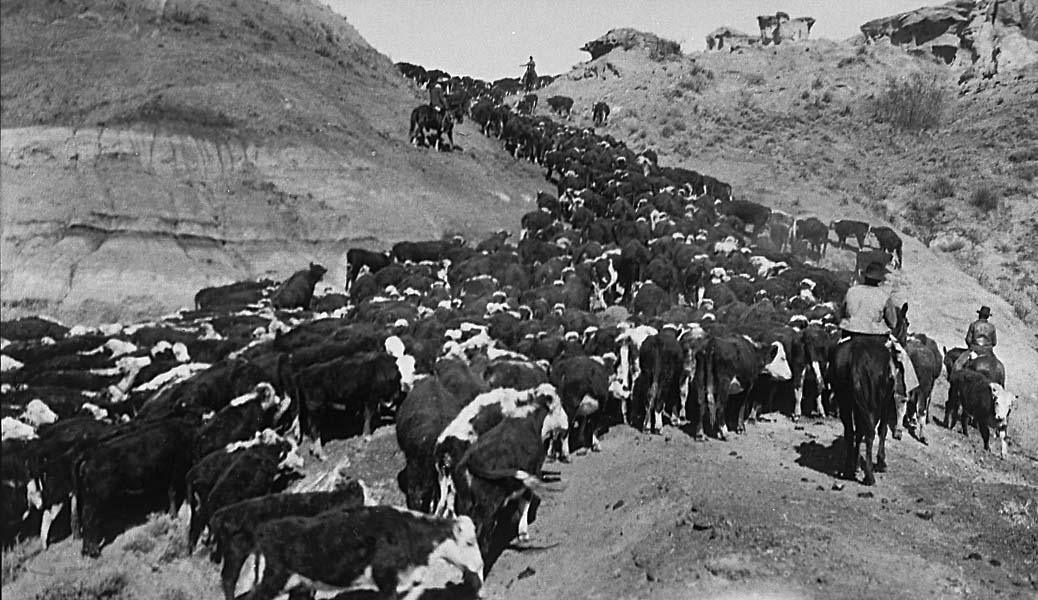
A map of western railroads and cattle trails
Ranches
Note
Cattle were raised in open range areas known as ranches. They moved freely throughout winter. Cowboys didn't work at this time. Since the cattle roamed freely in a large space, every cow was branded to properly identify its owner.
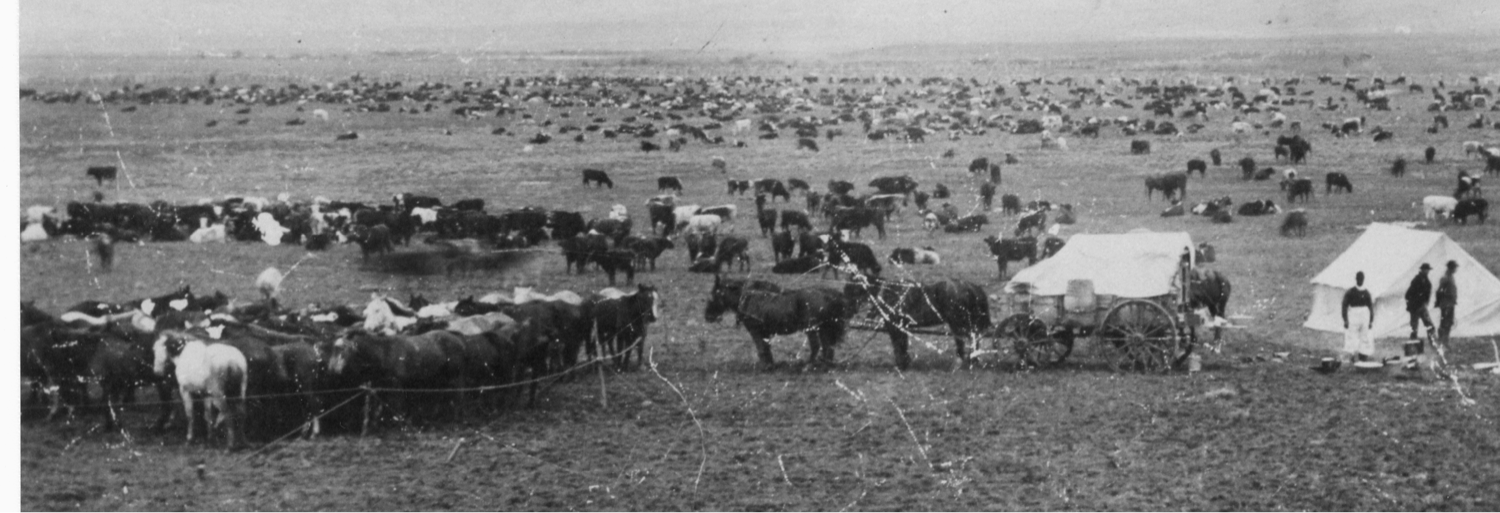
A cattle ranch
Note
Ranchers and cowboys claimed rights over land and water on ranches but they didn't actually own any of it. The land was unfenced. Ranching helped the cattle survive longer and become fatter. It also prevented conflict since cowboys didn't need to cross land.
Note
Raising cattle on the Great Plains made them fatter and survive longer in various weather conditions. Rather than driving cattlers, ranching cattles started on the Plains. This changed the way cowboys worked in the field.
Cowboys on the Trails
Cowboys worked seasonally from spring to the long drive in autumn. In terms of work, they did rounding up, branding and driving cattle for hundreds of miles when they travelled along cattle trails. They faced danger along the way including stampedes, river crossings, Indian hostility and extreme weather. Along the trail, they cooked using campfires and slept in open spaces. In cow towns, they paid saloons and brothels a visit in their free time.
Cowboys on the Ranches
While work was full-time and all year round, fewer cowboys were needed on the ranches. Here, they did the same thing as those who worked on the trails. But they did this on shorter journeys. They did not face much danger on the ranches, although wild animals and hostile Indians were still prevalent. On the ranches, they had bunkhouses to sleep in and cookhouses for them to prepare their food. Since they were used to drinking and gambling, they had a hard time adapting to the different lifestyle of ranches.
Impact of the Cattle Industry
Cattle ranching was prevalent on the Great Plains, which the Plains Indians found problematic since cattle and buffalo competed for grass.
The increase in cattle brought about a decline in the number of buffalo roaming the area through competition for food and water.
In some instances, the Plains Indians attacked the cowboys who crossed into their land. As a result, they fell into conflict with the U.S. army.
Rivalry existed between ranchers and homesteaders with land as the subject of their conflict. For the ranchers, they needed vast tracts of land to feed their cattle.
Ranch land was readily available and ranchers claimed these lands without having ownership to let their cattle move freely in the area.