The culture of the Native Americans of the Plains including a case study of the Lakota Sioux (OCR GCSE History B (Schools History Project)): Revision Notes
📚Revision Notes
The culture of the Native Americans of the Plains including a case study of the Lakota Sioux
Plains Indians refers to the members of the Native American people who inhabit the vast grasslands of the Great Plains of the United States and Canada.
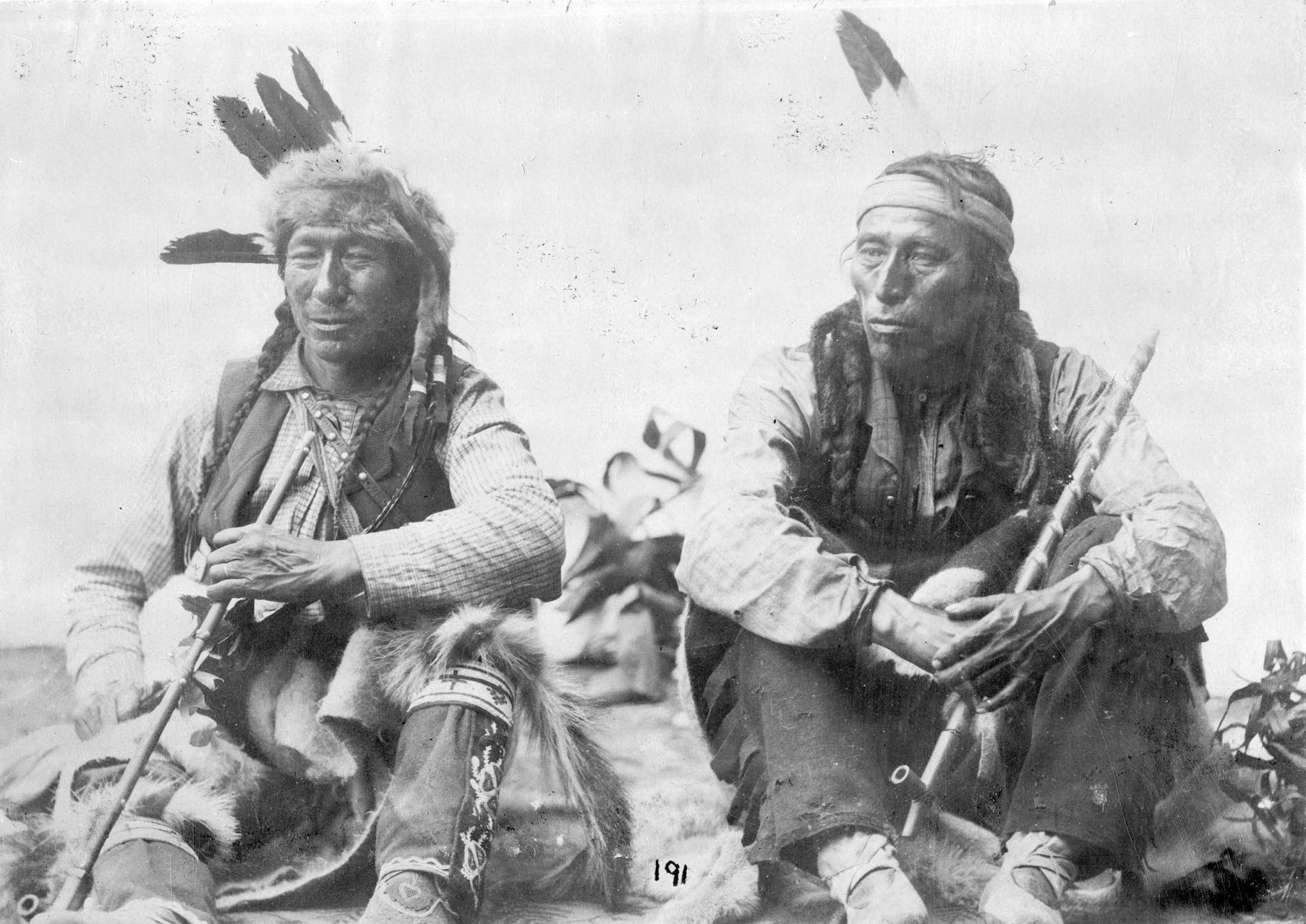
Two Plains Indian men
Note
Prior to the Mormon migration, the Great Plains were seen as an uninhabitable region of harsh winds, dry desert and little water. By contrast, the Native American Indians of the region, who were nomadic hunters and well adapted to the conditions, regarded the Great Plains as a perfect environment.
The culture of the Plains Indians including a case study of the Lakota Sioux
Housing
The Indian families of the Great Plains lived in tipis (aka teepees or lodges). A tipi was designed using animal skins and wooden supports for easy assembly and transportation. They were functional designs which included flaps at the top for smoke to escape.
Note
The floor of a tipi was covered with fur and the fire was centrally positioned. With limited space, Indian families had strict rules for behaviour and movement inside their homes.
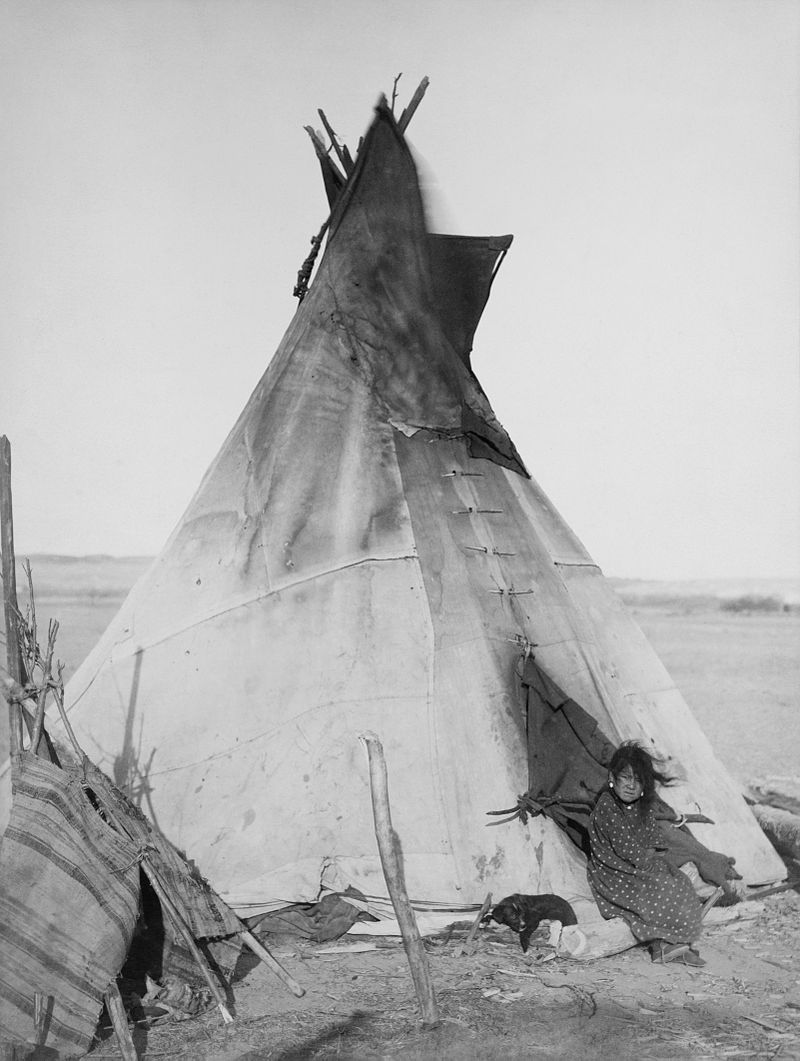
A Sioux tipi home
Note
It was usually covered with 10 to 20 buffalo skins sewn together. During hot weather, the bottom rolled up, or in cold weather, it was covered with earth. Building and maintaining a tipi was women's work while men applied geometric decorations.
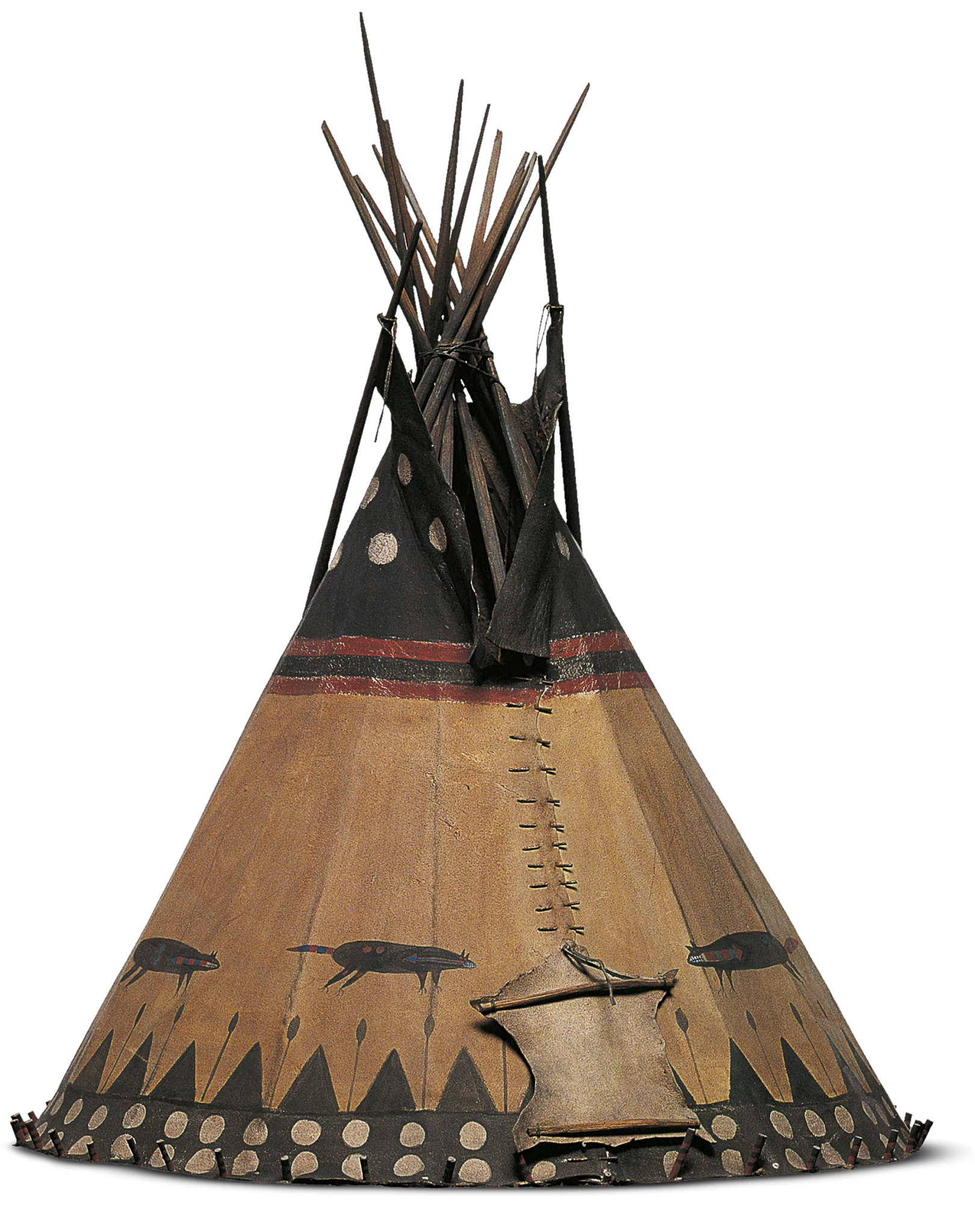
Features of a Tipi
Poles
Note
To make a cone shape, up to 20 poles are bound together at the top of the tipi
Buffalo hide
Note
The poles are draped with buffalo skin
Design
Note
Traditional painted designs are decorated on the tipi
Entrance
Note
The entrance is faced east to protect against westerly winds
Pins
Note
To fasten the tipi, wooden pins are used. The pins could be easily removed so that the tipi can be folded up during travel
Smoke flap
Note
The flap can be adjusted to keep in heat or air out of the inside of the tipi
Since Indians in the Great Plains were nomadic tribes, they spent most of their time travelling and hunting in bands. Each band could be composed of 10 to 50 families, all with movable tipis per family. Like other societies, each family member had roles.
Men
Hunt
Look after the horses
Protect the band and family
Family
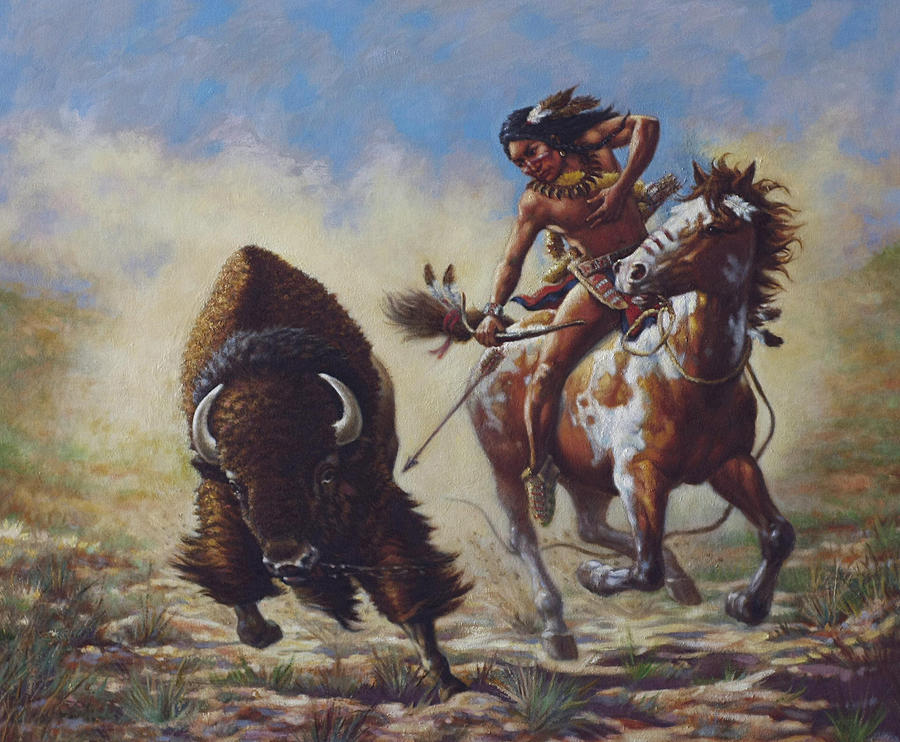
A Plains Indian man hunting a buffalo
Women
-
Take care of the tipi
-
Prepare food
-
Fetch water
-
Bear children Children
-
Boys were taught hunting and fighting skills
-
Girls learned homemaking Elderly
-
Provide advice to the council
-
Pass the history of the people to the next generation
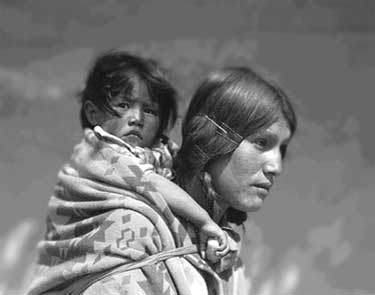
A Plains Indian woman carrying her child
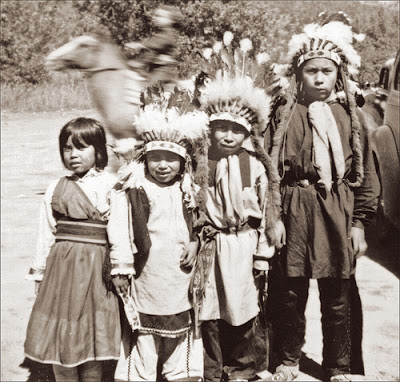
Plains Indian children
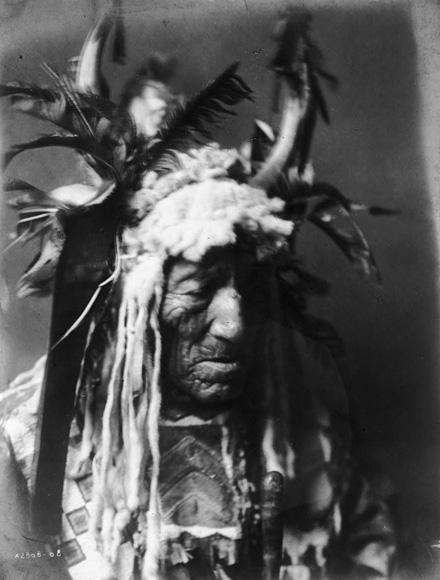
An elder from the Plains
Cooperation and organisation of Indian bands were the key to surviving in the Great Plains. Every year, Indian bands gathered as a nation. Indian bands in the Great Plains hunted and gathered together.
Politics
Note
Chiefs They are those with exemplary skills as warriors, as medicine men, and as spiritual leaders. Usually, they were elected by their tribe, not an heir to power.
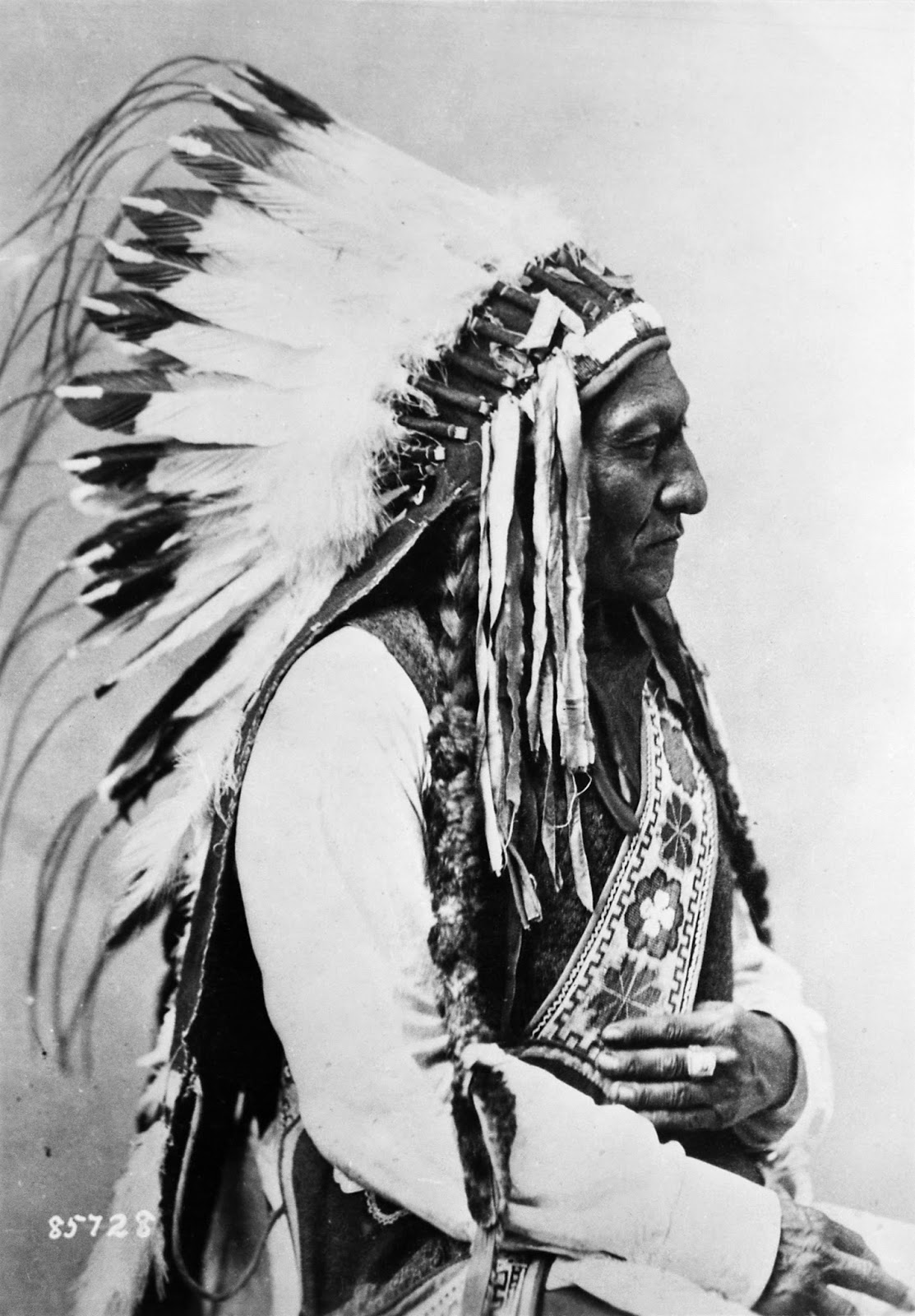
Chief Sitting Bull of Dakota Tribe
Note
The Council Usually composed of elders who were highly respected in their bands. They made important decisions related to war and punishment.
Note
Warrior Societies All men in the band were part of this society and their opinions were considered with utmost importance.
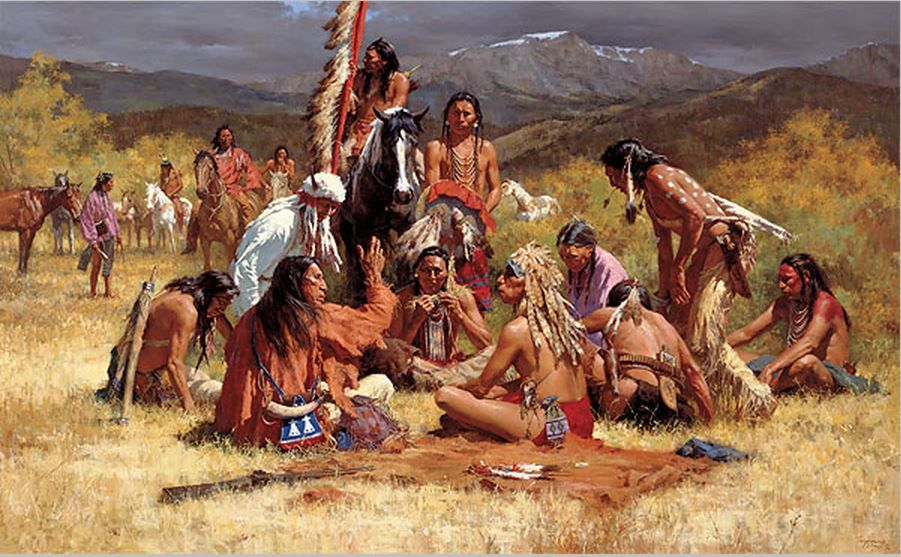
Plains Indians Council
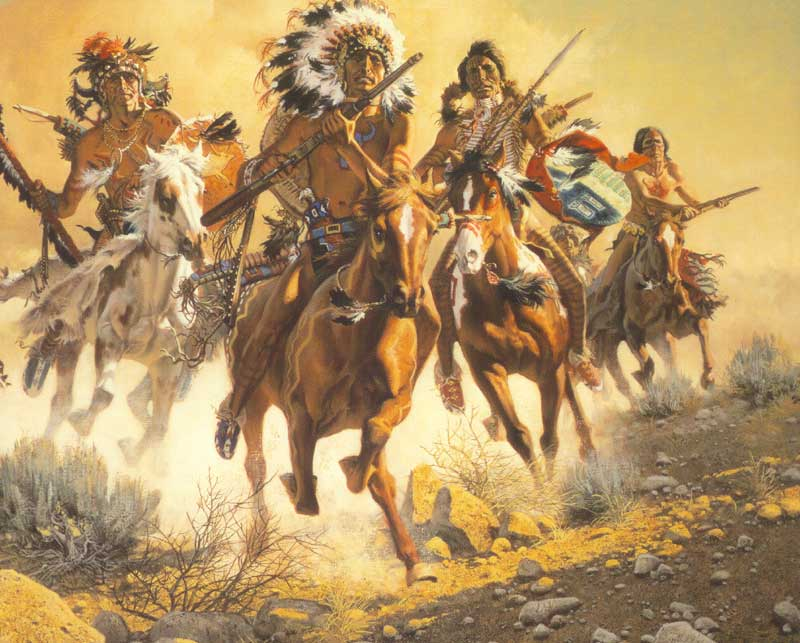
Plains Indians Warrior Societies
Beliefs
Note
One example is their belief of the Spirit World. Wakan Tanka or the Great Spirit was very significant to them, as he created the world and all life forms on Earth. They also believed that all living things had spirits and it had influence over their lives as a whole.
The Plains Indians' beliefs about land and nature are different from other societies.
Note
They also have different dances and ritual ceremonies which were ways for them to contact the spirit world. These included buffalo and scalp dances. The Sundance was the most famous when bands came together.
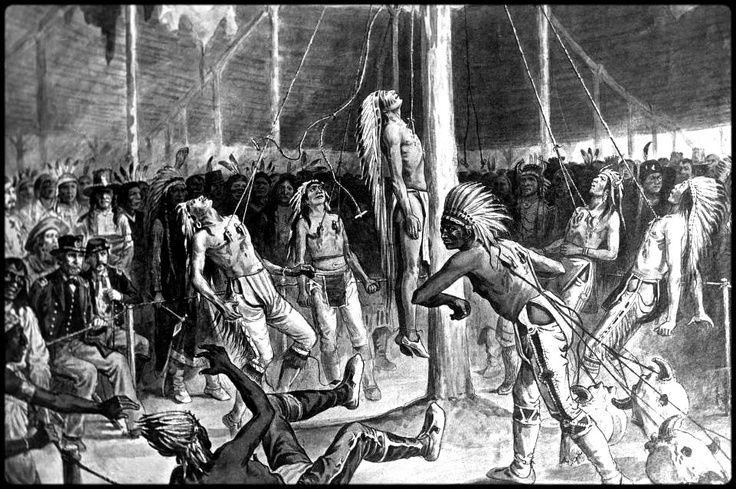
The Sundance
Note
Another belief of theirs was the visions that helped them in their journey. This was another way for them to contact the spirits. Young men were asked to search for theirs through cleaning their body, praying and fasting. For women, they developed visions once they reached puberty.
Note
Lastly, the Plains Indians had a different belief about land and it was one that was the most misunderstood and would later cause tension with the U.S. army. They believed that land was part of life itself and some of it was considered to be sacred. Land could not be owned by any individual.
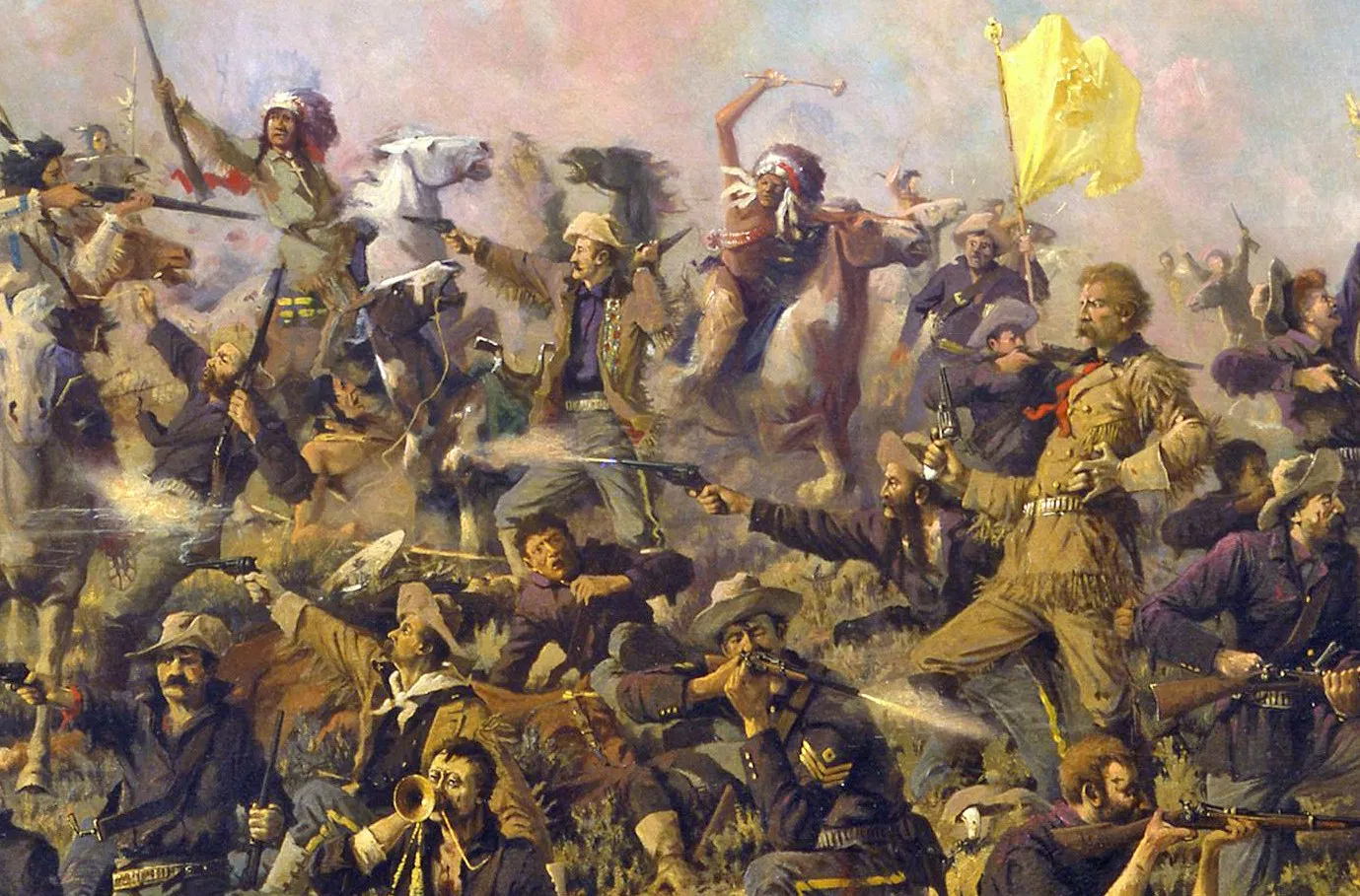
A scene depiction of Plains Indians fighting to protect their land
There are many well-known tribes of the Great Plains, but the one famous for warfare and resistance over white encroachment of the Plains was the Sioux tribe that had three divisions: Lakota, Dakota and Nakota.
Three Sioux Divisions
Dakota Sioux
Note
Also called Isanti or Santee, they consisted of four bands from the east and were known as the "knife makers".
Nakota Sioux
Note
Also called Ihanktown, they were the smallest division consisting of only three bands also from the east. They were named the "keepers of the Sacred Pipestone".
Lakota Sioux
Note
Also called Tetonwan or Teton, they consisted of seven bands from the west. They are noted for their warrior culture and were major opponents during the Great Sioux Wars against the United States Army. They were known for being the "dwellers on the Plains".
The Lakota Sioux nation, being known for their warfare, possessed certain attitudes regarding war including the importance of the buffalos and horses in their survival.
Importance of Buffalos
Note
Buffalo were hunted for living and survival. They were not farmed or bred. Before hunting, the Plains Indians performed several days of buffalo dance rituals by dressing like buffalo and copying their movements. This was done to help them hunt more buffalos along their journey.
Parts of the buffalo were used for food, clothing, equipment for tipis, and war weapons.
The heart of a buffalo was left on the Plains, following the belief that it would give new life to a herd.
After the hunt, women and children prepared the carcase for eating raw or cooked.
Jerky from the buffalo meat was stored for consuming during the winter season.
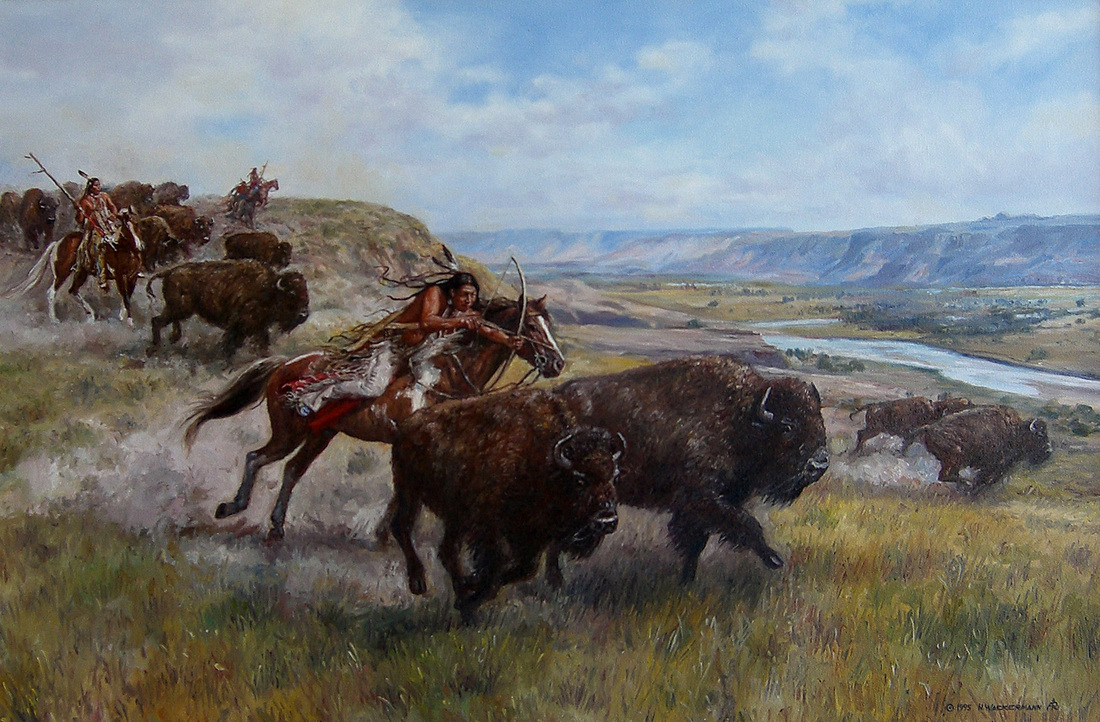
A scene depiction of Plains Indians buffalo hunting
Importance of Horses
Note
The first horses were brought to America by the Spanish colonists during the 16th century. In 1640, the Pueblo Indians of Mexico captured these horses from the Spaniards and, later on, took care of them through breeding and trading with other Indian nations.
Indians saw horses as a way for them to survive on the Plains. They were used during warfare.
Social status and wealth were determined by the number of horses that a person or tribe had.
Indians would ride horses to hunt for buffalo.
Horses served as a mode of transport to various places on the Plains since they were nomadic people.
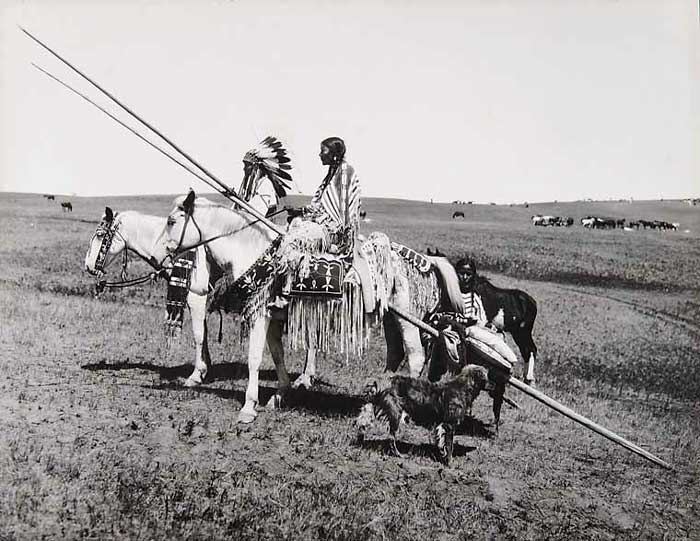
Plains Indians riding their horses
Reasons for Warfare
Note
There are many reasons why Lakota Sioux engaged in warfare. Some reasons are the following:
Demonstration of skills
Protection of hunting grounds
Revenge or honour
Unity of the tribe
Capture of horses or weapons
Test of strength among chiefs
Control of elders over the young and brave men
Fighting styles and attitude
Note
Lakota Sioux also had a different fighting style and attitude:
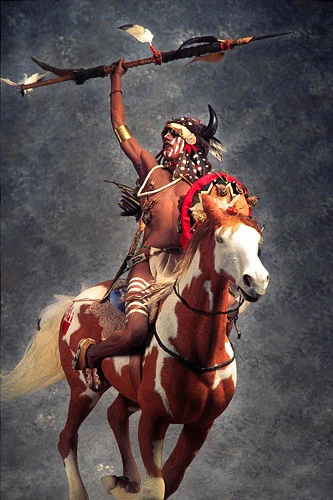
A Lakota Sioux Warrior
Some tribes scalped dead enemies so their spirits would not fight in heaven.
Warriors would gain honour through counting coup (i.e. touching the enemy by hand or stick).
They fought in short raids to show bravery.
They never engaged in war to own land or destroy or conquer other tribes.