Responses to the Black Death (OCR GCSE History B (Schools History Project)): Revision Notes
📚Revision Notes
Responses to the Black Death
Note
The Black Death was a devastating pandemic of bubonic plague that arrived in Europe in October 1347, and killed millions of people. A similar form of epidemic, called the Great Plague of London, occurred again in England between 1665 and 1666. Both caused massive numbers of deaths.
Historical context: Origin and nature of 14th-century plague
In 1333, the province of Hopei in northeastern China experienced an epidemic that destroyed about two-thirds of the population. The epidemic caused the death of about five million Chinese people. Being one of the busiest trading nations, the epidemic from China arrived in Europe in 1347, in Messina, Sicily.
Trading ships from the Black Sea usually passed through Constantinople and the Mediterranean.
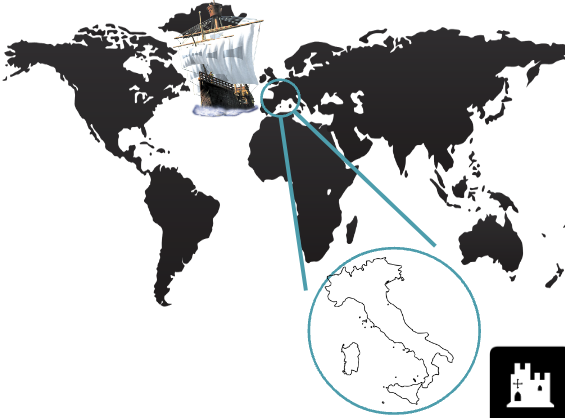
By the time the people of Messina realised the sickness brought by the ships, it was too late. The epidemic had already reached the city and immediately spread to the nearby countryside.
When the plague reached Bristol (one of the busiest ports in England) in 1348, London was inhabited by around 70,000 people. The plague affected all social classes. On 2 September, 1348, Joan Plantagenet, daughter of King Edward III of England, died of the plague. For two years, the plague killed 30 to 40% of the English population. It literally wiped out villages and towns.
Note
According to historians, poor hygiene and living conditions in London led the plague to spread to the rest of England. The River Thames, in particular, carried infections through ships. The church recorded about 20,000 deaths in London between 1348 and 1350.
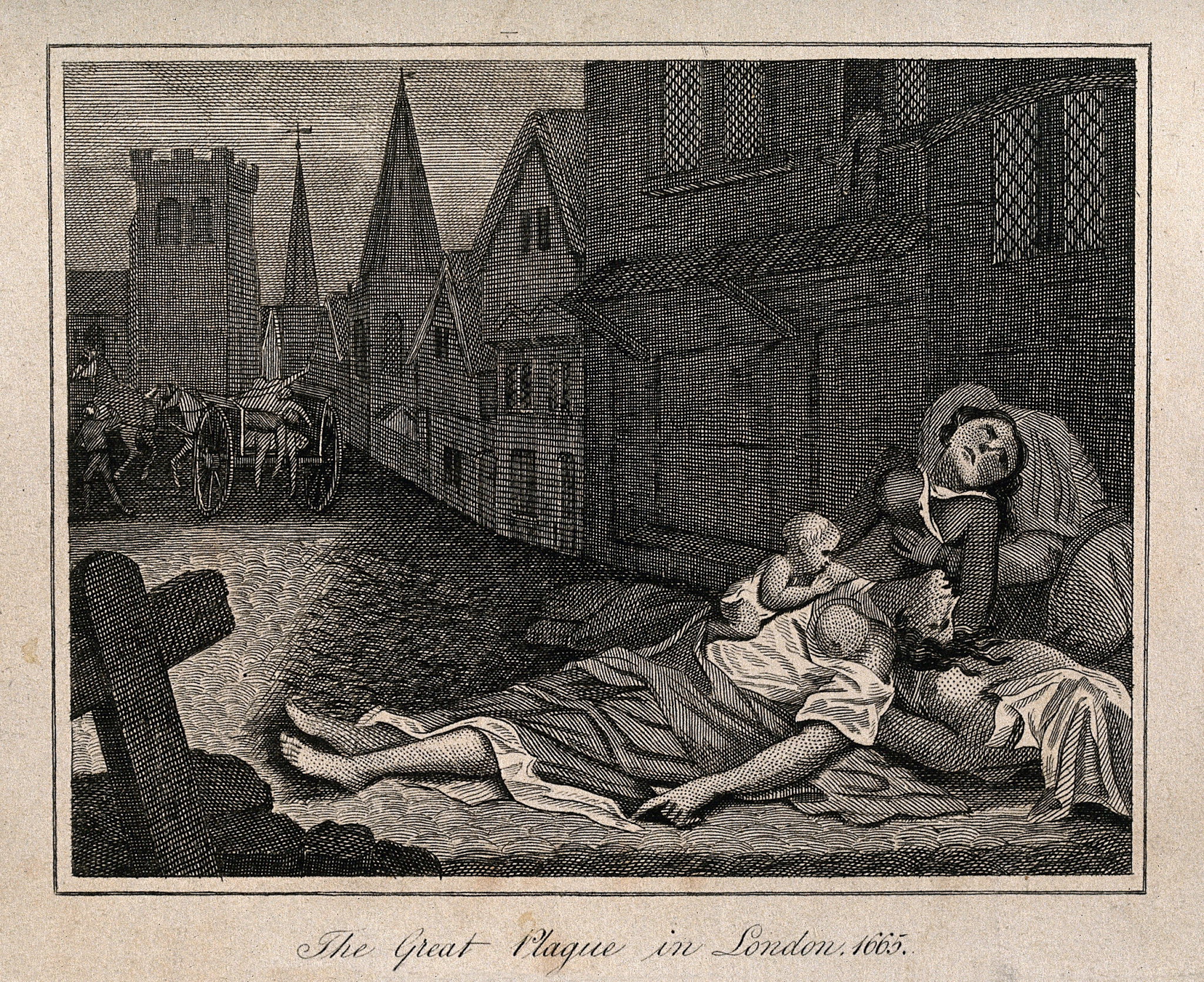
Image of an etching of two women lying dead in a London street, 1665
Response to the plague
When the bubonic plague started in Europe due to the widespread unhygienic habits, people were not aware that the main cause of death was the bacteria Yersinia pestis, which was spread by infected rats' fleas. Not having a scientific explanation for the disease that had wiped out over one-third of Europe's population, people attempted to save their lives in a variety of ways.
Note
Due to limited knowledge of the nature of diseases, people had very low chances of preventing them. During mediaeval times, men of higher ranks usually gained knowledge in medicine through practice. Most mediaeval doctors accepted and employed the early ideas of Hippocrates and Galen. They were unable to conclude an accurate diagnosis due to a lack of medical instruments. Due to the prevalent belief in miasma, most doctors carried posies, oranges and other scented natural remedies.
During the Black Death, many mediaeval doctors avoided patients for fear of being infected with the plague. No one knew exactly how the Black Death was transmitted, nor how to prevent or treat it. As a result, people believed in superstition, God's wrath, astrology and crude theories.

Physicians used unsanitary and dangerous procedures such as bloodletting and boil-lancing.

Burning aromatic herbs and bathing in rosewater or vinegar was also tried with little success. This was rooted in the miasma theory.

Other treatments included placing a frog's belly on the boil. The frog would swell up and explode.

Known as the Vicary method, people would shave a hen's butt and strap it to the swollen lymph nodes of the infected person. When the chicken got sick, the procedure was repeated until the chicken or the sick person recovered.

In mediaeval Europe, bathing in urine was a popular treatment for many diseases, including the plague. Urine from non-infected people would be collected and sold to sick people during the plague.
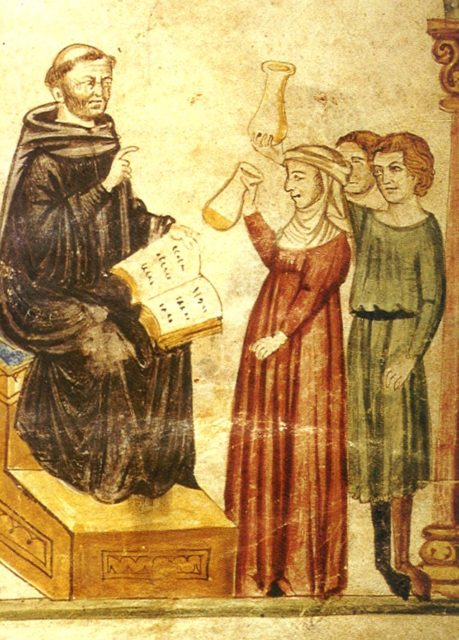
Image depicting mediaeval examination of urine