Religion in late Anglo-Saxon England (OCR GCSE History A (Explaining the Modern World)): Revision Notes
📚Revision Notes
Religion in late Anglo-Saxon England
Note
Religion was an important part of daily life in Anglo-Saxon England. The kings and their courts had converted to Christianity in the 590s, and since then the religion had spread throughout the country. Due to a mixture of influences from the Roman Catholic and Celtic churches, the Anglo-Saxon church developed its own distinct religious traditions.
What was the late Anglo-Saxon Church like?
- The Church was powerful as it held over one-quarter of the land in England.
- This land was divided into large areas, each controlled by a bishop.
- The bishops were well-educated, important people who served on the Witan.
- Local priests were not as educated as the bishops, had small landholdings, and were usually married.
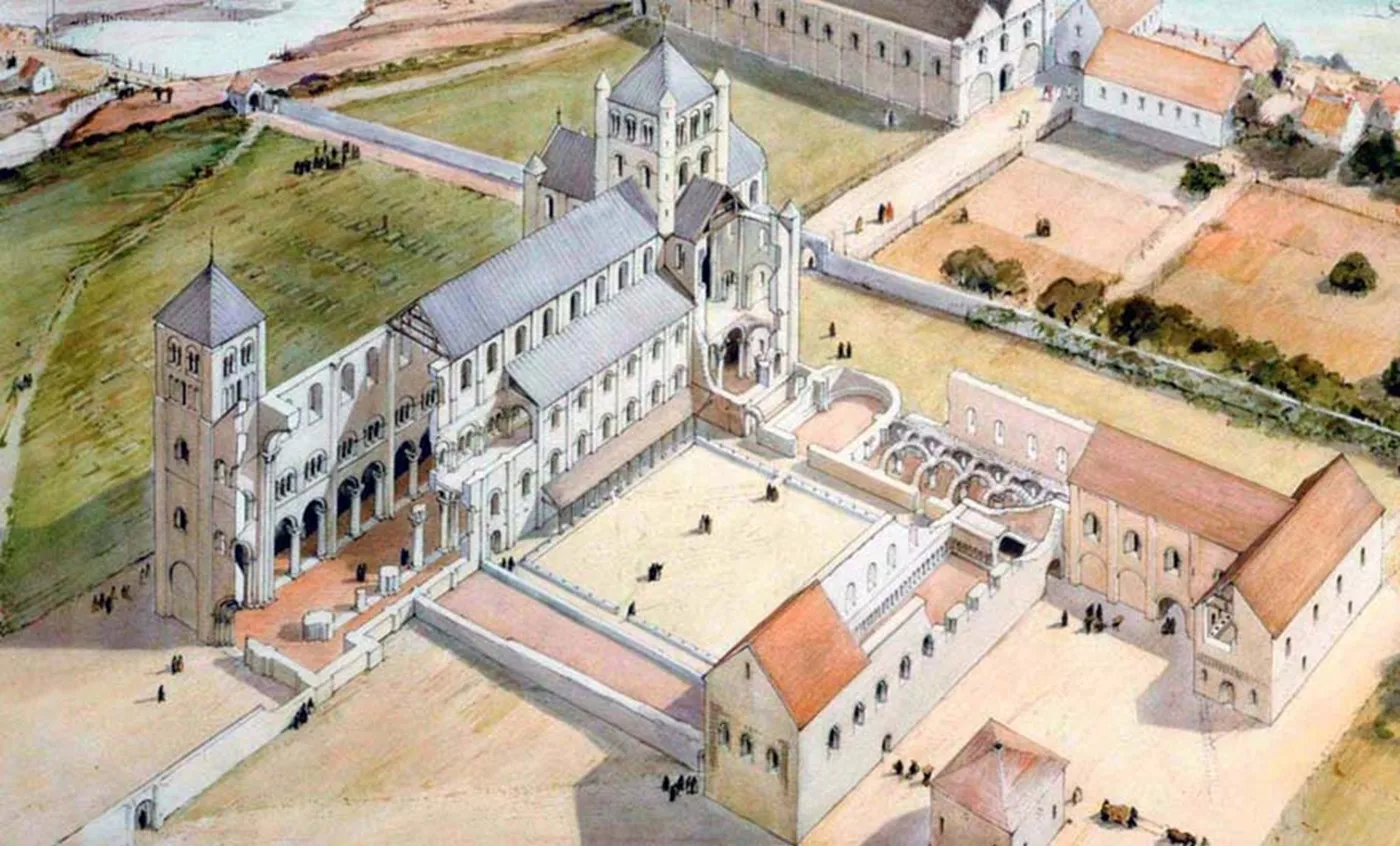
Note
A reconstruction drawing of the Norman Abbey and Palace
What made the late Anglo-Saxon church distinct?
- The Anglo-Saxon church was different from the rest of Western Europe due to its mixed church traditions and styles.
- Roman Catholic and Celtic traditions were blended
- Whilst the Roman Catholic church insisted that the Bible should only be written in Latin, monks wrote Bible extracts in the normal language of the people, i.e. Old English.
- In some parts of the country, people gathered to worship around large stone crosses since there was no permanent church building.
- Whilst the Pope had the authority to declare new saints, the Anglo-Saxon church had too many saints, who were local people that the community thought highly of after their death.
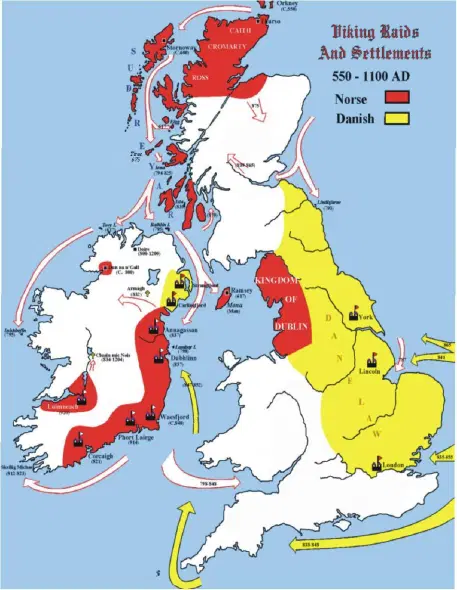
- Anglo-Saxons believed that God gave punishments for the sins of the people. They thought that Viking invasions were a punishment for their sins.
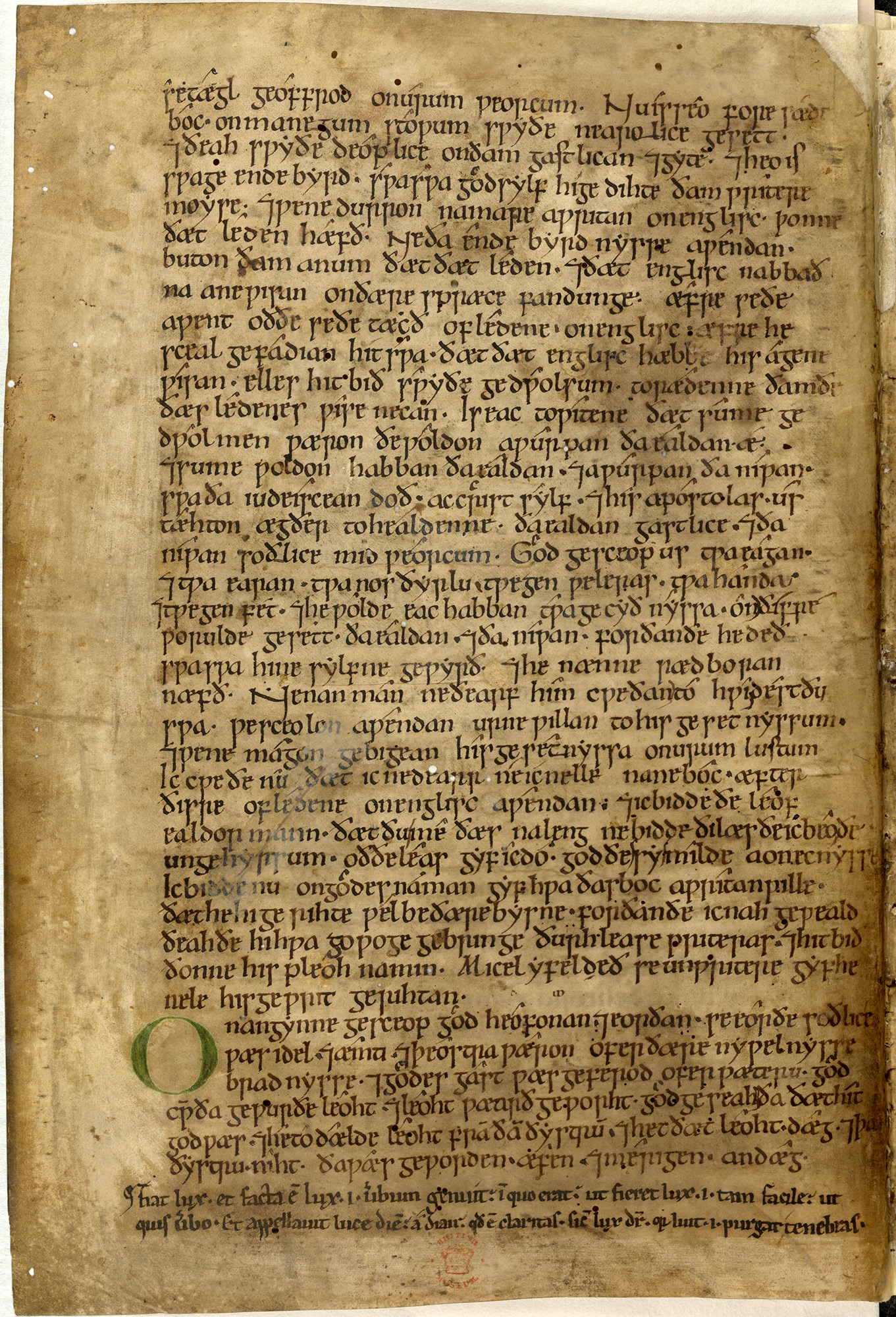
First page of the translation of the first six books of Old Testament into Old English
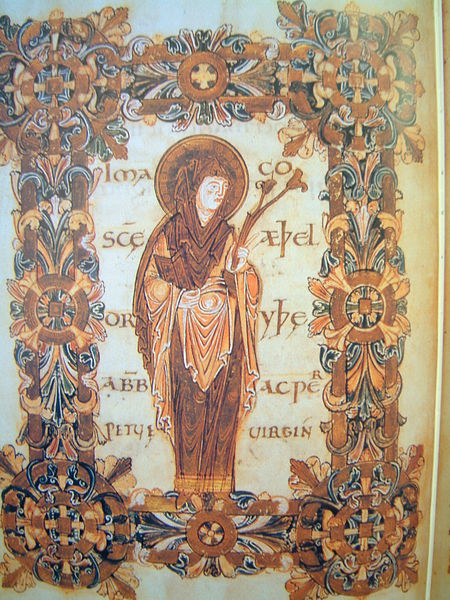
St. Aethelthryth, an Anglo-Saxon saint
Viking raids in Britain
Who were the church leaders in late Anglo-Saxon England?
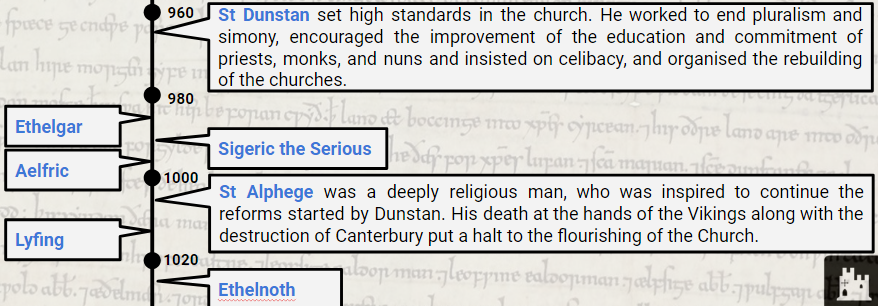
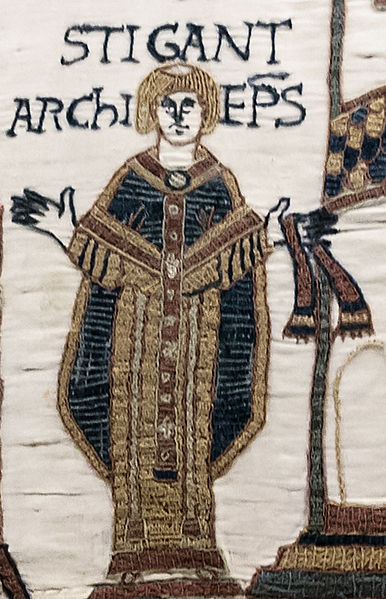
Archbishops of Canterbury
Since the Christianisation of Anglo-Saxons through Pope Gregory's appointment of Augustine to England in 596, the country had become Christian in the eleventh century. Augustine established the archbishopric of Canterbury, which became the office of the leader of the Church in England.
Note
The Anglo-Saxon church was criticised by the Pope for allowing its local priests to marry - a practice that had been discouraged on the continent for a hundred years.

Hierarchy in the Church
Pope- Head of the church
Archbishops/ Bishops- Ecclesiastical superiors over a cathedral or region
Priests- Ecclesiastical authorities over a parish, village, or town church
Monastic orders- Religious adherents in monasteries