First uprisings against Norman rule (OCR GCSE History A (Explaining the Modern World)): Revision Notes
📚Revision Notes
First uprisings against Norman rule
Note
William was keen to assert his legitimacy and his right to rule England. He claimed he was Edward the Confessor's rightful heir and so wanted to emphasise how his rule was a continuation of Edward's, hoping that he would win support and loyalty from the English by doing so.
How did William establish his authority?

The Anglo-Saxon Earls of Mercia and Northumbria, Edwin and Morcar were allowed to keep their lands. In return, they had to accept the authority of William as their king.

William granted land ownership to his trusted Norman barons and took away the land of the nobles who refused to support him.

Changes in the feudal system were introduced to England: William owned all the lands. Norman feudalism was based on royal strength.
William the Conqueror returned to Normandy six months after his victory in the Battle of Hastings. England was already won and William's authority was already established. Bishop Odo, the king's half-brother, and William FitzOsbern, a friend and a relative of the king, were left to rule England in William's place.
Resistance in the West and on the Welsh border
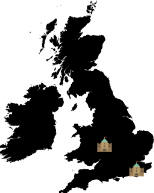
William faced a rebellion in Kent in 1067. The people of Kent were unhappy with how they were being treated by the Normans and petitioned Eustace II of Boulogne, who had argued with William. Eustace II wanted to gain control of Dover himself. They attacked Dover Castle but failed.
Anglo-Saxon thegns in the Welsh border region greatly resented Normans taking over land they believed was theirs. In 1067, one of these thegns, Eadric the Wild, joined forces with two Welsh princes to attack and plunder Hereford.
Resistance in Exeter and Mercia
The city of Exeter refused to swear loyalty to William and was against the taxes levied by the new king. With the encouragement of Harold Godwinson's mother, Gytha, the people of the region revolted. William returned to England, dealt with the threat and put Exeter under siege. The people surrendered after 18 days and were treated leniently by the king, who hoped to win support in the region.
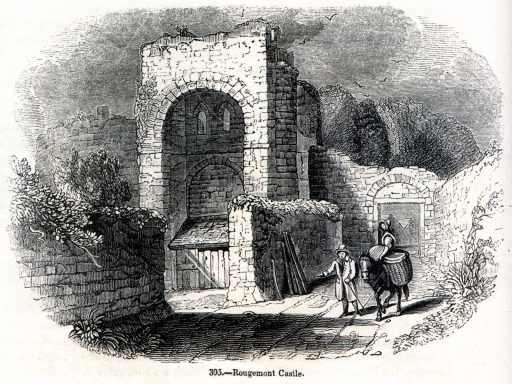
An engraving of the Rougemont castle in Exeter, built after the rebellion
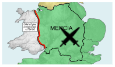
The Welsh-supported rebellion in Mercia was launched with Earls Edwin and Morcar. The two earls began to gather allies against William and in Edwin's land in Mercia. The king acted quickly and stopped the revolts. William let Edwin and Morcar return to their lands.
Note
William built the Rougemont castle in Exeter and left it under the control of his half-brother. When Harold Godwinson's sons tried to invade the following year, the city of Exeter refused to support them.