Dimensions (OCR GCSE Maths): Revision Notes
📚Revision Notes
Dimensions
What Are Dimensions?
Dimensions describe the different aspects of an object that can be measured. There are three primary dimensions:
- One Dimension ():
- Description: Objects that have just a length.
- Units of Measurement: , etc.
- Examples: A straight line or a piece of string.

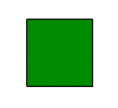
- Two Dimensions ():
- Description: Objects that have an area (length and width).
- Units of Measurement: , etc.
- Examples: A rectangle, square, or circle.
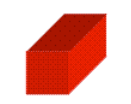
- Three Dimensions ():
- Description: Objects that have a volume (length, width, and height).
- Units of Measurement: , etc.
- Examples: A cube, sphere, or cylinder.
- Four Dimensions ():
- Note: involves time, which is not typically considered in GCSE Maths.
Using Dimensions to Understand Formulas
The advantage of understanding dimensions is that it allows you to determine what a formula is calculating: length, area, volume, or something else. Here's how you can analyse a formula using dimensions:
- Change All Variables to the Letter :
- Variables represent quantities like length, width, and height. For simplicity, change all these variables in the formula to .
- Ignore Numbers and Constants:
- Constants such as (pi) or numerical coefficients should be ignored for this step.
- Simplify the Formula:
- After replacing variables with , you should simplify the expression.
- Interpret the Result:
- If you end up with : The formula is for length ().
- If you end up with : The formula is for area ().
- If you end up with : The formula is for volume ().
- If the result doesn't fit any of these: The formula may be incorrect or not applicable.
Note
Example 1: Analyzing a Formula
Let's analyse the formula to determine whether it calculates length, area, volume, or nothing at all.
Step-by-Step Breakdown:
- Identify the Variables:
- Here, and are variables representing lengths. In this analysis, we replace all length variables with .
- Ignore Constants:
- The number is a constant, which doesn't affect the dimensionality. We can ignore it for this step.
- Simplify the Expression:
- After replacing and with the expression becomes:
- We see that the expression simplifies to .
- Interpret the Result:
- indicates that the formula is for calculating area.
- Conclusion: The formula is used to calculate an area.
Note
Example 2: Analyzing a More Complex Formula
Let's analyse the formula to determine whether it calculates length, area, volume, or nothing.
Step-by-Step Breakdown:
- Identify the Variables:
- The variables and represent lengths. We replace all these variables with to signify their dimensional nature.
- Ignore Constants:
- The numbers and are constants and can be ignored for this step.
- Simplify the Expression:
- After replacing and with , the expression becomes:
- Simplify within the brackets:
- Interpret the Result:
- The final expression simplifies to , indicating that the formula is for calculating area.
Conclusion: The formula is used to calculate an area.
Note
Example 3: Analyzing a Complex Formula
Let's analyse the formula to determine whether it calculates length, area, volume, or nothing useful.
Step-by-Step Breakdown:
- Identify the Variables:
- The variables , and represent lengths. Replace all these variables with to signify their dimensional nature.
- Ignore Constants and Fractions:
- The fraction and (which is just a number) can be ignored for this analysis as they do not affect the dimensionality.
- Simplify the Expression:
- After replacing the variables with , the expression becomes:
- Simplify within the brackets:
- Notice that this simplifies to a mixture of and .
- Interpret the Result:
- The final expression contains both (which corresponds to area) and (which corresponds to volume). Since a formula should consistently describe either length, area, or volume, the presence of both and indicates that the formula doesn't make sense dimensionally.
Conclusion: The formula is not valid as it mixes dimensions incorrectly.
Note
Example 4: Analyzing a Complex Volume Formula
Let's analyse the formula:
Objective: Determine whether this formula calculates length, area, volume, or something else.
Step-by-Step Breakdown:
- Identify the Variables:
- The variables , and represent lengths. We replace all these variables with to signify their dimensional nature.
- Ignore Constants and Numbers:
- The number is a constant, so it doesn't affect the dimensionality. Ignore it during the analysis.
- Simplify the Expression:
- Replace , and with , and simplify the expression:
- Simplify the terms within the formula:
- Interpret the Result:
- The final expression simplifies to , which indicates that the formula is for calculating volume. Conclusion: The formula is used to calculate volume.
Note
Example 5: Analyzing a Complex Length Formula
Let's analyse the following formula:
Objective: Determine whether this formula calculates length, area, volume, or nothing.
Step-by-Step Breakdown:
- Identify the Variables:
- The variables , and represent lengths. Replace all these variables with to signify their dimensional nature.
- Ignore Constants:
- The constants and can be ignored for the purpose of this analysis since they do not affect the dimensionality.
- Simplify the Expression:
- Replace and with , and simplify the expression:
- Simplify further by cancelling out the terms:
- This simplifies to , which indicates that the formula is for length.
- Interpret the Result:
- Since the simplified formula results in , it indicates that the original formula is used to calculate length.
Conclusion: The formula is used to calculate length