Sine and Cosine rules (OCR GCSE Maths): Revision Notes
📚Revision Notes
Sine and Cosine Rules
Introduction to Sine and Cosine Rules
In trigonometry, the Sine and Cosine Rules are incredibly powerful tools that extend the basic trigonometric ratios (Sin, Cos, Tan) to any triangle—not just right-angled triangles. This makes them extremely versatile and useful for solving a wide variety of problems.
The Sine Rule
The Sine Rule is used when you know:
- Two angles and one side ( or ).
- Two sides and a non-included angle (). The formula for the Sine Rule is:
Where:
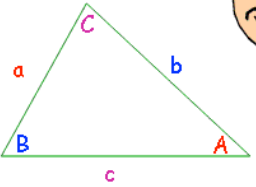
- , , and are the lengths of the sides of the triangle.
- , , and are the angles opposite those sides.
1. The Sine Rule: Finding an Unknown Side
What Information do you need to be given?
- Two angles and the length of a side.
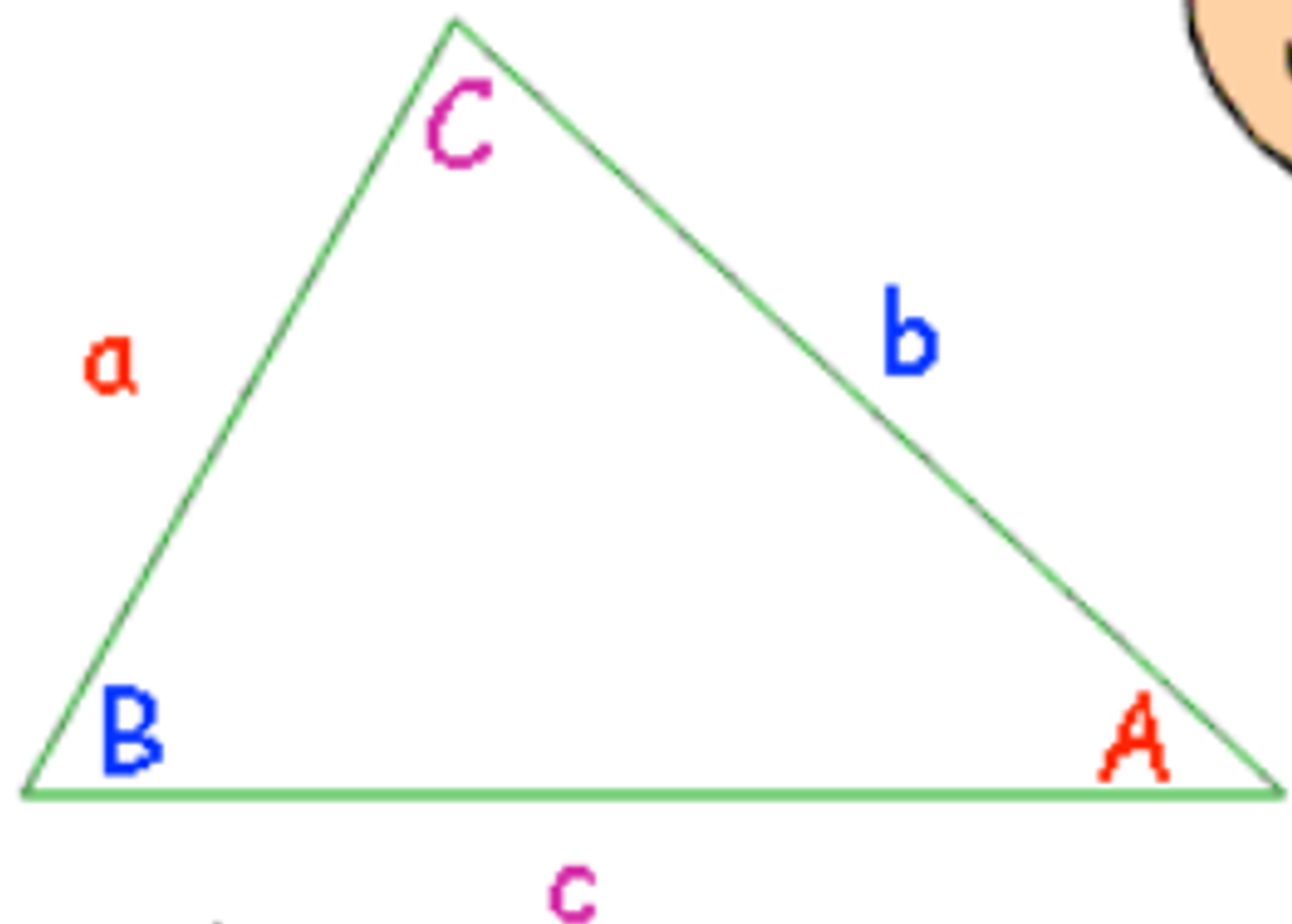
What is the Formula?
The Sine Rule is given by:
Where , and are the sides of the triangle, and , and are the angles opposite these sides.
Note
Example: Find the length of side x_x_ in the triangle below where , , and side .
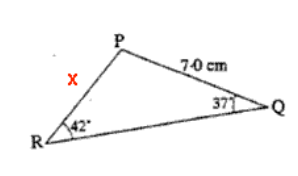
To find :
- Multiply both sides by :
- Substitute the values:
So, the length of side is approximately 6.3 cm.
2. The Sine Rule: Finding an Unknown Angle
What Information do you need to be given?
- Two lengths of sides and the angle not included (i.e., not between those two sides).
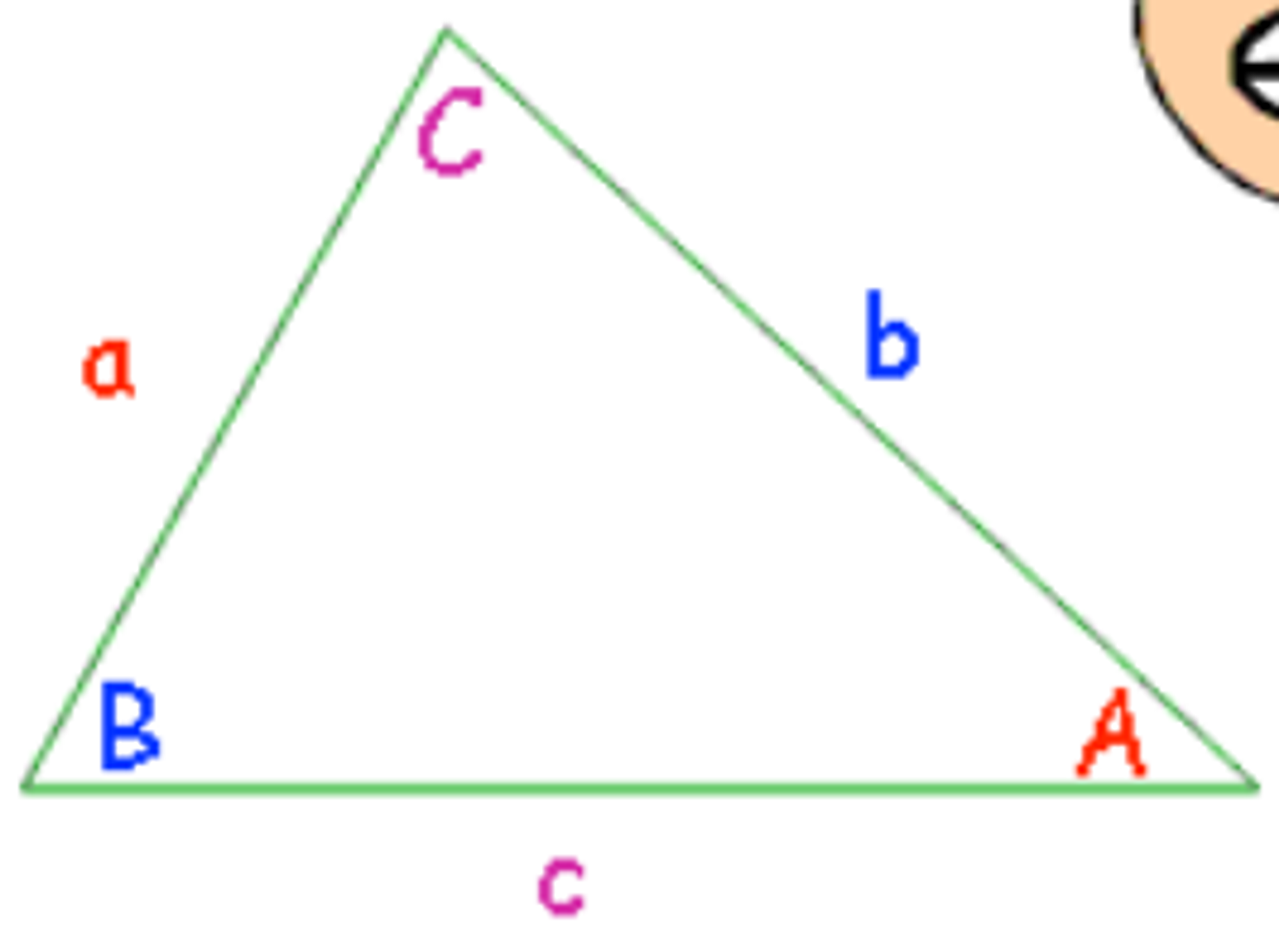
What is the Formula?
The Sine Rule can also be rearranged to find an unknown angle:
Note
Example: Find the size of angle x_x_ in the triangle below where , , and .
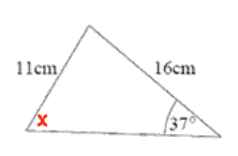
To find :
- Multiply both sides by :
- Substitute the values:
- To find , take the inverse sine:
So, the angle is approximately 61.1°.
3. The Cosine Rule: Finding an Unknown Side
What Information do you need to be given?
- Two sides of the triangle and the included angle (i.e., the angle between the two sides).
What is the Formula?
The Cosine Rule for finding an unknown side is:
Where:
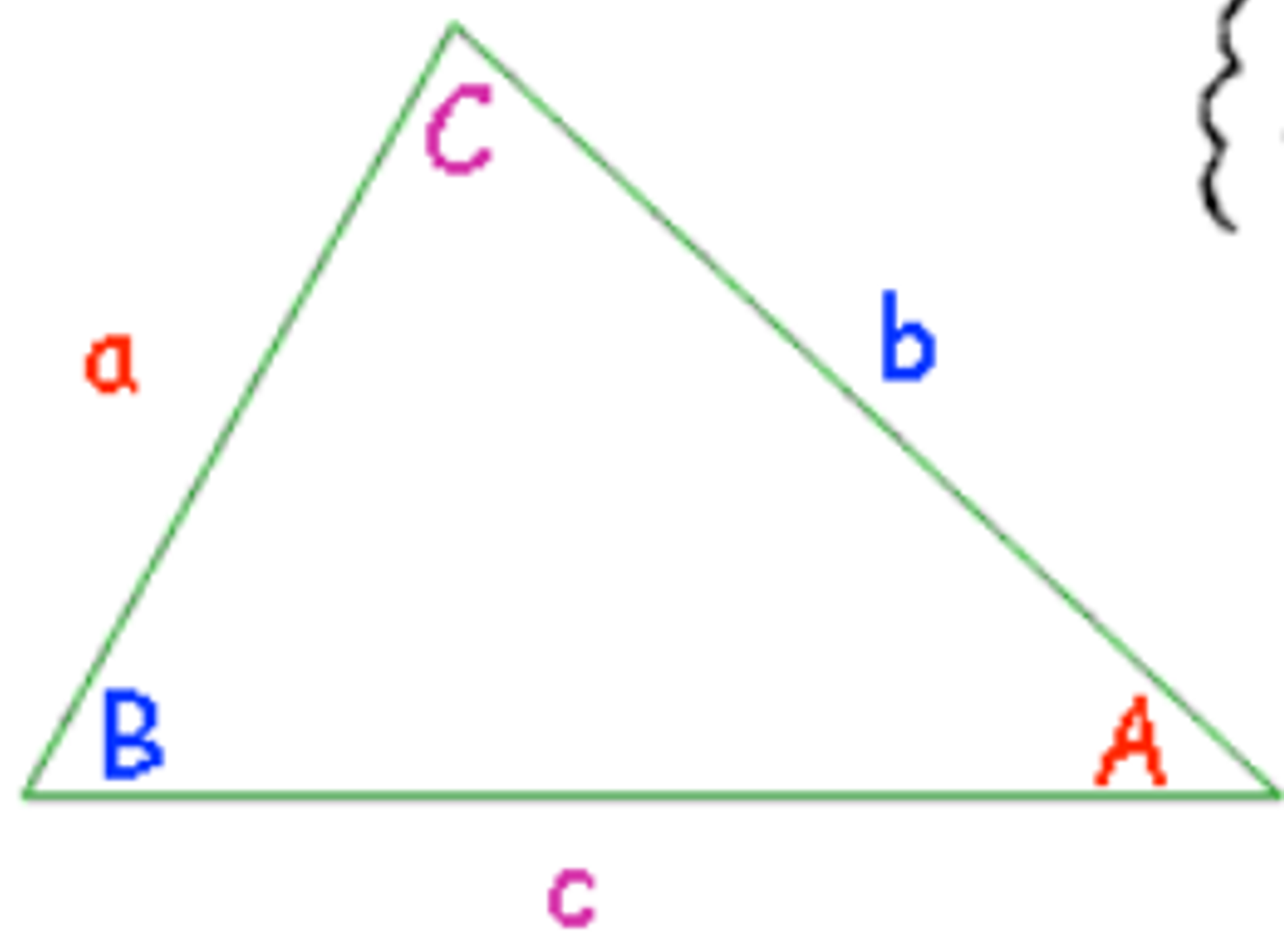
- , , and are the sides of the triangle.
- is the angle opposite side .
Note
Example: Find the length of side in the triangle where , , and .
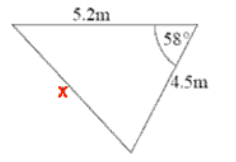
- Substitute the values into the formula:
- Calculate each term:
- Square root both sides:
So, the length of side is approximately 4.74 m.
4. The Cosine Rule: Finding an Unknown Angle
What Information do you need to be given?
- All three lengths of the triangle.
What is the Formula?
The Cosine Rule for finding an unknown angle is:
Where:
- , and are the sides of the triangle.
- is the angle opposite side .
Note
Example: Find the size of angle in the triangle where , , and .
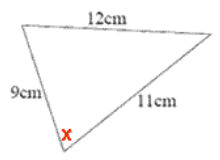
- Substitute the values into the formula:
- Calculate each term:
- Use the inverse cosine to find :
So, the angle is approximately 72.97°
Summary
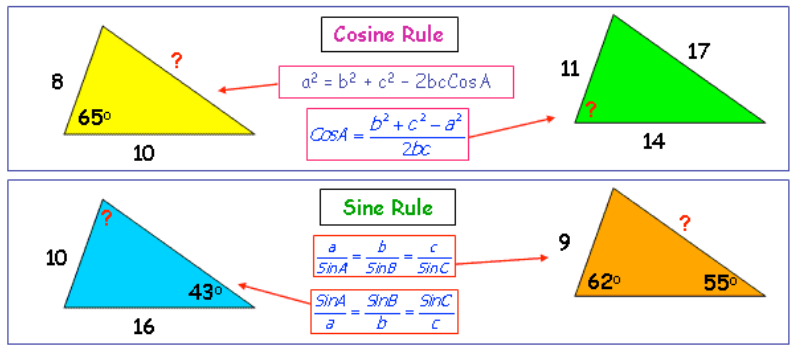
The Sine Rule
The Sine Rule is used when we are given either:
- Two angles and one side ( or )
- Two sides and a non-included angle () Formula:
Where:
- are the sides of the triangle
- are the angles opposite those sides Finding an Unknown Side:
When we have two angles and one side, we can find the unknown side using the formula:
Worked Example:
Note
Example
Given:
- Angle
- Side opposite angle
- Another angle To find the unknown side :
Finding an Unknown Angle:
When given two sides and an angle not included between them, the Sine Rule can help find the unknown angle.
Given:
- Sides and
- Angle To find angle :
Then use the inverse sine to find :
The Cosine Rule
The Cosine Rule is used when we are given:
- Three sides ()
- Two sides and the included angle (SAS) Formula for Finding a Side:
Where:
- are the sides of the triangle
- is the included angle between sides and
Worked Example:
Note
Example
Given:
- Side , side
- Included angle To find the side :
Formula for Finding an Angle:
If all three sides of the triangle are known, the Cosine Rule helps find an unknown angle.
Example:
Given:
- Sides , and
To find angle :