Static Electricity (OCR GCSE Physics A (Gateway Science Suite)): Revision Notes
📚Revision Notes
2.4.2 Static Electricity
Note
Static electricity is the build-up of electric charge on the surface of objects. It happens when you rub two things together, like a balloon and a woolly jumper.
How Does It Work?
- Rubbing Surfaces: When we rub two surfaces together, we produce static electricity, tiny particles called electrons then move from one object to another. This is because the charge difference between the Earth and the charged surface gets so big that electrons will jump from the charged surface to the Earth. As the electrons jump, we will be able to see a spark. The object losing electrons becomes positively charged, while the object gaining electrons becomes negatively charged. This is called a charge imbalance. Sparking: The "spark" is when the charge jumps through the air from the highly negative object to the highly positive object, to balance out the charges
Note
An Example of Static Electricity Question: Laura takes an uncharged balloon and a jumper. She rubs the balloon against the jumper for several seconds. Laura then touches the jumper and experiences a small electrical shock. Why has this happened?
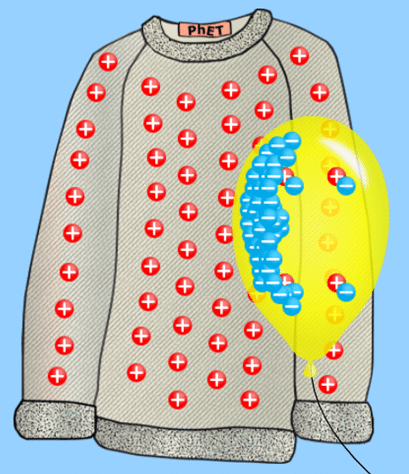
- When the balloon is rubbed against the jumper, we get electron transfer. As the balloon rubs against the jumper, electrons will be transferred from the balloon to the jumper. This results in a negatively charged jumper and a positively charged balloon.
- When Laura touches the jumper, the electrons are transferred to her. Compared to the jumper, Laura is positively charged. Therefore the electrons jump across the gap between the jumper and Laura's hand, creating a spark (and therefore an electrical shock).
- The electrons are trying to get to the earth. Electrons are always trying to get to the earth. This means that they will go through Laura's body and travel straight down into the earth. In this situation, we would refer to Laura as an 'earthed' object; she is in contact with the earth, therefore providing a pathway for the electrons.
General Uses and Dangers of Static Electricity
Uses and Dangers
| Uses of Static Electricity | Dangers of Static Electricity |
|---|---|
| Spray Painting: A static charge is used to ensure paint spreads evenly and sticks to the surface. | Electric Shocks: Static charge build-up can cause shocks when touching objects. |
| Photocopiers: Static electricity helps to attract toner to the paper in the correct pattern. | Fires/Explosions: Static sparks can ignite flammable gases or liquids, leading to dangerous situations. |
| Air Purifiers: Static charge attracts dust and particles, making it easier to remove them from the air. | Damage to Electronics: Sensitive electronic components can be damaged by static discharge. |
Lightning
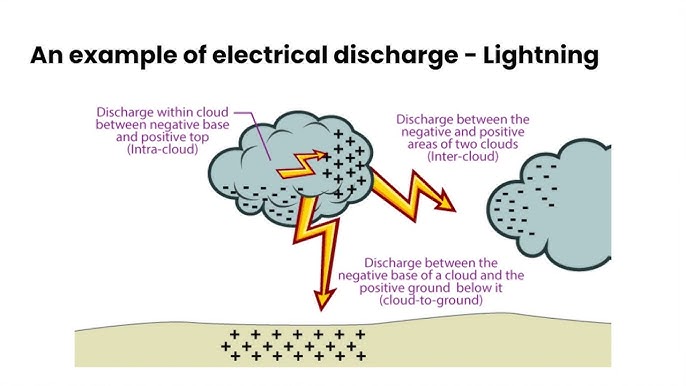
- Warmer air is less dense than colder air. Warm air in clouds rises, as it is less dense than colder air. The warmer air carries small ice crystals as it moves upwards.
- An electric charge is created. As these crystals move upwards, they rub together causing an electric charge to form at the top and bottom of the cloud.
- Lightning is caused by this electric charge. Eventually, the charge becomes so large that electrons jump to the ground, where we see a bolt of lightning