Grippers and End Effectors (Junior Cert Applied Technology): Revision Notes
📚Revision Notes
Grippers and End Effectors
Grippers and end effectors are essential for robotic systems and have key roles in automation.
Definitions
- Grippers: These are tools on robotic arms that can grab and move objects, helping robots work in different settings.
- End Effectors: These are at the end of robotic arms and interact with the environment in specific ways.
Functions of Grippers
- Purpose: Replace human tasks with robots to make work more accurate and efficient.
- Industries: Grippers are used in:
- Manufacturing: For assembly lines and moving materials.
- Healthcare: In surgery robots and labs.
- Logistics: For automated storing and moving items.
Note
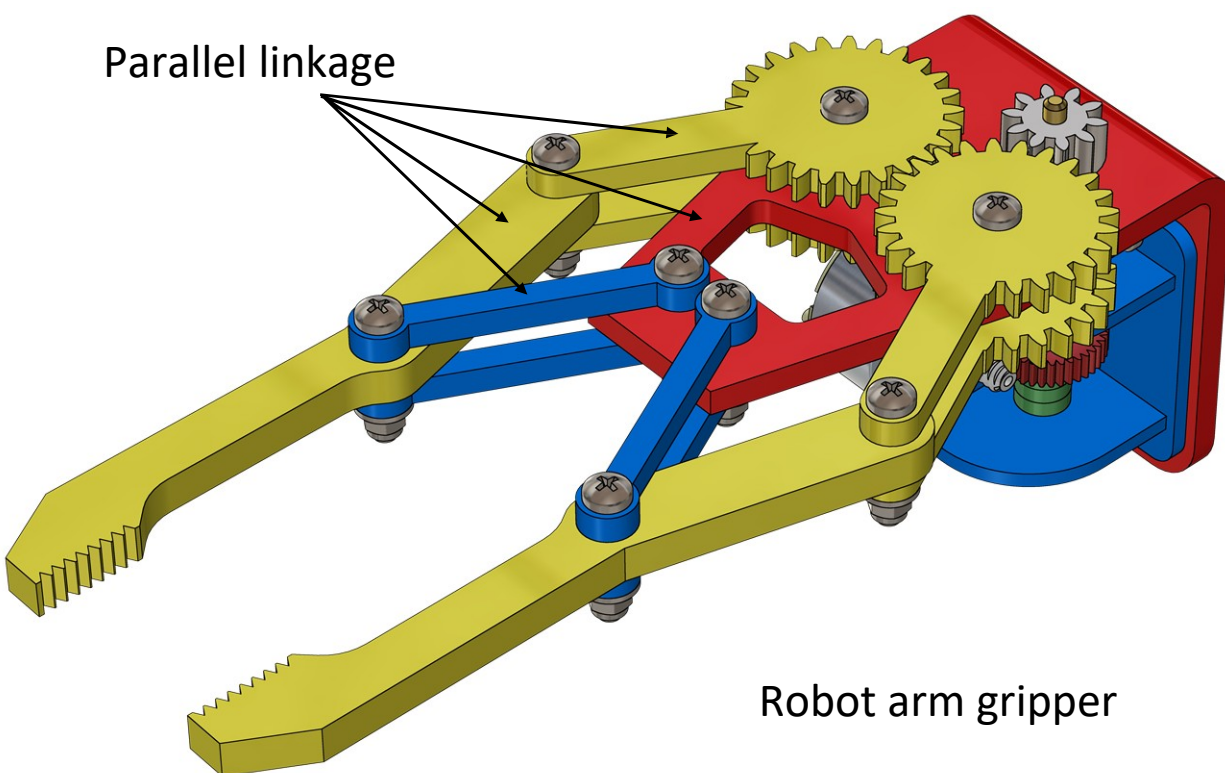 This diagram illustrates a typical industrial setting where grippers are utilised.
Types of Grippers
- Mechanical Grippers: Use parts to hold objects tightly, good for detailed tasks.
- Pneumatic Grippers: Use air, ideal for light items and fast operations.
- Vacuum Grippers: Use suction to pick up smooth objects, used in packaging.
| Type | Grip Strength | Energy Use | Uses |
|---|---|---|---|
| Mechanical | High | Moderate | Manufacturing, Assembly |
| Pneumatic | Moderate | High | Fast Pick-and-place |
| Vacuum | Low | Low | Packaging |
Mechanisms Used
- Linkage Systems: Help move gripper parts together smoothly.
- Gear Trains: Make movements precise for the gripper's function.
Important
It's crucial to select the right mechanism for precision in the gripper's function. Mistakes in mechanism choice can negatively impact performance.
Design and Material
- Materials: Choose metals, plastics, or blends for strength, lightness, and flexibility.
- Design Considerations: Balance grip strength and precision while considering size and practical use.
Technology Examples
- Related Devices:
- Hoists: Use similar raising methods.
- Car Jacks: Use linkages to lift.
- Scissor Lifts: Use supports for raising loads.
Feedback's Importance
- Feedback Systems: Sensors that adjust force and check position instantly.
- Benefits: Essential for precision, adapting during use.
Fastening Methods
- Nylon Lock Nuts: Prevent parts from loosening due to vibrations, keeping the gripper steady.
- Other Techniques: Chosen based on use and environment for sturdy assembly.
Note
Summary
- Versatile Role: Grippers are valuable tools in automation across industries.
- Types: Different grippers like mechanical, pneumatic, and vacuum serve various needs.
- Mechanisms: Linkages and gears are used for accuracy.
- Material and Design: Influence how well a gripper performs.
- Feedback Systems: Allow real-time adjustments for precise operations.
- Fastening: Ensures the rigidity and safety of grippers.