Properties of Materials (Junior Cert Engineering): Revision Notes
📚Revision Notes
Properties of Materials
Understanding the properties of materials is essential in engineering design. When selecting materials for different applications, engineers need to consider how materials will behave under various conditions and forces. These properties determine whether a material is suitable for a specific job and help predict how it will perform in real-world situations.
Strength properties
Strength refers to a material's ability to resist different types of forces without breaking or failing. There are five main types of strength that materials can possess, each relating to a specific type of force or load.
Note
Understanding these five types of strength is fundamental to material selection in engineering applications. Each type corresponds to a different way forces can act on materials in real-world situations.
Tensile strength
This property describes how well a material can resist being pulled apart. When forces act to stretch or extend a material, tensile strength determines the maximum stress the material can handle before it breaks. Think of a crane cable lifting a heavy load - the cable needs excellent tensile strength to avoid snapping under the pulling force.

Example
Real-World Example: Crane Operations
When a crane lifts a 5-tonne load:
- The cable experiences tensile forces equal to the weight being lifted
- The cable must have tensile strength greater than the applied force
- Safety factors ensure the cable can handle much more than the working load
Important
Materials like steel cables and chains require high tensile strength for safe operation.
Compressive strength
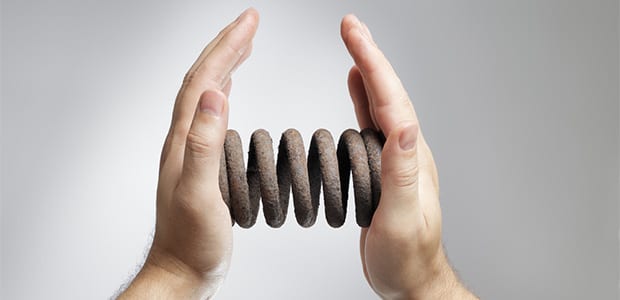
This is the opposite of tensile strength - it measures how well a material can resist being squashed or compressed. When you sit on a chair, your weight creates compressive forces that the chair legs must withstand. Building materials like concrete and stone are typically chosen for their excellent compressive strength.
Note
Compressive forces tend to 'squash' materials, making them shorter and wider. This is why concrete pillars are designed to be thick enough to distribute compressive loads safely.
Shear strength
Shear forces act parallel to a surface, trying to slide one part of the material past another part. This happens when you use scissors to cut paper or when forces try to 'slice' through a material. Rivets in structures need good shear strength to resist forces that might try to shear them off.

Example
Practical Example: Structural Rivets
In a steel bridge:
- Rivets join metal plates together
- Wind and traffic loads create shear forces on these rivets
- The rivets must resist these sliding forces to maintain structural integrity
Note
Bench shears and cutting tools apply shearing forces to separate materials by overwhelming their shear strength.
Bending strength
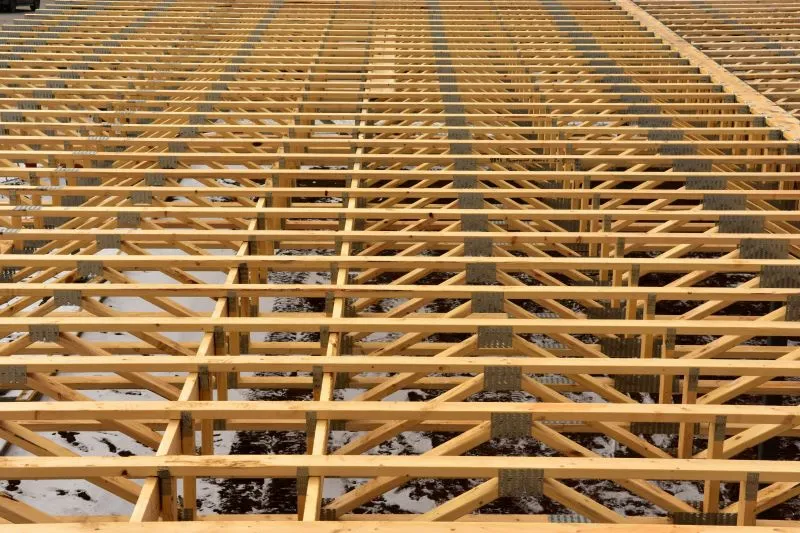
This property determines how well a material can resist forces that try to bend it. When you stand on a wooden plank supported at both ends, the plank experiences bending forces. Materials with good bending strength can support loads without sagging or breaking.
Example
Structural Example: Floor Joists
Floor joists in buildings need excellent bending strength to support the weight of people and furniture without sagging. The wood or steel beams must resist bending under distributed loads across their span.
Torsional strength
This relates to a material's ability to resist twisting forces. When you turn a key in a lock or use a screwdriver, you're applying torsional forces. Drive shafts in machinery must have good torsional strength to transmit rotational power without twisting apart.
Important
Torsion tends to twist materials, and weak materials will fail under excessive twisting forces. This is why drive shafts are often made from high-strength steel alloys.
Other important material properties
Beyond strength, materials have several other important properties that affect their suitability for different applications.
Hardness
Hardness measures how well a material can resist surface damage such as scratching, indentation, or abrasive wear. Diamond is extremely hard, whilst materials like lead are quite soft. Engineers test hardness using special equipment that applies controlled forces to see how much the material surface deforms.
Note
Practical Applications:
- Drill bits need high hardness to cut through other materials
- Bearing surfaces require hardness to resist wear
- Tool steels are heat-treated to achieve optimal hardness
Ductility
A ductile material can be stretched and drawn into thinner sections without breaking. This property is essential for processes like wire drawing, where thick metal rods are pulled through progressively smaller holes to create thin wire.

Example
Manufacturing Example: Wire Drawing
Copper's excellent ductility makes it ideal for electrical wiring:
- Thick copper rods are drawn through progressively smaller dies
- The material stretches without breaking
- Final product: thin, flexible wire suitable for electrical applications
Malleability
This property allows materials to be hammered, rolled, or pressed into different shapes without cracking or breaking. Unlike ductility (which involves stretching), malleability involves deformation in all directions. This property is crucial for manufacturing processes like forging and sheet metal forming.
Example
Manufacturing Application: Rivet Formation
Rivet heads are formed by hammering malleable metal:
- The rivet shank is inserted through holes
- The protruding end is hammered to form a head
- The malleable metal expands and creates a secure joint
Toughness vs brittleness
Toughness describes a material's ability to absorb energy from impacts and blows without fracturing. Tough materials can bend and deform before breaking, making them ideal for applications where sudden impacts are expected.
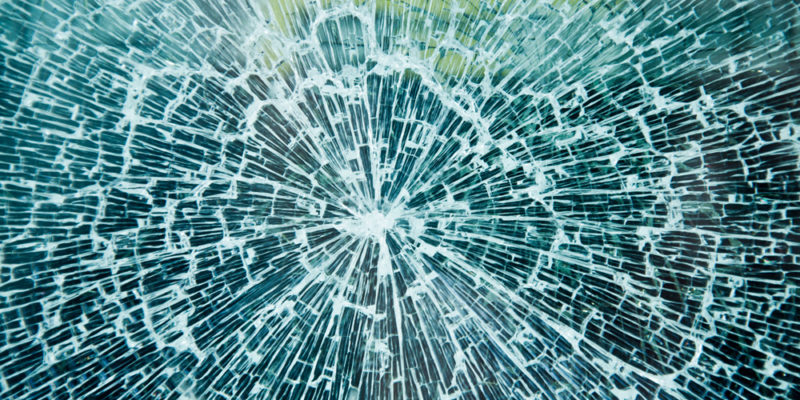
Brittleness is the opposite characteristic. Brittle materials fracture easily under impact with little or no warning. Glass is a classic example of a brittle material - it shatters suddenly when struck rather than bending first.
Important
Safety Consideration: Brittle materials can be dangerous in structural applications because they fail suddenly without warning signs. This is why safety glass is designed to crumble rather than form sharp shards.
Elasticity
Elastic materials return to their original shape after the deforming force is removed. Springs are perfect examples of elastic behaviour - they compress under load but spring back to their original length when the load is removed.
Important
Critical Concept: If a material is stretched beyond its elastic limit, it becomes permanently deformed and won't return to its original shape.
Conductivity
This property determines how easily heat, electricity, or sound can flow through a material. Different types of conductivity are important for different applications:
Note
Types of Conductivity:
- Thermal conductivity: Important for heat sinks, radiators, and cooking utensils
- Electrical conductivity: Critical for wiring, circuit boards, and electronic components
- Sound transmission: Relevant for acoustic applications and noise control
Example
Testing Method: Thermal Conductivity
The images show a clever test using ball bearings attached with candle wax to different materials:
- Heat is applied to one end of each material
- As heat conducts through each material at different rates
- The ball bearings fall off in order of the materials' thermal conductivity
- Metals typically show the highest thermal conductivity
Exam tips
Important
Key Distinctions to Remember:
- Ductility vs Malleability: Ductility involves stretching (like making wire), whilst malleability involves hammering and shaping
- Force directions matter: Tensile forces pull apart, compressive forces push together, and shear forces slide materials past each other
- Property pairs: Toughness and brittleness are opposite properties - tough materials resist impact, brittle materials fracture easily
- Real examples help: Think of everyday objects to remember properties - rubber bands are elastic, glass is brittle, copper wire is ductile
Summary
Key Points to Remember:
- Strength comes in five types: tensile (pulling), compressive (squashing), shear (sliding), bending (sagging), and torsional (twisting)
- Hardness protects against surface damage like scratching and wear
- Ductility allows wire drawing, whilst malleability enables hammering into shapes
- Toughness resists impact damage, but brittleness causes sudden fracture
- Elasticity provides spring-back action, and conductivity allows energy flow through materials