Energy Resources II (Junior Cert Geography): Revision Notes
📚Revision Notes
Energy Resources II
Impacts of Oil Exploitation
Environmental Impact
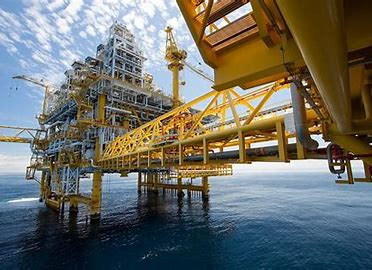
- Oil is an efficient fuel that produces less smoke and a lot of energy when burned, but it also causes significant harm.
- Oil spills can kill marine life, and burning oil releases greenhouse gases, contributing to global warming.
- It can also lead to the formation of acid rain, damaging the environment.
Economic Impact
- The oil industry has made Saudi Arabia one of the wealthiest nations, supporting its economy and allowing it to develop other sectors.
- Oil is easily transported by pipelines or tankers and creates valuable by-products like paints and plastics.
- However, oil is a finite resource that may run out in around 100 years, risking future economic stability.
Social Impact
- Oil wealth has changed Saudi Arabia a lot. In the past, many people lived as nomads, moving with their animals. Today, it is a modern and rich country. People have a high standard of living, with good healthcare, transport, and schools.
- To work in the oil industry, many people have come from other countries such as Egypt, India, Pakistan, Bangladesh, the Philippines, and the USA. These workers are very important, but some of them are treated unfairly. Many migrant workers work long hours in very hot conditions for little pay. Saudi Arabia has also been criticised for human rights issues.
Acid Rain
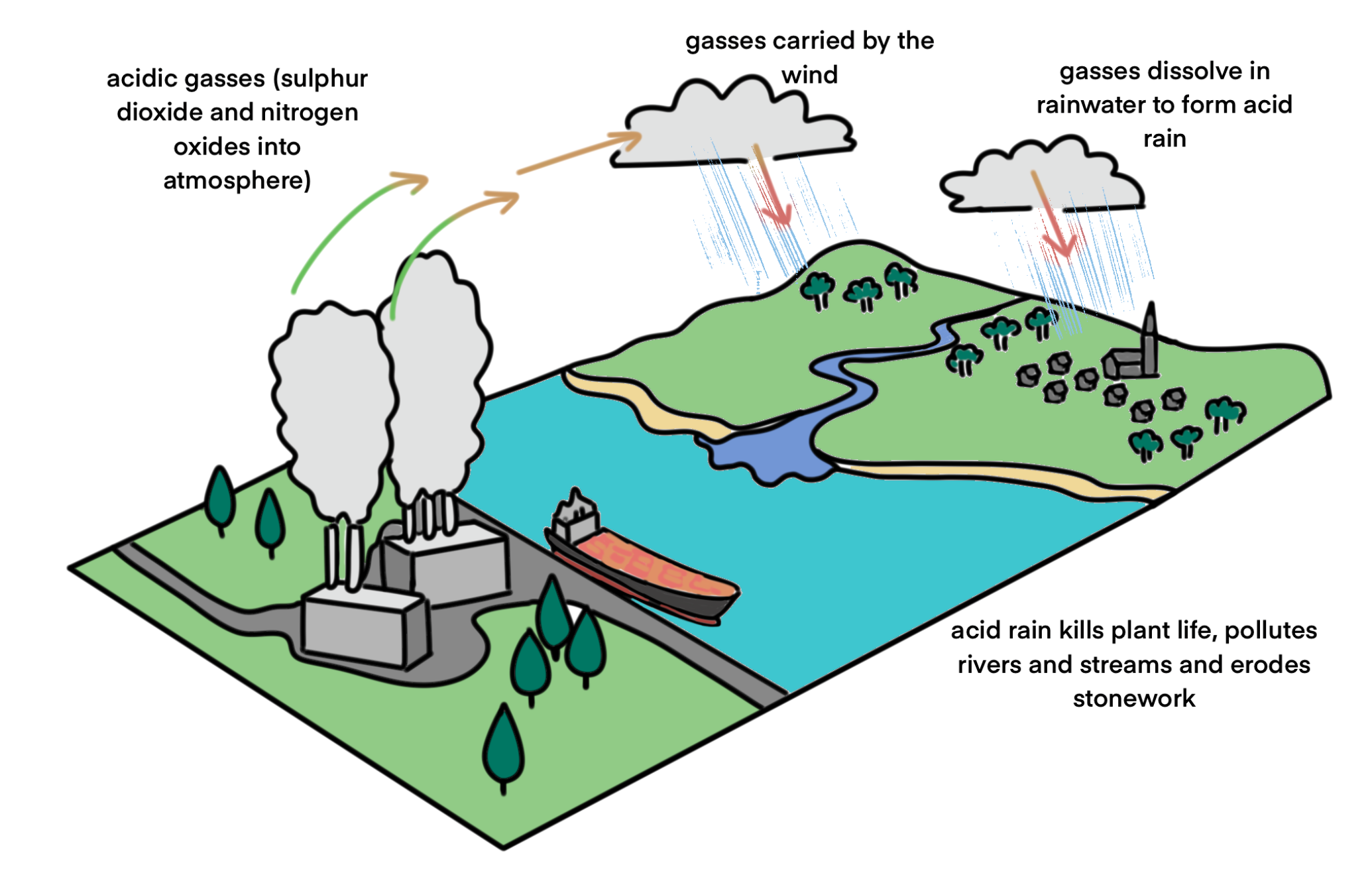
Acid rain is rainfall that has been made acidic due to pollutants in the atmosphere. It can harm the environment, buildings, and human health.
Formation of Acid Rain:
- Burning fossil fuels (like coal, oil, and gas) releases sulphur dioxide (SO₂) and nitrogen oxides (NOₓ) into the air.
- These gases react with water vapour in the atmosphere to form sulphuric acid and nitric acid. When it rains, these acids fall to the ground as acid rain.
- Acid rain can damage forests, lakes, rivers, and buildings. It can also cause health issues in humans, especially respiratory problems.
Effects of Acid Rain
- Forests: Acid rain removes nutrients from the soil, weakening trees by depriving them of essential minerals. This leads to discoloured leaves, higher vulnerability to diseases, and eventual tree death. Countries like Sweden, Norway, and Germany have experienced significant forest damage due to acid rain.
- Soils: Acid rain increases soil acidity, making it less fertile and unsuitable for crops. Leaching occurs, where important nutrients are washed away, forcing farmers to use more fertilisers to support plant growth.
- Buildings: Acid rain causes erosion and damage to buildings and statues, especially those made of limestone and marble. Historic landmarks like the Colosseum in Rome are at risk, impacting tourism and cultural heritage.
Solutions to Acid Rain
- Energy-efficient cars with lower emissions are promoted, and public transport use is encouraged to reduce car emissions.
- Renewable energy sources like solar and wind power are being developed to decrease reliance on fossil fuels.
- Energy conservation in homes and businesses is encouraged to reduce overall emissions.