Patterns of Change in Crime and Punishment (Junior Cert History): Revision Notes
📚Revision Notes
Patterns of Change in Crime and Punishment
Ancient Rome
Who Made the Law?
- The Twelve Tables: A written code of law created by the emperors and the Senate.
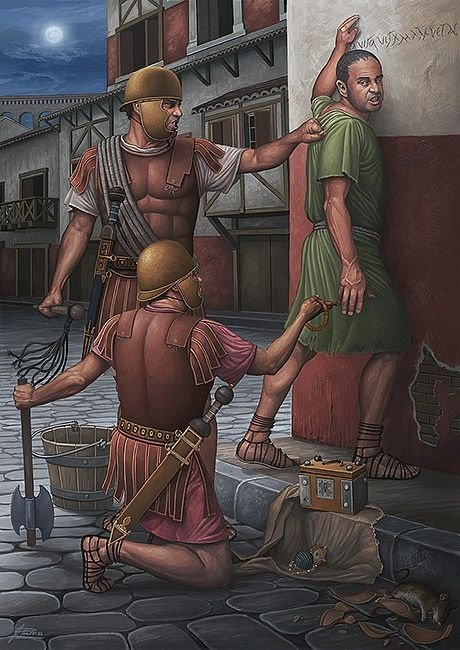
- Order was maintained by soldiers, not a police force.
- Vigiles (firefighters) patrolled the streets at night to prevent crimes and fires.
- Courts ruled on guilt or innocence. Serious crimes were tried by a jury, while less serious ones were tried by a magistrate.
What Were the Crimes?
- Common crimes included robbery, burglary, fraud in trade, arson, and murder.
- Running away as a slave and being Christian (until Emperor Constantine's conversion) were also crimes.
What Were the Punishments?
- Punishments were severe and depended on social status.
- Plebians: Flogged or fined for minor crimes; executed for serious crimes.
- Patricians: Exiled or executed for serious crimes.
- Slaves: Harsh punishments like crucifixion or forced combat.
- Decimation: Military punishment where every tenth soldier was executed to maintain discipline.
The Middle Ages
Who Made the Law?
Laws were made by the king and local lords. A crime was any activity breaking the king's law, forming the basis of English common law.
Who Enforced the Law?
- Communities enforced the law through hue and cry (a call for help). The parish constable and sheriff helped catch criminals.
- Nighttime was dangerous; watchmen patrolled the streets.
- Trials included trial by ordeal (surviving pain proved innocence) and trial by combat (winner was right).
- Royal courts tried certain crimes with justices of the peace. Church courts were more lenient, claiming benefit of the clergy.
What Were the Crimes?
- Mostly minor crimes like damage to property, theft, or poaching.
- Serious crimes included murder, arson, treason, and rebellion.
What Were the Punishments?
- No prisons for punishment, only temporary holding before trial.
- Minor crimes: fines, flogging, public humiliation (stocks, pillories).
- Serious crimes: execution by hanging or beheading, mutilation.
- Women faced specific punishments for scolding, prostitution, or witchcraft.
The Industrial Revolution
Who Made the Law?
- Laws were made by parliament and signed by the king or queen.
- Crime increased with urbanisation, leading to new changes and the end of the Bloody Code (harsh capital punishments).
Who Enforced the Law?
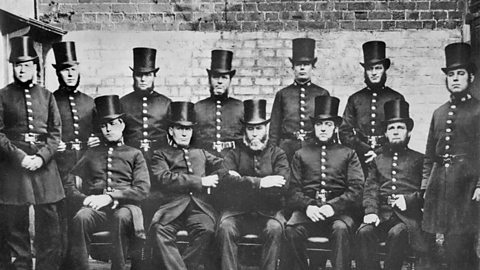
Introduction of the first professional police force, the Peelers, in 1829, focusing on crime prevention.
What Were the Punishments?
- Transportation: Criminals were sent to Australia to work for settlers for seven years.
- Prison conditions improved with the Gaols Act (1823), separating prisoners by gender and crime.
- The Separate System: Prisoners were kept in individual cells.
- The Silent System: Hard labour in silence.
Modern Times
Who Made the Law?
- Social changes, economic gaps, and public opinion influenced laws.
- Decriminalisation of some acts like homosexuality (1967 in Britain, 1993 in Ireland) and abortion (1967 in Britain, 2018 in Ireland).
Who Enforced the Law?
- Modern police adapted to new crimes with motorisation, specialised units (drugs, fraud, traffic), and neighbourhood watches.
- Scientific advances: fingerprinting, DNA testing, CCTV, radios, and databases.
What Were the Crimes?
- Crime figures rose from the 1960s.
- New crimes emerged, including cybercrimes, terrorism, and drug offences.
- New laws protected against racial, religious, and sexual discrimination.
What Were the Punishments?
- Prisons aimed at reform; the death penalty abolished in 2004 in Britain.
- Alternatives to prison: probations, community service, and electronic tagging.
- Juvenile courts and youth detention centres were established, though re-offending rates remained high.
Key Terms
- Twelve Tables: the earliest set of written laws in ancient Rome, created around 450 BC, that formed the foundation of Roman legal practice.
- Vigiles: the ancient Roman firefighters and night watchmen who also acted as a form of police force to maintain order in the city.
- Hue and Cry: a mediaeval legal practice where bystanders were required to help catch a criminal who had been witnessed committing a crime by raising a loud public outcry.
- Trial by Ordeal: a judicial practice in the Middle Ages where the guilt or innocence of the accused was determined by subjecting them to a dangerous or painful test, believed to be under divine judgement.
- Bloody Code: the English legal system from the late 17th to early 19th centuries, characterised by the high number of crimes punishable by death.
- Peelers: the early police officers in London, named after Sir Robert Peel, who established the Metropolitan Police Force in 1829. They are also known as "Bobbies."
- Transportation: a punishment used in Britain from the 17th to 19th centuries, where criminals were sent to penal colonies in places like Australia and America.
- Separate System: a prison system developed in the 19th century where prisoners were kept in solitary confinement to encourage reflexion and repentance.
- Silent System: a prison regime where inmates were kept in isolation during the night and forced to work in silence during the day, aimed at rehabilitation through discipline.
- Cybercrimes: illegal activities conducted using computers or the internet, such as hacking, identity theft, and online fraud.
Revision Questions
- What were the Twelve Tables in Ancient Rome?
- True or False: The Vigiles were responsible for fighting fires and preventing crimes in Ancient Rome.
- What was the hue and cry in the Middle Ages?
- Fill in the blank: The trial by _______ involved surviving pain to prove innocence.
- What was the Bloody Code?
- True or False: The Peelers were the first professional police force introduced in 1829.
- Where were criminals transported as punishment during the Industrial Revolution?
- Fill in the blank: The _______ system kept prisoners in individual cells.
- What new type of crime emerged with the rise of the internet?
- True or False: The death penalty was abolished in Britain in 2004.