Energy in Chemical Reactions (Junior Cert Science): Revision Notes
📚Revision Notes
Energy in Chemical Reactions
Introduction
When chemical reactions take place, energy changes always occur. Some reactions release heat energy to their surroundings, while others absorb heat energy from their surroundings. Understanding these energy changes helps us predict and control chemical reactions in everyday life and industrial processes.
Heat changes in chemical reactions
Exothermic reactions
An exothermic reaction is a chemical reaction that releases heat energy to the surroundings. The word 'exothermic' comes from 'exo' meaning 'out' and 'thermic' meaning 'heat'. When an exothermic reaction occurs, you will observe a temperature rise in the surroundings.
Note
Memory Aid: Think of EXO = EXIT - exothermic reactions let heat exit or leave the system!
Common examples of exothermic reactions include:
-
Combustion reactions - All reactions involving the burning of fuels release heat. For example, burning coal or natural gas are exothermic reactions that we use for heating
-
Respiration - When oxygen and glucose react in living cells, the reaction releases heat energy. This energy helps maintain our body temperature
-
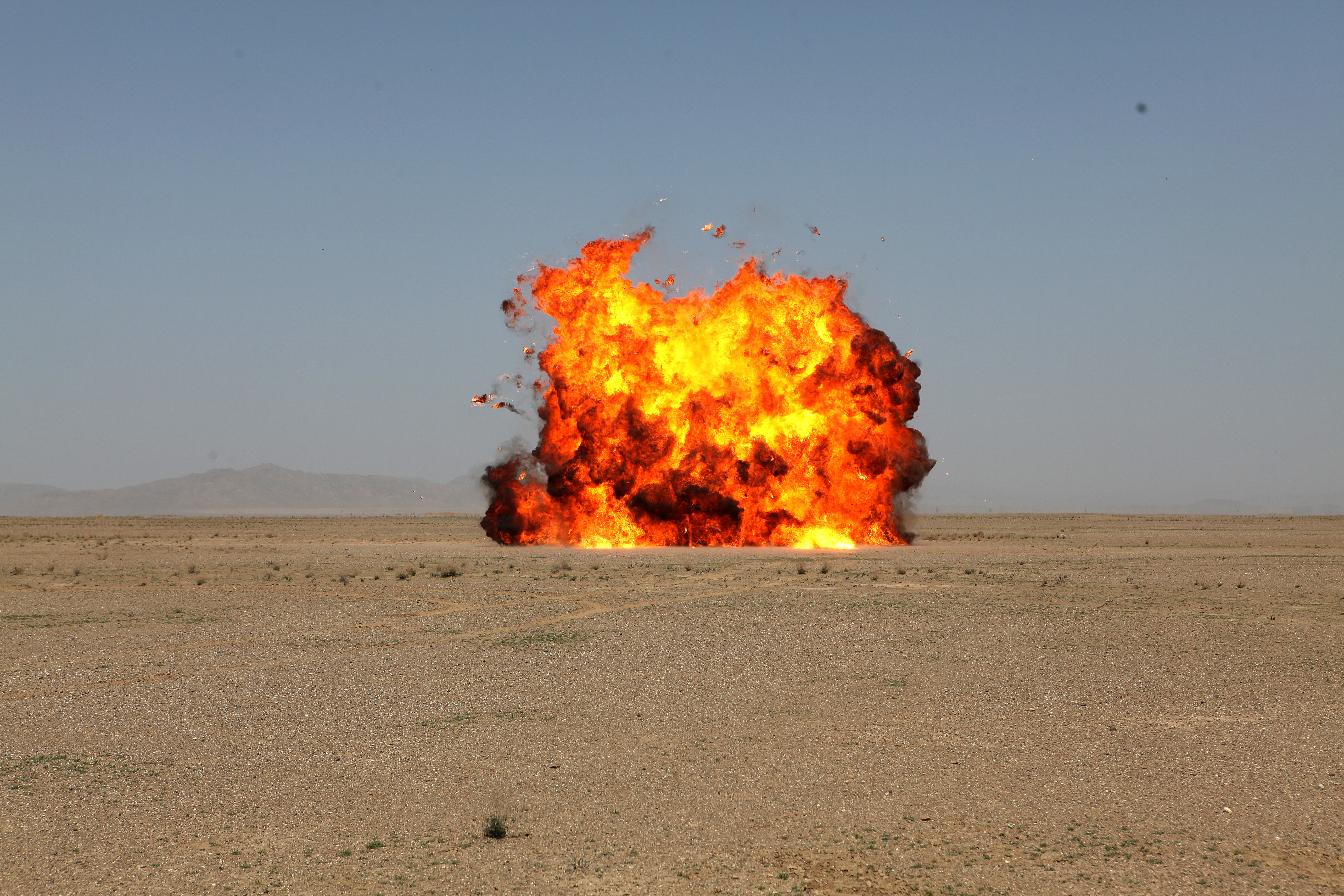
Explosions - These are very rapid exothermic reactions that release large amounts of heat energy quickly
-
Neutralisation reactions - When acids react with bases, heat is released
-
Hand warmers and self-heating food cans - These products use exothermic reactions to generate heat when needed
Endothermic reactions
An endothermic reaction is a chemical reaction that absorbs heat energy from the surroundings. The word 'endo' means 'inside' or 'within'. When an endothermic reaction occurs, you will observe a temperature drop in the surroundings because heat energy is being taken in by the reaction.
Note
Memory Aid: Think of ENDO = ENTER - endothermic reactions let heat enter the system!
Common examples of endothermic reactions include:
- Sherbet dissolving in water - When sherbet dissolves in water, it feels cold in your mouth because the reaction absorbs heat energy
- Instant cold packs - These are used to treat injuries and contain two separate bags. One bag contains water and the other contains a chemical. When the bags are mixed together, an endothermic reaction occurs, making the pack feel cold
- Photosynthesis - Plants absorb energy from the sun and use it with carbon dioxide and water to produce glucose and oxygen. This is an endothermic process

Important
Warning about concentrated acids:
Concentrated acids are highly corrosive and can cause severe burns. When diluting concentrated acids like sulfuric acid with water, always add the acid to the water slowly (never the other way around), as this produces a highly exothermic reaction.
Activation energy
Understanding collision theory
For a chemical reaction to occur, the reacting particles must collide with each other. However, not all collisions between particles result in a reaction. Chemists have developed collision theory to explain the energy changes that occur when chemical reactions take place.
Note
Collision theory helps us understand why some reactions happen and others don't. It's all about particles bumping into each other with enough energy and the right orientation!
The key points of collision theory are:
- Reacting particles must collide with each other for a reaction to occur
- A collision will only result in products forming if a certain minimum energy is reached during the collision
- This minimum energy is called the activation energy
What is activation energy?
Activation energy is the minimum energy that colliding particles must have for a chemical reaction to occur.
Think of activation energy as an energy barrier that must be overcome before a reaction can happen. Just like you need enough energy to push a ball over a hill, particles need enough energy to overcome the activation energy barrier.
Effective collisions
An effective collision is one that results in the formation of products. For a collision to be effective:
- The particles must collide with each other
- They must have at least the minimum energy (activation energy) needed for the reaction
- They must collide with the correct orientation
When gas molecules have low kinetic energies and collide, they simply bounce apart without any reaction taking place. However, if molecules have high enough kinetic energies and collide, products are formed. This is an effective collision.
The hydrogen and oxygen reaction
A useful example to understand activation energy is the reaction between hydrogen and oxygen to form water:
Example
Worked Example: Activation Energy in the Hydrogen-Oxygen Reaction
The situation: Imagine a plastic bottle filled with a mixture of hydrogen gas and oxygen gas. The bottle contains millions of these molecules, which are constantly colliding with each other and with the walls of the bottle.
At room temperature: Despite all these collisions, no reaction takes place because the molecules don't have enough kinetic energy to overcome the activation energy barrier.
Providing activation energy: To make the reaction occur, extra energy needs to be supplied. This can be done by bringing a lighted taper near the bottle opening. The heat from the taper provides the activation energy needed.
The result: Once started, the explosive reaction launches the bottle into the air, and a loud bang is heard. In fact, if there is exactly twice as much hydrogen as oxygen in the bottle, the bang is even louder because all the reactants are used up completely.
Energy profile diagrams
What is an energy profile diagram?
An energy profile diagram (also called a reaction profile diagram) is a graph that shows the change in energy of a chemical reaction with time as the reaction takes place. These diagrams help us visualise the energy changes that occur during chemical reactions.
The key features of an energy profile diagram are:
- The y-axis shows energy
- The x-axis shows time or reaction progress
- The starting point shows the energy of the reactants
- The ending point shows the energy of the products
- The peak of the curve shows the activation energy barrier
Energy profiles for exothermic reactions
In an exothermic reaction, the products have less energy than the reactants. This is because energy has been released to the surroundings during the reaction.
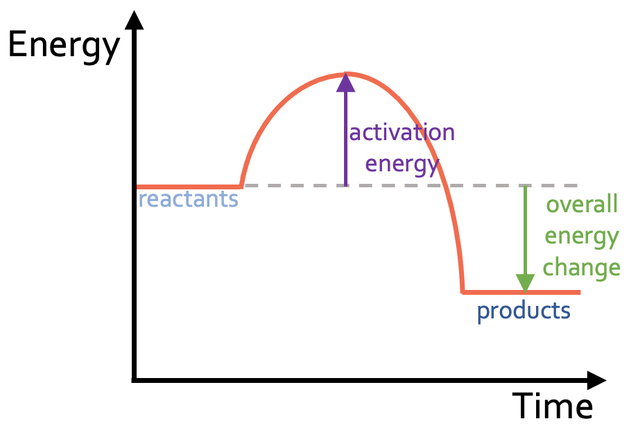
On the energy profile diagram for an exothermic reaction:
- The reactants start at a higher energy level
- The products end at a lower energy level
- The difference in energy between reactants and products represents the heat given out
- The activation energy is shown as the energy difference between the reactants and the peak of the curve
- The symbol (delta H) is used to represent the enthalpy change and is negative for exothermic reactions
Energy profiles for endothermic reactions
In an endothermic reaction, the products have more energy than the reactants. This is because energy has been absorbed from the surroundings during the reaction.
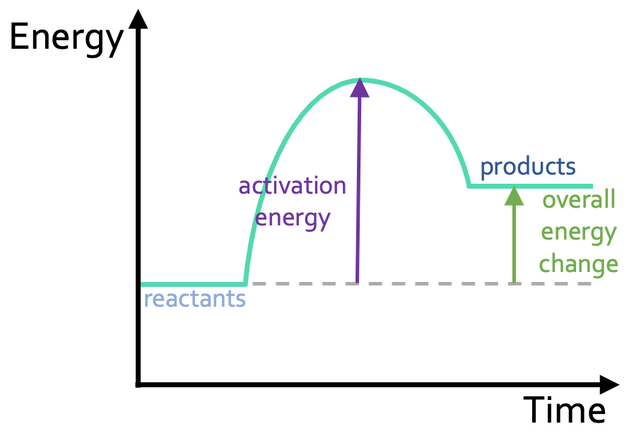
On the energy profile diagram for an endothermic reaction:
- The reactants start at a lower energy level
- The products end at a higher energy level
- The difference in energy between reactants and products represents the heat taken in
- The activation energy is still shown as the energy difference between the reactants and the peak of the curve
- The symbol is positive for endothermic reactions
Large vs small activation energy
The size of the activation energy affects how fast a reaction occurs.
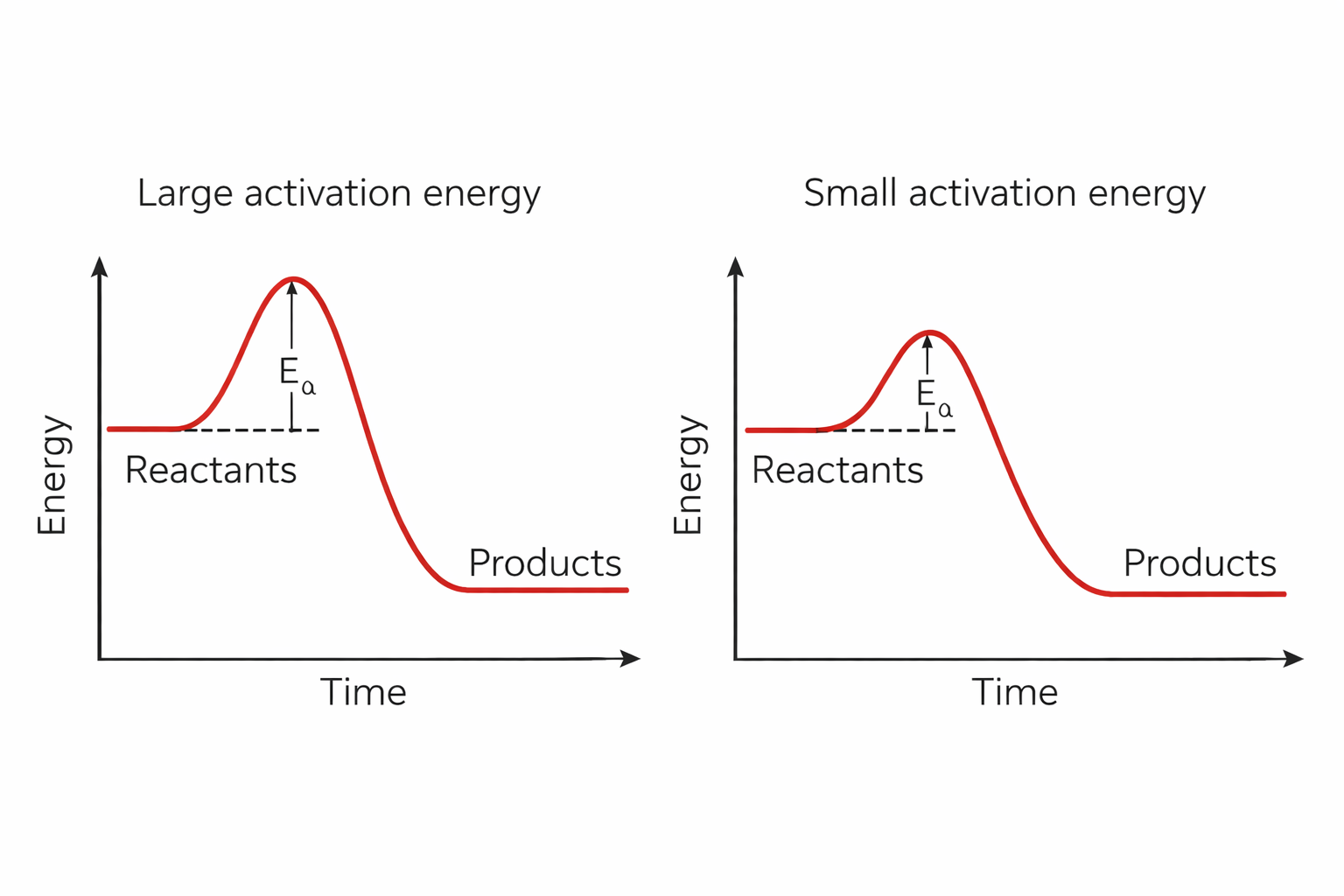
Large activation energy:
- Only a small number of molecules have enough energy to pass over the energy barrier
- Therefore, the products are formed slowly
- The reaction rate is slow
Small activation energy:
- A large number of molecules have enough energy to pass over the energy barrier
- Therefore, the products are formed quickly
- The reaction rate is fast
Important
Exam Tip: When drawing an energy profile diagram and showing the activation energy, make sure the arrow tip touches the top of the curve to receive full marks.
Factors affecting the rate of reaction
Several factors can affect how quickly a chemical reaction occurs. Understanding these factors helps us control reactions in practical situations.
Temperature
How does temperature affect reaction rate?
At higher temperatures, there is an increased number of collisions because the moving molecules have more kinetic energy. The molecules are moving faster at the higher temperature.
Additionally, at higher temperatures, more molecules have the minimum activation energy needed for the reaction to occur. More of the colliding molecules have the energy to overcome the activation energy barrier.
Result: In short, there are more effective collisions at higher temperatures, so the rate of reaction is increased.
Particle size
How does particle size affect reaction rate?
For the same mass of larger marble chips compared to smaller marble chips:
- The smaller the size of the marble chip, the more the surface area is exposed
- The greater the surface area exposed, the more collisions will be taking place
- The greater the number of collisions that take place, the greater the number of effective collisions
- Therefore, more effective collisions will also increase
Result: The rate of reaction is increased when particle size is decreased because there is a larger surface area available for collisions.
Concentration
How does concentration affect reaction rate?
If the concentration of the reactants is increased, the molecules are crowded closer together. This means:
- There is an increase in the number of effective collisions
- More particles are available to collide in the same volume
- Therefore, the rate of reaction will be increased
Result: Higher concentration leads to a faster reaction rate because there are more particles available to collide with each other.
Catalysts
What is a catalyst?
A catalyst is a substance that speeds up a chemical reaction without being used up itself. Catalysts are very important in chemistry because they allow reactions to occur more quickly and at lower temperatures, which can save energy and money in industrial processes.
Note
Think of a catalyst as a shortcut - it provides an easier route over the energy barrier, making it simpler for the reaction to proceed!
How do catalysts work?
A catalyst works by providing an alternative route for the reaction to occur. This alternative route has a lower activation energy than the original pathway.
Because the activation energy is lower when a catalyst is present:
- More molecules now have the energy needed for effective collisions
- The rate of reaction increases
- The reaction occurs faster
Important points about catalysts:
- The catalyst itself is not used up during the reaction
- The catalyst can be recovered and used again
- Catalysts do not affect the amount of products formed, only how quickly they are formed
- Different reactions require different catalysts
Energy profile diagrams with catalysts
We can show the effect of a catalyst on an energy profile diagram.
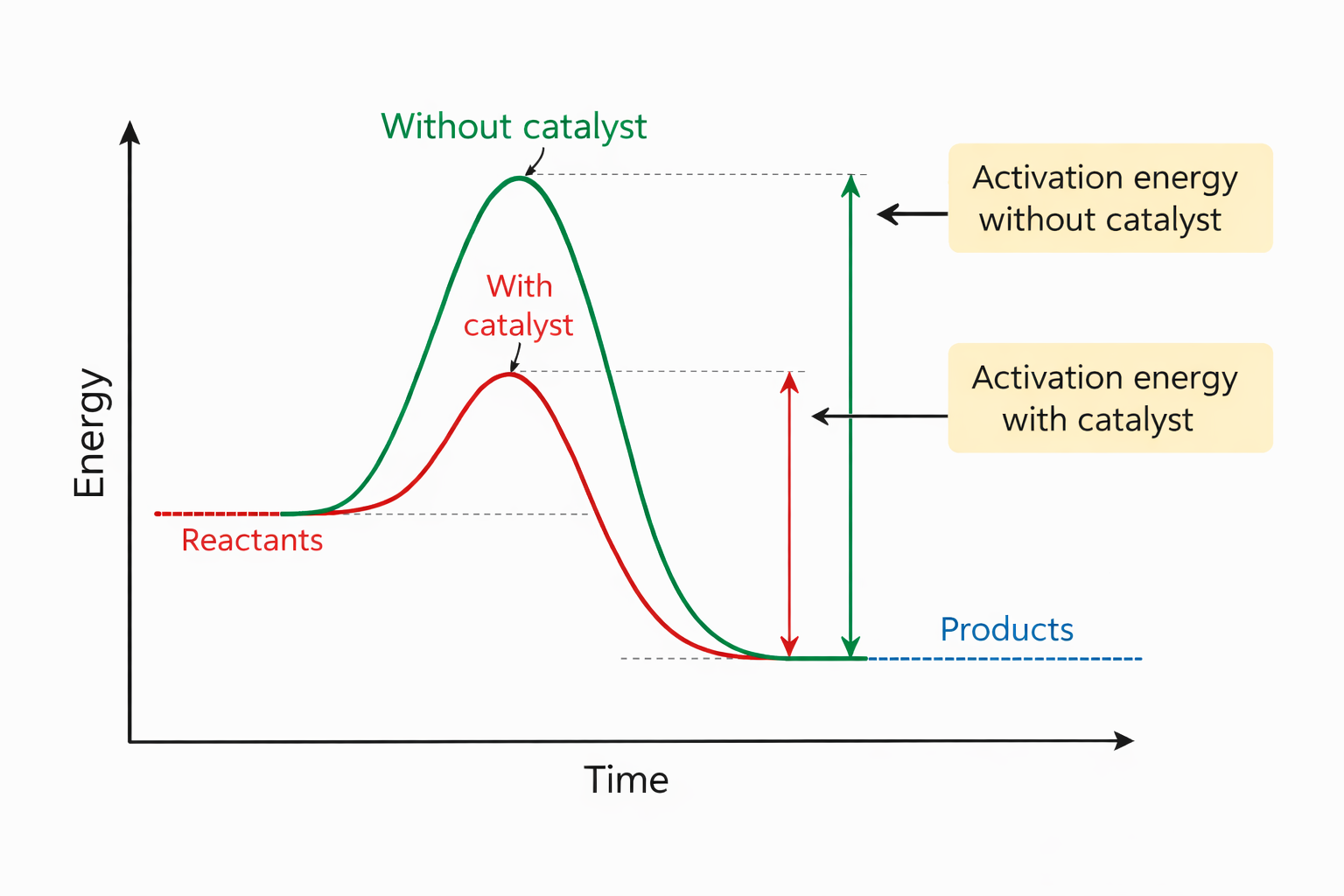
The diagram shows two pathways:
- Without catalyst (higher curve) - Has a higher activation energy barrier
- With catalyst (lower curve) - Has a lower activation energy barrier
Key observations:
- Both reactions start at the same reactants energy level
- Both reactions end at the same products energy level
- The catalyst does not change the overall energy change of the reaction ( remains the same)
- The catalyst only lowers the activation energy needed
- This means more molecules can successfully react, so the reaction is faster
The catalyst provides a "shortcut" over the energy barrier, making it easier for the reaction to proceed.
Summary
Key Points to Remember:
-
Exothermic reactions release heat energy to the surroundings, causing the temperature to rise. Examples include combustion, respiration, and neutralisation.
-
Endothermic reactions absorb heat energy from the surroundings, causing the temperature to drop. Examples include dissolving sherbet, instant cold packs, and photosynthesis.
-
Activation energy is the minimum energy that colliding particles must have for a chemical reaction to occur. It acts as an energy barrier that must be overcome.
-
Energy profile diagrams show how energy changes during a chemical reaction. The peak represents the activation energy, and the difference between reactants and products shows whether the reaction is exothermic or endothermic.
-
Catalysts speed up reactions by providing an alternative pathway with lower activation energy. They are not used up in the reaction and can be used again.
-
Memory Aids: EXO = EXIT (heat exits), ENDO = ENTER (heat enters), Catalyst = Shortcut (easier energy path)